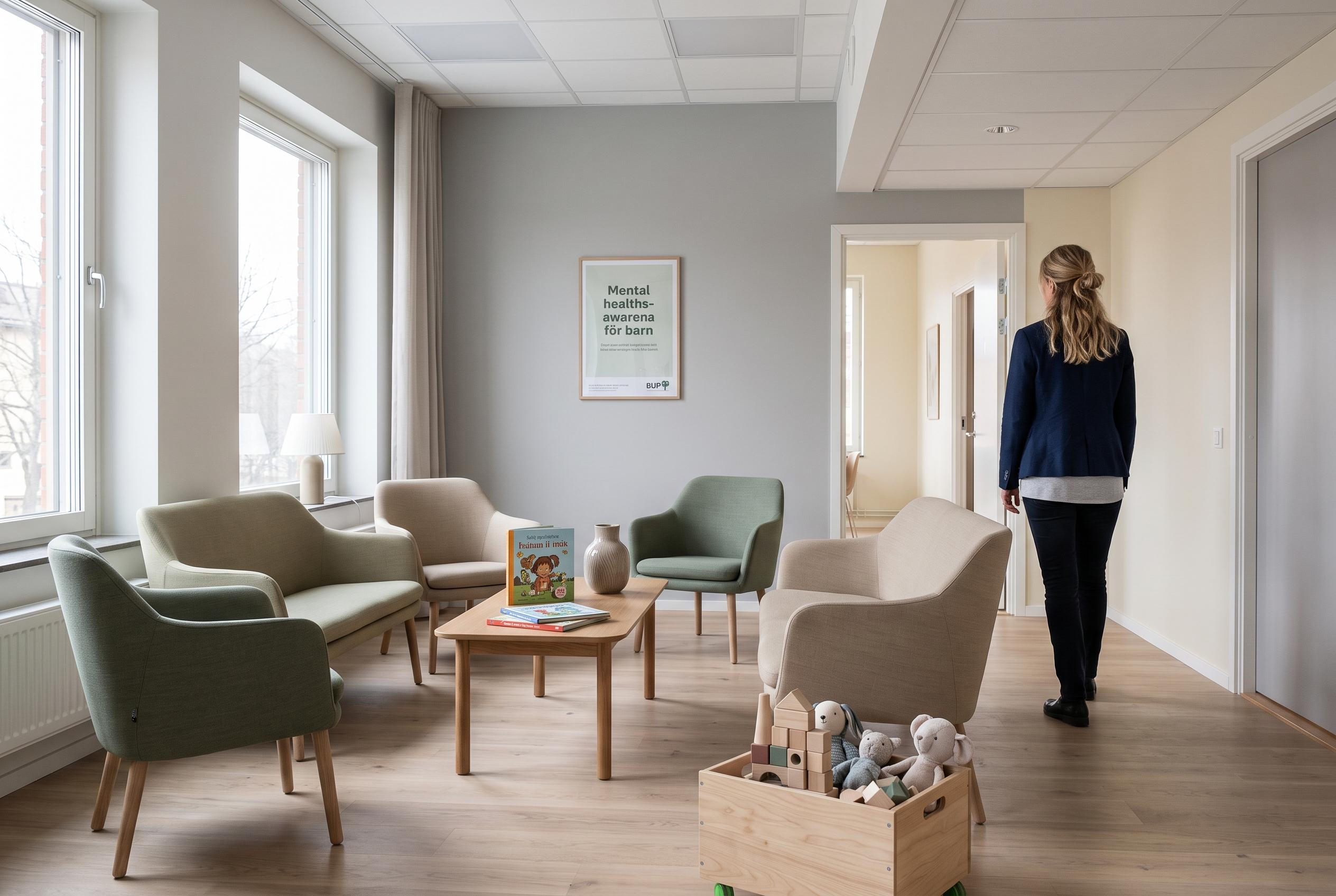

In Kalmar County, efforts to improve child and adolescent psychiatric access are overshadowed by allegations of quality lapses and debates over market-driven care, raising concerns about equality and systemic reform.
The rising number of children and young people struggling with mental ill health has become one of the most urgent social challenges of our time. Behind waiting lists and statistics are anxious teenagers, children who cannot manage school and families left waiting for answers, support and treatment. In Kalmar County, local leaders say they have made child and adolescent psychiatry a priority and that access has improved, with shorter queues for assessment and treatment and a new “En väg in” intake service designed to help families reach the right care more quickly.
Even so, the reliance on outsourced neuropsychiatric assessments points to a deeper problem. Temporary contracts with private providers may help when public capacity falls short, but they are not a lasting solution. According to the Swedish Health and Social Care Inspectorate, a review in January 2026 of 10 privately financed providers found shortcomings in every one of them, including weak information gathering at the start of assessments and the use of ADHD medication as a first or only treatment, despite national guidance. Swedish media including SVT and Svenska Dagbladet reported that the findings raised fresh concerns about patient safety, quality and whether some children were being diagnosed on incomplete evidence. Svenska Dagbladet also reported that one provider, Psykiatrispecialisterna, was ordered to stop operating after inspectors identified serious failings.
That picture has fuelled a broader debate about whether children’s psychiatric care is drifting towards a market model. The concern is not that every private assessment is poor, but that the ability to pay can create faster access for some families while others remain in line. That risks widening inequality in a system that is meant to prioritise need. It also underlines the importance of building stronger public capacity rather than allowing shortages to be managed permanently through private purchases.
The case for reform goes beyond specialist psychiatry itself. Many children need help long before they reach a clinic, and support from schools, social services and primary care can prevent problems from escalating. The National Board of Health and Welfare says Sweden’s care guarantee for child and adolescent psychiatry is intended to ensure investigations and treatment begin within 30 days, but hitting that target depends on a well-staffed system and effective coordination. Advocates for a stronger public model argue that the answer lies in better school health services, more local youth mental health support and closer cooperation between agencies, so families are not forced to wait until difficulties become crises.
Disclaimer: This content is for informational purposes only and is not intended to be a substitute for professional medical judgment, advice, diagnosis, or treatment.