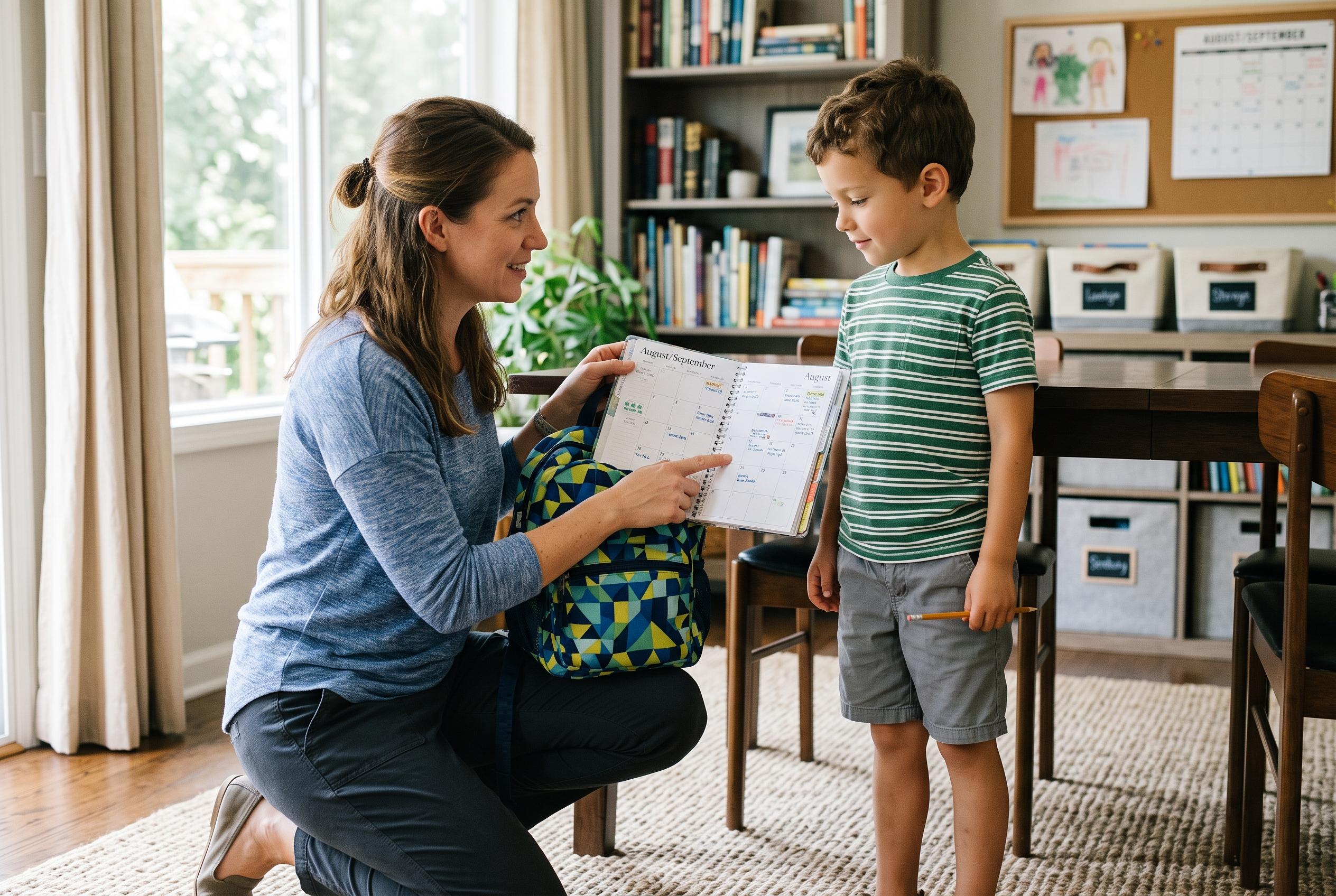

As the new school year approaches, experts advise parents to embrace gradual preparation and validate children’s emotions to ease anxiety and foster confidence during transitions.
As the school year approaches, many families brace for a rough start, and that unease is often a normal response to change rather than a sign that anything is wrong. Natalie, host of Mom On Purpose, argues that transitions feel difficult because the brain prefers predictability and routine. That insight fits with guidance from Johns Hopkins Medicine, the Children’s Hospital of Philadelphia and HealthyChildren.org, all of which advise parents to prepare children gradually for new schedules, new classrooms and new expectations rather than waiting for the first day to arrive unannounced.
One of the most useful shifts is to expect some resistance. Children may cling at drop-off, wake more anxiously, or push back against new routines, and parents often feel it too. The point is not to avoid the discomfort but to stop interpreting it as a problem that must be fixed immediately. Johns Hopkins Medicine recommends easing children into the change with earlier bedtimes, familiar peers and practice runs, while PBS KIDS for Parents suggests involving children in the practical steps of the season so the change feels less abrupt.
Another helpful mindset is to treat difficult feelings as part of the process. A child who cries at separation is not failing at school, and a parent who feels unsettled is not doing anything wrong. HealthyChildren.org and the Kids Mental Health Foundation both encourage parents to validate worries, listen carefully and help children work through negative thoughts rather than demanding cheerfulness. That approach keeps the connection intact while still holding the line on attendance and routine.
It also helps to remember that the first week, or even the first month, does not define the whole year. The Kids Mental Health Foundation notes that anxiety around a transition such as moving to a new school is common, and it advises parents to support coping skills and seek extra help if worry lingers for weeks. CHOP similarly recommends rehearsing the route to school, visiting the building and practising the drop-off sequence so children can build confidence before the pressure is on.
Natalie’s final reminder is simple: hard things can be handled. That does not mean every school morning will be easy, only that families can survive the awkward, emotional and uncertain parts without treating them as failure. When parents combine that perspective with practical preparation and steady reassurance, the transition back to school becomes less of a crisis and more of a managed adjustment.
Disclaimer: This content is for informational purposes only and is not intended to be a substitute for professional medical judgment, advice, diagnosis, or treatment.