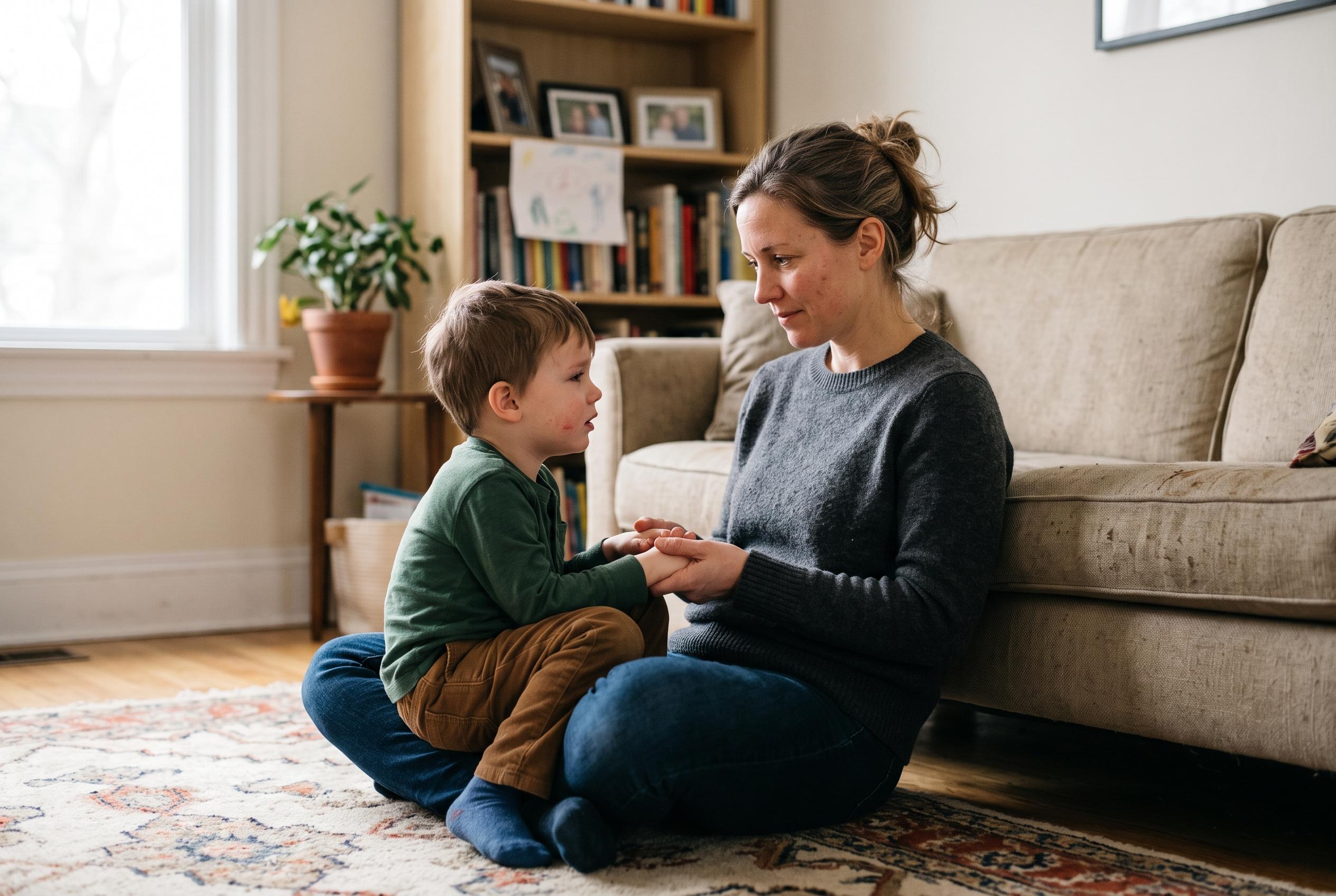

A growing shift towards calmer, more emotionally supportive parenting methods centred on co-regulation is reshaping how adults help children navigate intense feelings, fostering resilience through small, consistent acts of reassurance.
In homes where tantrums and tears are part of the daily rhythm, a quieter style of parenting is gaining ground. The approach, known as co-regulation, asks adults to stay calm, close and emotionally available while a child is overwhelmed, rather than expecting a young child to settle alone. Harvard Health says this helps children and teenagers learn, over time, how to soothe themselves when feelings run high.
At its simplest, co-regulation means an adult lending their steadiness to a child whose nervous system is still developing. The Health Service Executive in Ireland says that validation, presence and simple coping strategies can help children move through intense emotion without feeling abandoned by the adult in front of them. The Child Mind Institute describes the process as one in which adults model self-control while children gradually build their own.
Dibber International Preschools South Africa says one early sign of this shift is when parents start naming emotions instead of only correcting behaviour. Saying a child seems angry, frightened or disappointed can help connect feeling with language, and that can make the emotion easier to recognise next time. The preschool group also says this does not mean every outburst becomes a teaching moment; sometimes the most useful response is simply pausing long enough to acknowledge what the child is going through.
Other signs are more physical and often more subtle. Harvard Health and Tapouts both note that a calm adult response, including lowering one’s body to a child’s eye level or taking a breath before speaking, can reduce tension and help the child feel safe. The point is not perfection. As Harvard Health notes, children learn from repeated practice, including moments when adults recover after losing patience and return to repair the interaction.
Dibber says the approach does not remove boundaries from family life. Children still need limits, but those limits are delivered with warmth rather than threat. The wider shift reflects a growing understanding of early childhood development and a reassessment of how much emotional support children need before they can manage difficult feelings on their own. In that sense, co-regulation is less a dramatic parenting overhaul than a series of small, steady acts: kneeling instead of shouting, naming the feeling, holding the boundary and coming back after the storm has passed.
Disclaimer: This content is for informational purposes only and is not intended to be a substitute for professional medical judgment, advice, diagnosis, or treatment.