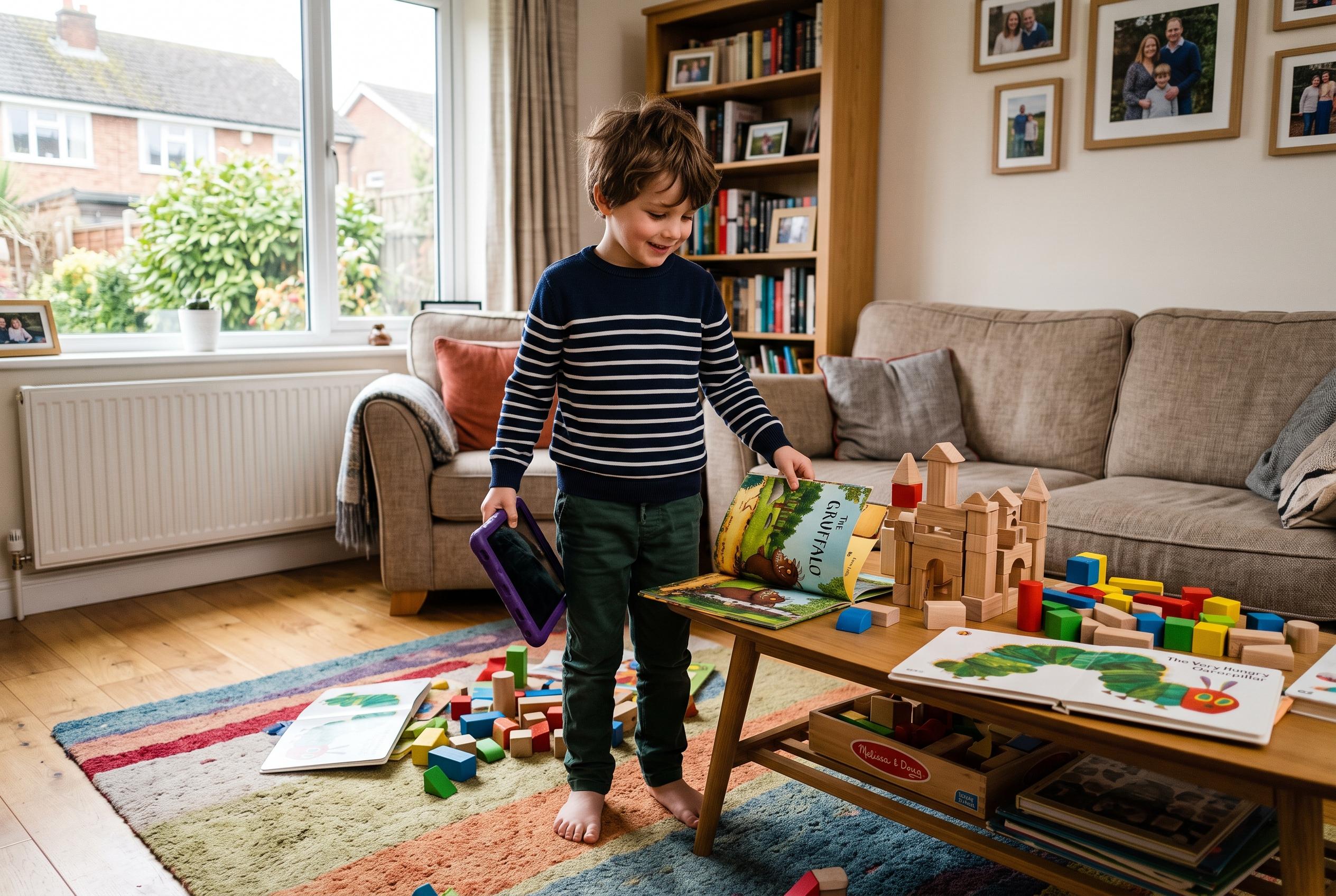

Research indicates UK children spend nearly a month a year on screens, raising worries about impact on sleep, behaviour, and social skills, prompting experts to advocate for balanced routines and alternative activities.
Children in the UK are spending about a month a year on screens, according to research cited by DevonLive, with many parents saying devices are edging out family time and face-to-face socialising. The concern is not simply the number of hours involved: health guidance from the Cleveland Clinic, MedlinePlus and the Mayo Clinic Health System all points to wider effects when screen use crowds out sleep, movement and ordinary routines.
Yasmin Shaheen-Zaffar, a creative health practitioner and children’s mental health ambassador at The Principle Trust Children’s Charity, said the most visible warning sign is distress when screen time ends. She also pointed to a fading interest in play, movement and family activities, a growing wish to be alone with devices and technology beginning to disrupt mornings, meals, homework, bedtime and time with others. Health sources such as MedlinePlus and the Mayo Clinic Health System say excessive screen use is also linked with sleep problems, behavioural issues and, in some cases, reduced physical activity and weight gain.
Her advice is to treat the transition away from screens as a regulation issue rather than a confrontation. Speaking to Tenpin, she said parents should stay calm, recognise a child’s feelings and prepare them for change, arguing that children are more able to cope when connection comes before correction. The Cleveland Clinic says too much screen time can also interfere with language development, while a Time report on research in young children linked heavier screen use with weaker progress in language, memory and social skills.
Rather than relying only on bans, Shaheen-Zaffar suggested adding other activities that naturally compete for a child’s attention, such as creative work, outdoor play, movement and time with others. That approach broadly matches advice from health bodies, which recommend clear limits, fewer screens in bedrooms and a routine that leaves room for sleep, physical activity and offline play. For parents trying to reset habits during the summer holidays, the message is that screens should be one part of a child’s day, not the centre of it.
Disclaimer: This content is for informational purposes only and is not intended to be a substitute for professional medical judgment, advice, diagnosis, or treatment.