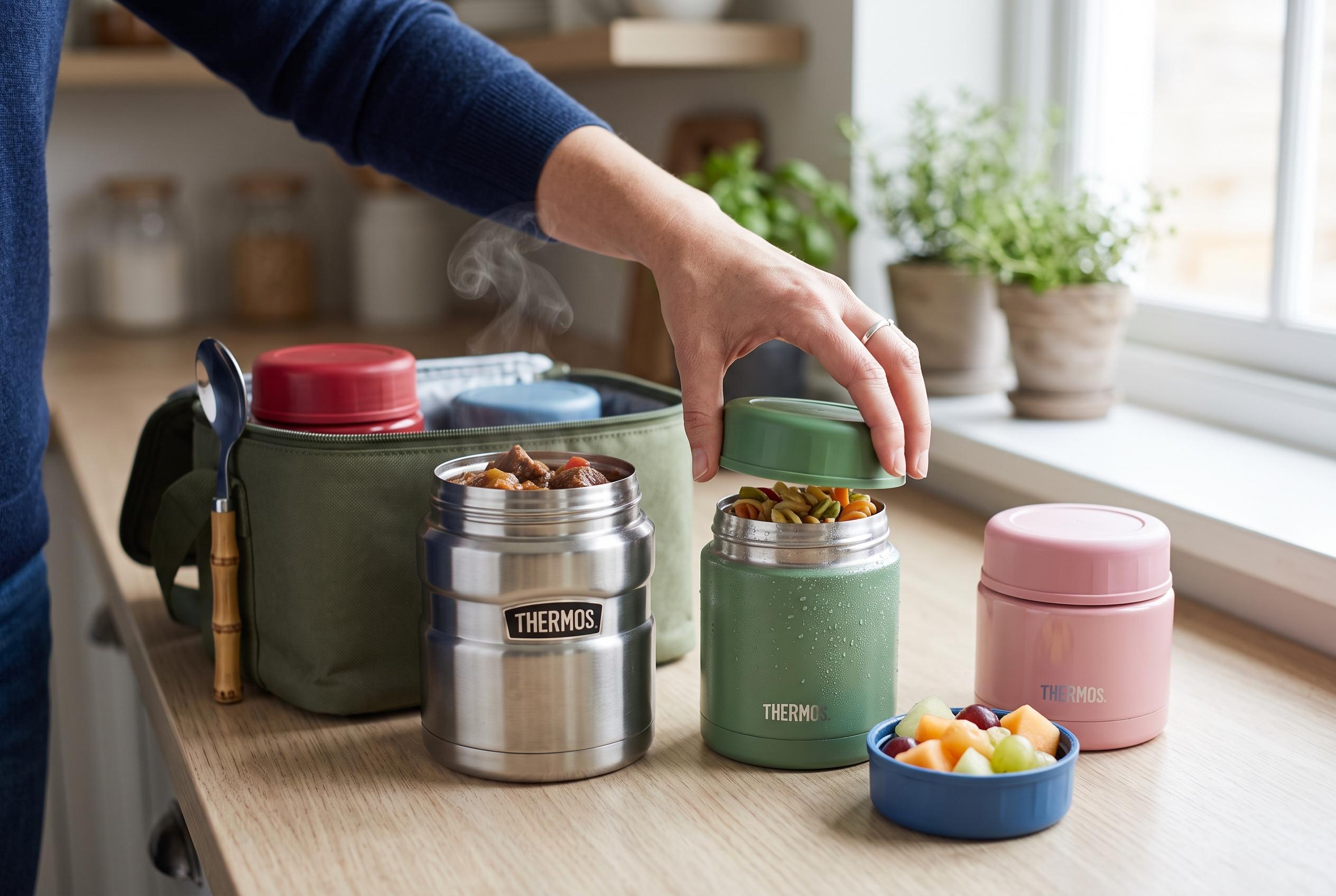

Switching to insulated food jars can revolutionise school lunches by keeping meals warm or cold for hours, offering a wider range of appealing options and reducing waste and frustration.
If a carefully packed sandwich keeps coming back home squashed, warm and untouched, it may be time to rethink the school lunch routine. An insulated food jar can make that easier by opening up options far beyond bread: last night’s pasta, soup, fried rice, porridge or a chilled yoghurt bowl can all work well if the jar is chosen and packed properly.
The main decision is size. Thermos says its 10oz FUNtainer jar is built for smaller portions and keeps hot food hot for up to 5 hours, while the 16oz version is designed for larger school lunches and retains heat for up to 7 hours. The larger jar also keeps cold food cold for up to 9 hours. In practical terms, a smaller jar suits younger children and snacks, a mid-size option works for many primary school lunches, and a larger jar is better for teenagers or anyone with a bigger appetite.
Food safety matters just as much as the recipe. The USDA says perishable food should be kept out of the temperature “danger zone” between 40F and 140F for too long, and should be kept cold during transit or hot until lunchtime. It also advises refrigerating chilled food promptly and making sure hot food is thoroughly reheated before packing. For school lunches, that means preheating the jar with boiling water for hot meals, pre-chilling it for cold meals and avoiding lukewarm food that sits too long at room temperature.
That opens the door to lunches children may actually eat. Hot options include macaroni cheese, fried rice, butter chicken and rice, meatballs with pasta, shepherd’s pie in layers, pea and ham soup, baked beans and cheese, or roast vegetables with gravy. Breakfast-style meals can work too, such as porridge with banana or mini pancakes with fruit. For warmer weather, cold jars suit yoghurt and granola, rice salad, tuna pasta salad, a deconstructed sushi bowl, hummus with vegetable sticks or a thick smoothie bowl.
The best choice is usually not the most ambitious one. It is the food your child already likes at home, packed in a jar that fits their lunch bag and that they can open by themselves. Start with a few dependable meals, keep crunchy toppings separate and use leftovers sensibly. For many families, that is enough to cut down on wasted food and make the school lunch routine a little less frustrating.
Disclaimer: This content is for informational purposes only and is not intended to be a substitute for professional medical judgment, advice, diagnosis, or treatment.