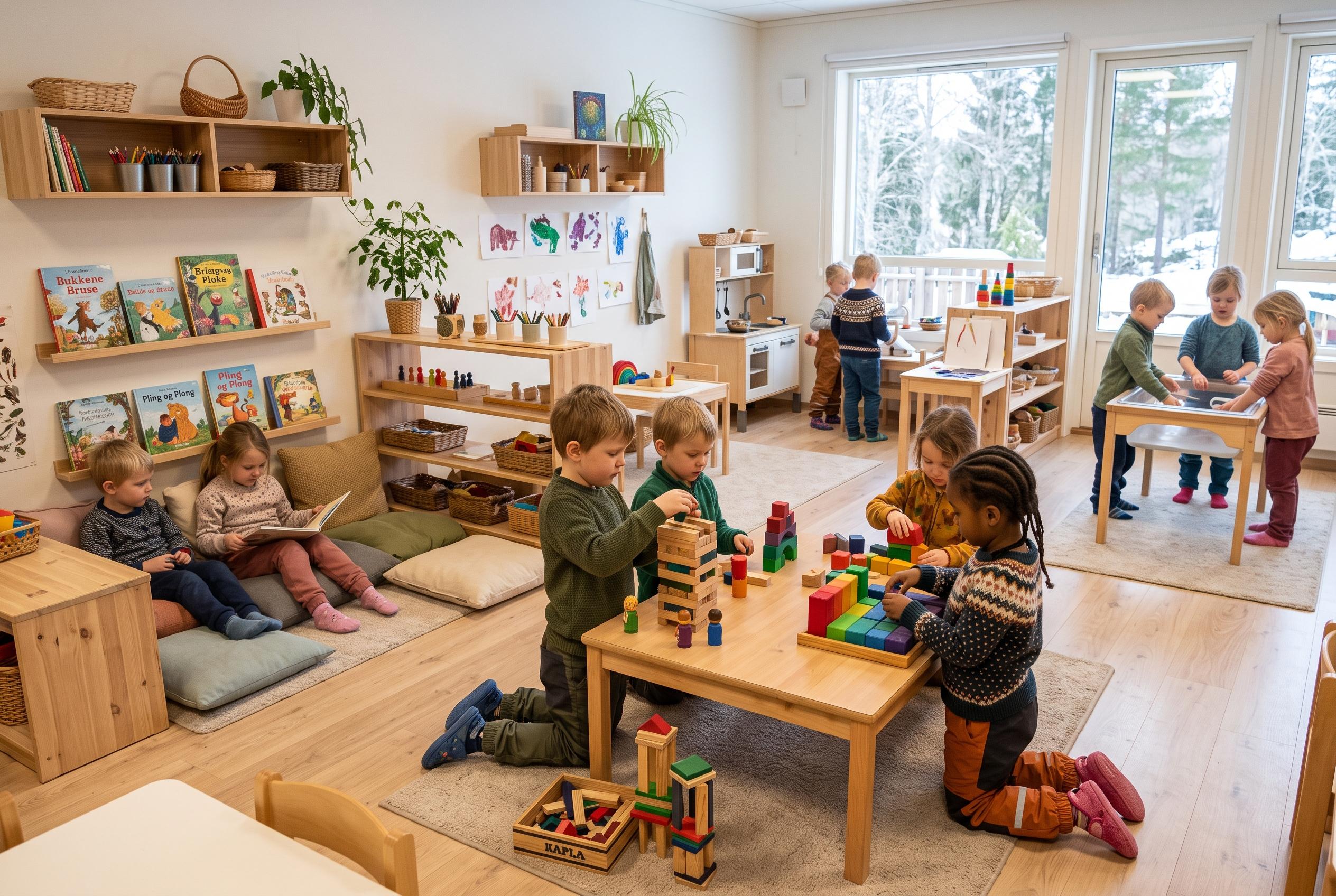

A new Norwegian school review calls for less theory, more play, and flexible curricula in early education to address underperformance and enhance student engagement, but faces funding and staffing challenges.
Norway’s latest school review argues that the country has tried to fix weak educational results with the wrong tools. Presented at Arendalsuka on Tuesday, the report pushes for a less theory-heavy early school day and a stronger emphasis on play, practical work and basic skills for the youngest pupils. The broad idea is simple: if children are to learn more, they may need a school day that feels less like a drill and more like a place to explore, move and make sense of what they are taught.
The most striking proposal is a new model for first and second grade. Rather than keeping the current subject split intact, the panel wants to loosen the timetable and give teachers more freedom to adapt lessons to the group in front of them. Systematic teaching in reading, writing, arithmetic and language would remain, but it would sit alongside more play-based learning and more room for rest and movement. In effect, the report is trying to reconcile two ideas that are often set against each other: more joy in school and better results from school.
To make that possible, the committee also proposes folding 12 hours of after-school care into the compulsory school day. That would not mean 12 extra teaching hours. Instead, the time would be used for play, breaks and recovery. It is an attractive idea in one sense, because most young pupils already spend long days in organised care. But it also raises a practical question about family flexibility, since attendance would become mandatory for more of the day.
The report’s bigger weakness may be staffing, not philosophy. Norway already faces pressure in its schools and municipalities are under financial strain. The panel itself acknowledges that its plans would cost just over 4 billion kroner, or roughly 3% more for schools. It also warns against further cuts to school budgets as local authorities face fewer children and more older residents. That makes the proposal ambitious, but also vulnerable unless the state is willing to pay and the labour market can supply the people needed to carry it out.
The committee also wants more practical and aesthetic subjects, including music, food and health, with a modest increase in hours from grades 3 to 7. It argues that schools should be more demanding about teacher qualifications and far less reliant on unqualified staff, which it describes as a serious weakness in the system. There is also support for keeping the teacher staffing rule in place while a new resource norm is studied, setting aside 1 billion kroner for more time for contact teachers, strengthening mentoring for new teachers and keeping printed books in classrooms. In a wider debate about Norwegian schooling, some education voices have warned that basic skills are slipping, while teacher representatives say reforms will fail unless teachers are given enough planning time and proper staffing. The committee’s answer is that the direction of travel matters as much as the details. The hard part is turning a compelling vision into something schools can actually afford and staff.
Disclaimer: This content is for informational purposes only and is not intended to be a substitute for professional medical judgment, advice, diagnosis, or treatment.