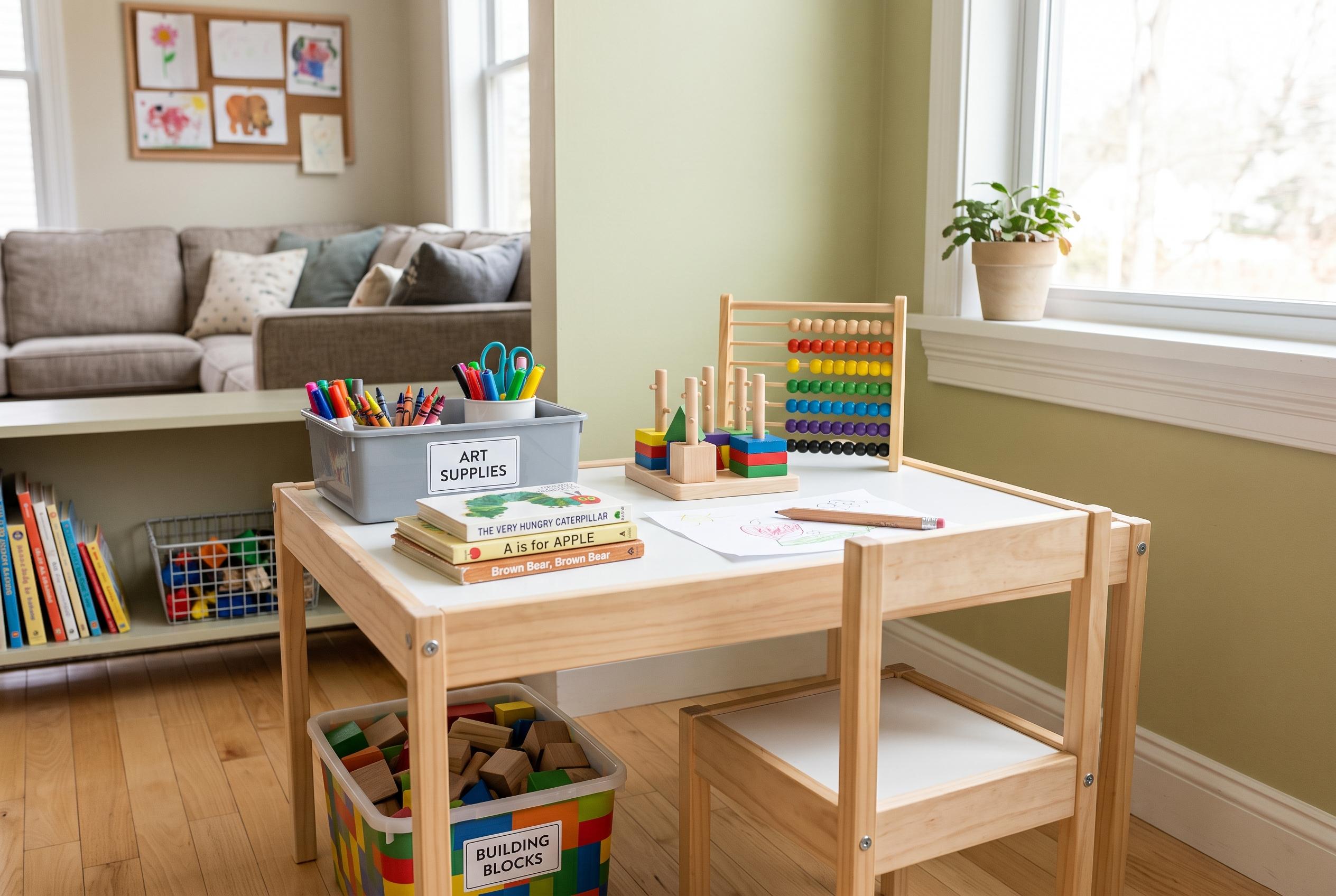

Practical and inexpensive home learning stations, tailored to children’s age and interests, can transform routine study time into engaging, independent learning experiences, fostering confidence and curiosity.
Creating learning stations at home can feel more elaborate than it is. In practice, it often begins with a table, a shelf or a corner of a room and a few everyday items arranged with intention. The appeal is simple: a child is given a place to read, sort, build, draw or experiment, and that physical cue helps turn ordinary study time into something more focused and purposeful.
The idea works because children respond to routine and environment. According to guidance on home learning spaces from a range of education and parenting sources, a dedicated nook can encourage concentration, independence and confidence without requiring a separate room or expensive furniture. When materials are visible, labelled and easy to return, children are more likely to manage them on their own, and that sense of ownership can make learning feel less like a chore and more like a habit.
A practical setup does not need to be complicated. Seven stations cover most family needs: a reading nook with books and soft lighting, a maths table with counters and flashcards, a writing desk with paper and pencils, a science bin with hands-on discovery tools, an art and fine-motor corner, a calm-down space for sensory regulation and a technology station for typing or educational apps. Home learning guides from several education websites also recommend using child-sized furniture, open baskets and clearly marked containers so children can move through activities with minimal help.
Age matters too. Younger children usually do best with low shelves, sturdy materials and short tasks, while older pupils can handle longer, more research-heavy work and better-equipped technology zones. For homes with more than one child, colour-coding supplies can prevent arguments and make clean-up easier. Educators who adapt classroom-centre methods for the home also stress the value of making each space visually distinct so children know what belongs where and what kind of work is expected in each area.
The stations become more engaging when they follow a theme. A week built around the human body, for example, can give the science area a clear purpose and provide a reason to rotate in new books, diagrams and experiments. Other families use a display wall to show finished work, a tactic several home-learning guides say can boost motivation and help children see their progress.
Cost need not be a barrier. Shoeboxes can become sorting trays, jars can hold pencils and a baking tray can stand in for a magnetic board. Community swap groups, thrift shops and libraries are all useful sources for inexpensive materials, and some libraries lend more than books, including STEM kits and manipulatives. Home organisation advice also suggests starting with what is already available before buying anything new, then adding durable items that can serve multiple purposes.
Digital tools can help keep the system running smoothly. A shared calendar can track rotations, printed checklists can remind children what to do at each stop and a basic spreadsheet can help parents follow progress over time. At the same time, several experts on home learning caution against letting screens replace hands-on work. The best setups use technology to support the routine, not to dominate it.
What matters most is consistency, not perfection. A visual timer, a bell or a favourite song can signal when it is time to move on. Supplies can be refreshed every few weeks, and children can help decide what works and what does not. Families that begin with a few simple zones often find that the routine gradually becomes second nature, turning a small part of the home into a dependable place for curiosity, practice and calm.
Disclaimer: This content is for informational purposes only and is not intended to be a substitute for professional medical judgment, advice, diagnosis, or treatment.