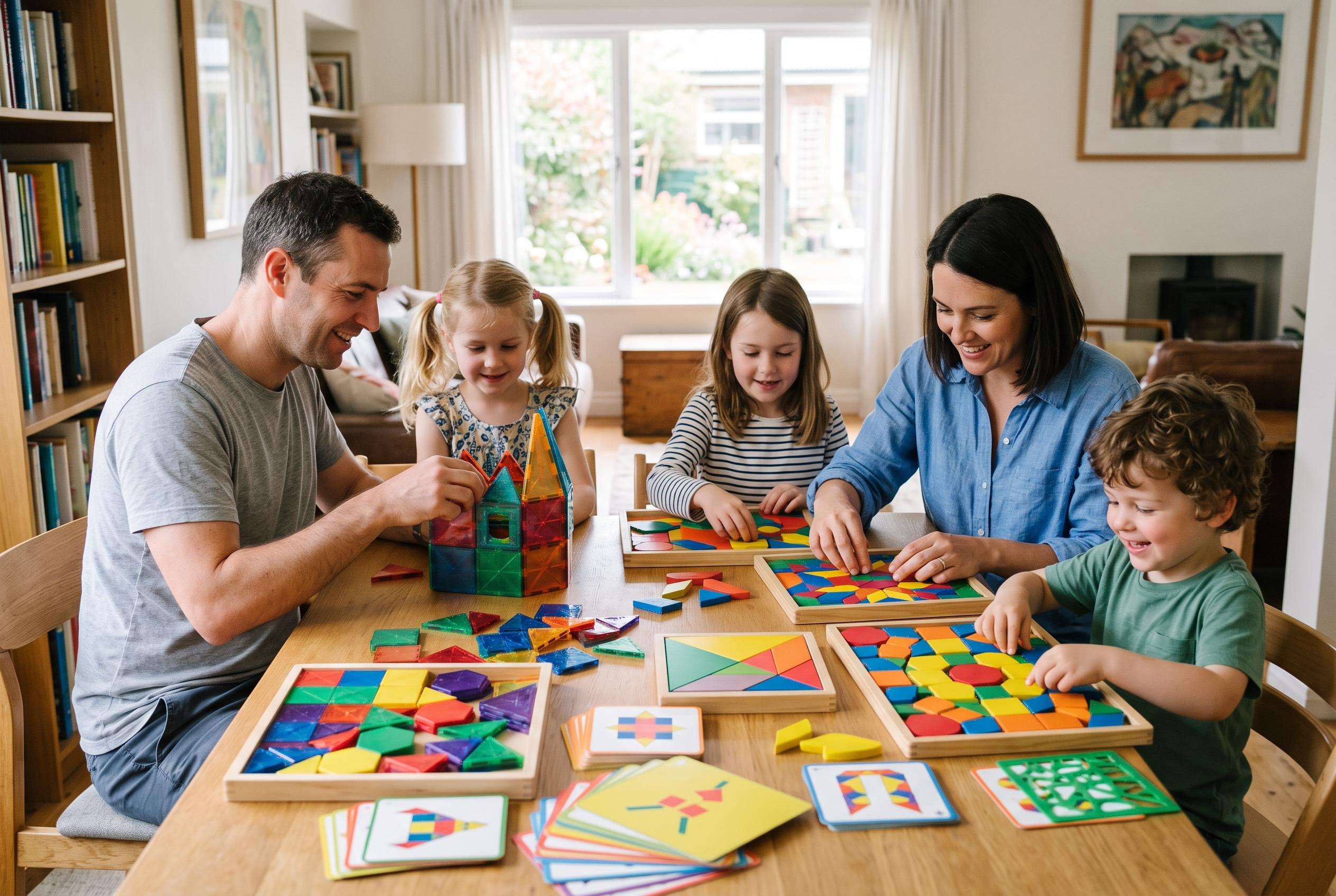

Families are embracing geometric crafts that combine tactile play with early STEM skills, fostering pattern recognition, spatial awareness, and creative expression in children across various age groups.
Geometric crafts are having a strong moment with families because they do more than keep children occupied. Activities built around circles, triangles, squares and other simple forms can help young children notice patterns, build shape vocabulary and develop early spatial thinking, which education resources say is a key foundation for later mathematics. Early years guides from curriculum and teaching organisations also stress that children learn best when they can handle shapes, move them around and explore how they fit together.
That is why the most appealing trends this year tend to combine clean lines with tactile materials and a little creative freedom. Paper collage remains one of the easiest entry points for toddlers and pre-schoolers, especially when adults prepare the pieces in advance. Tape-resist painting adds a satisfying reveal and works well for children who enjoy a more visual, layered process. Sponge printing offers a low-mess route into repeating patterns, while origami-style animals can suit older children who are ready for step-by-step instructions.
For families looking to push a little further, tessellation stencils and 3D paper sculptures offer a stronger bridge between art and mathematical thinking. Repeating patterns can introduce the idea that shapes can cover a surface without gaps, while folded paper nets make the jump from flat to solid forms easier to understand. Himmeli-inspired structures and other geometric builds also tap into the broader trend for handmade decor with a structured, minimalist look.
String art and similar line-based projects add another layer by asking children to count sides, notice angles and work on hand-eye coordination. With younger children, foam boards and large yarn are a safer starting point than nails and small pins. The result is usually decorative enough to keep on display, which matters in a craft culture that increasingly values items children are proud to show off.
The wider craft market helps explain why these projects are catching on. Search interest in paint party kits and girls’ night crafts has risen sharply, while many people are turning to do-it-yourself gifts and memory-keeping projects as a way to save money and make presents feel more personal. That broader shift has also supported a boom in beginner-friendly kits and online-inspired hobbies, from glass painting to visible mending and scrap-based textile work.
For parents, the choice comes down to age, attention span and the amount of help they want to provide. Collage and stamping tend to work best for 2-year-olds and up, while origami and 3D constructions usually suit children closer to 5 or 6. The most important factor is not perfection but engagement: when children start spotting shapes in ordinary objects, the craft has done its job.
Disclaimer: This content is for informational purposes only and is not intended to be a substitute for professional medical judgment, advice, diagnosis, or treatment.