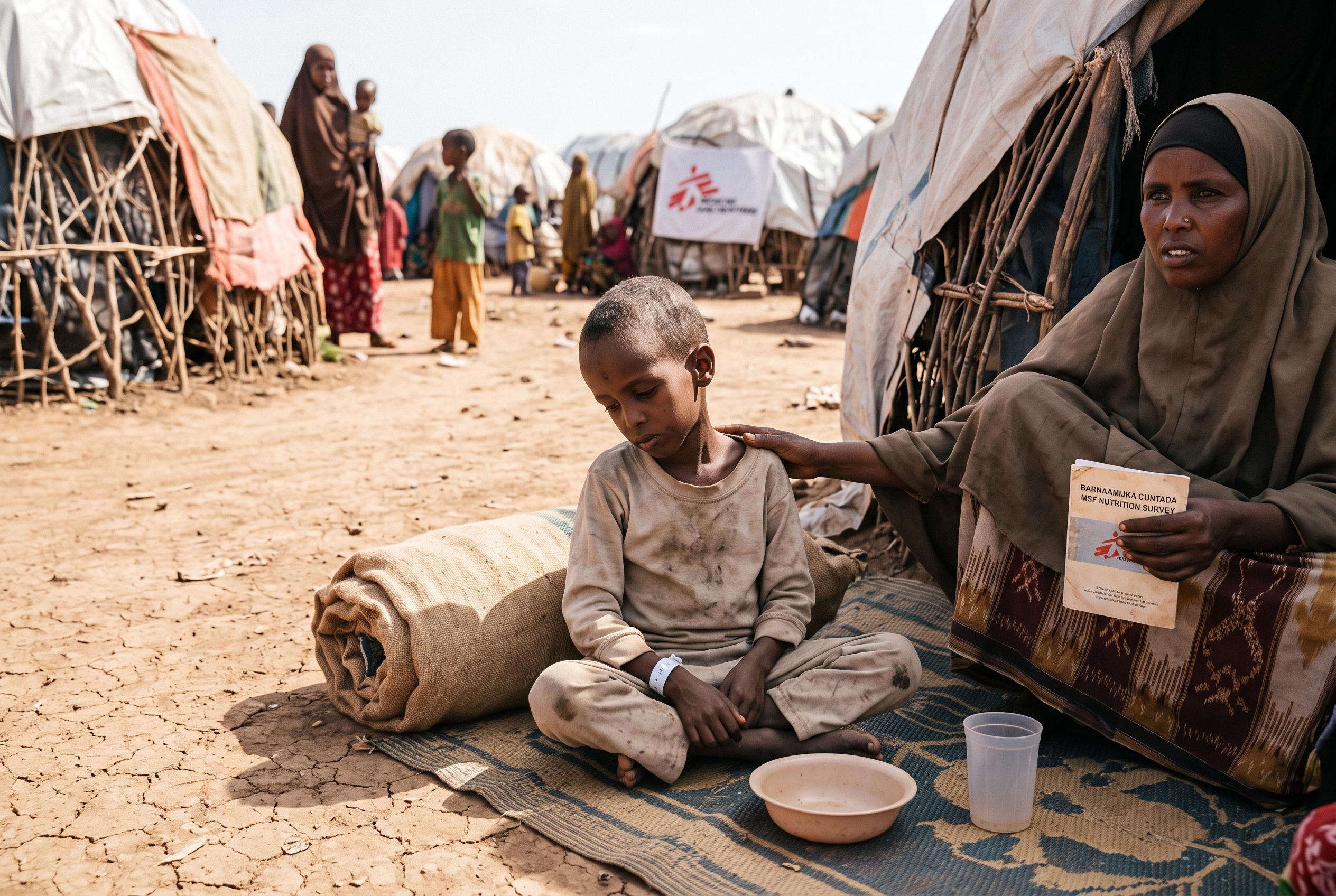

A recent MSF survey reveals alarming levels of acute malnutrition among children in Baidoa’s displacement sites, signalling an urgent need for enhanced international aid amid worsening drought and disease outbreaks.
Médecins Sans Frontières says children in displacement sites in Baidoa, in south-west Somalia, are facing levels of hunger so severe that one in two screened was found to be acutely malnourished, while one in four was severely malnourished. The aid agency described the findings from its July survey as evidence of an emergency already beyond critical.
The survey covered 888 households across 14 displacement sites in Baidoa and found that many families are surviving on just one meal a day, with only a tiny share able to manage three meals. MSF said its own routine screening in the area had already shown acute malnutrition affecting about half of children under 5 since the start of the year.
The findings come as Somalia enters another lean period after repeated failed rains, with drought stripping families of food, water, crops and livestock. The World Health Organization said in March that 6.5 million people were facing high levels of acute food insecurity, while the World Food Programme and UNICEF have warned that roughly 1.8 million to 1.9 million children are expected to suffer acute malnutrition in 2026, including nearly half a million at risk of the most severe form.
MSF said the burden is especially heavy on women and children, who make up the vast majority of people forced from their homes by drought. The UN said in the first three months of 2026 more than half a million people were displaced in Somalia, with drought driving nine in 10 of those movements.
The organisation said admissions to its outpatient nutrition services in Baidoa had more than doubled compared with the same period last year, while inpatient care has also risen sharply. It has expanded one facility from 50 to 150 beds and is trucking safe water to displacement sites, but said medical care alone cannot keep pace with the scale of need.
Disease is adding to the crisis. MSF said it has treated about 2,500 measles cases in Baidoa since January, well above last year’s total, while diphtheria is also spreading where vaccination coverage remains patchy. It said more than 2,600 pregnant and breastfeeding women have been admitted for malnutrition support in the past two months, raising concerns for newborns as well as mothers.
The aid group criticised major donors, including the United Kingdom and the United States, for reducing support as humanitarian needs rise. Somalia’s aid response plan has been cut by 40% in 2026 and was less than one-third funded by July, according to MSF, which warned that the squeeze is weakening already fragile health services.
MSF is urging a larger, better coordinated emergency response, with more inpatient beds, more staff, reliable supplies of therapeutic food and medicines, and stronger vaccination campaigns to reach communities that have been missed. “The world cannot wait for a famine declaration before acting,” Allara Ali, the group’s Somalia project coordinator, said in a statement. “Action is needed now to prevent loss of lives.”
Disclaimer: This content is for informational purposes only and is not intended to be a substitute for professional medical judgment, advice, diagnosis, or treatment.