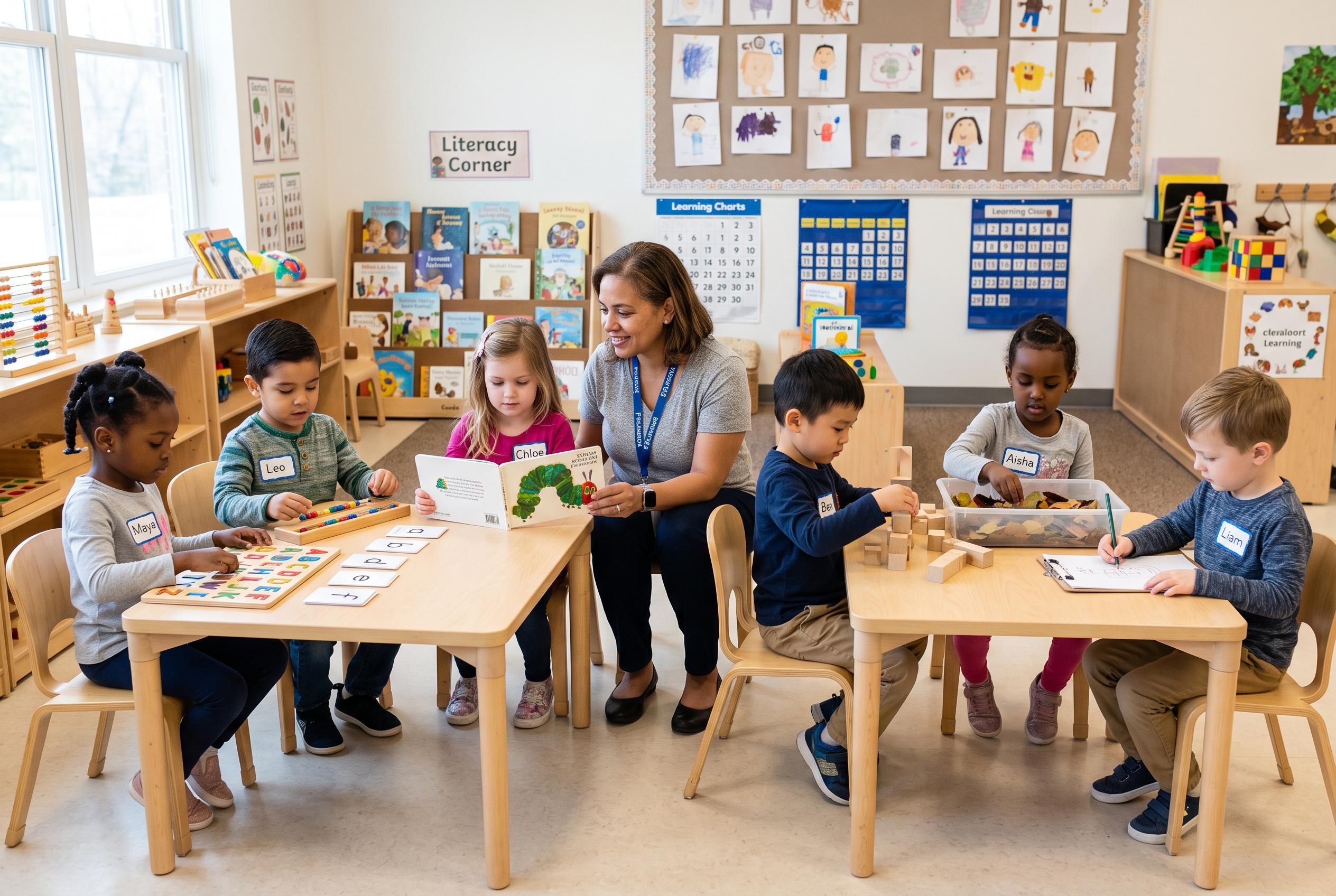

A 20-year study in Florida reveals that children attending public school pre-kindergarten outperform peers in later academic achievement, highlighting the importance of teacher qualifications and curriculum quality.
Researchers in Florida say children who attend public school pre-kindergarten may carry academic advantages well into their teenage years, according to a long-running study that tracked Miami-Dade County students from third grade through high school. The Florida International University-led project followed about 400,000 students over 20 years and found that those who attended public school pre-K4 scored better on standardised tests and achieved stronger grades than peers who spent their early years in family-based childcare. The university said the findings add weight to arguments that early classroom instruction can shape later performance.
The study compared public school pre-K with centre-based daycare and home-based childcare programmes that were part of the Early Learning Coalition. While all of the settings met minimum requirements, the researchers said teacher qualifications appeared to be a key difference, with public school pre-K the only option that required teachers to hold a college degree. George Mason University led the research, which was overseen by Charles Bleiker, an associate professor at FIU. Bleiker said the results challenge the view that early education is interchangeable and suggested that better-trained teachers and stronger curricula may matter more than critics claim.
The findings fit into a broader, sometimes mixed, body of research on pre-K. A study of Texas’s targeted public pre-kindergarten programme found gains in maths and reading, along with lower rates of grade retention and special education placement. But other research has found that early academic boosts can fade by first grade, while behavioural effects linger, and that long-term benefits often depend on programme quality. One analysis of public pre-K programmes concluded that stronger results were most evident when quality was higher, particularly in disadvantaged districts.
Bleiker said the Miami data also point to the value of classroom routines and social preparation before children enter kindergarten. He argued that children who are introduced earlier to structured school settings may adapt more easily later, and that teachers with training in development and classroom management are better equipped to handle behaviour issues. The study’s large Hispanic sample, drawn from a county where Hispanic residents make up a substantial share of the population, gives the research unusual reach, according to FIU. Bleiker now uses the findings to shape curriculum interventions and early maths programmes, while also urging parents to look for stable staffing, visit centres and check local quality ratings before enrolling a child.
Disclaimer: This content is for informational purposes only and is not intended to be a substitute for professional medical judgment, advice, diagnosis, or treatment.