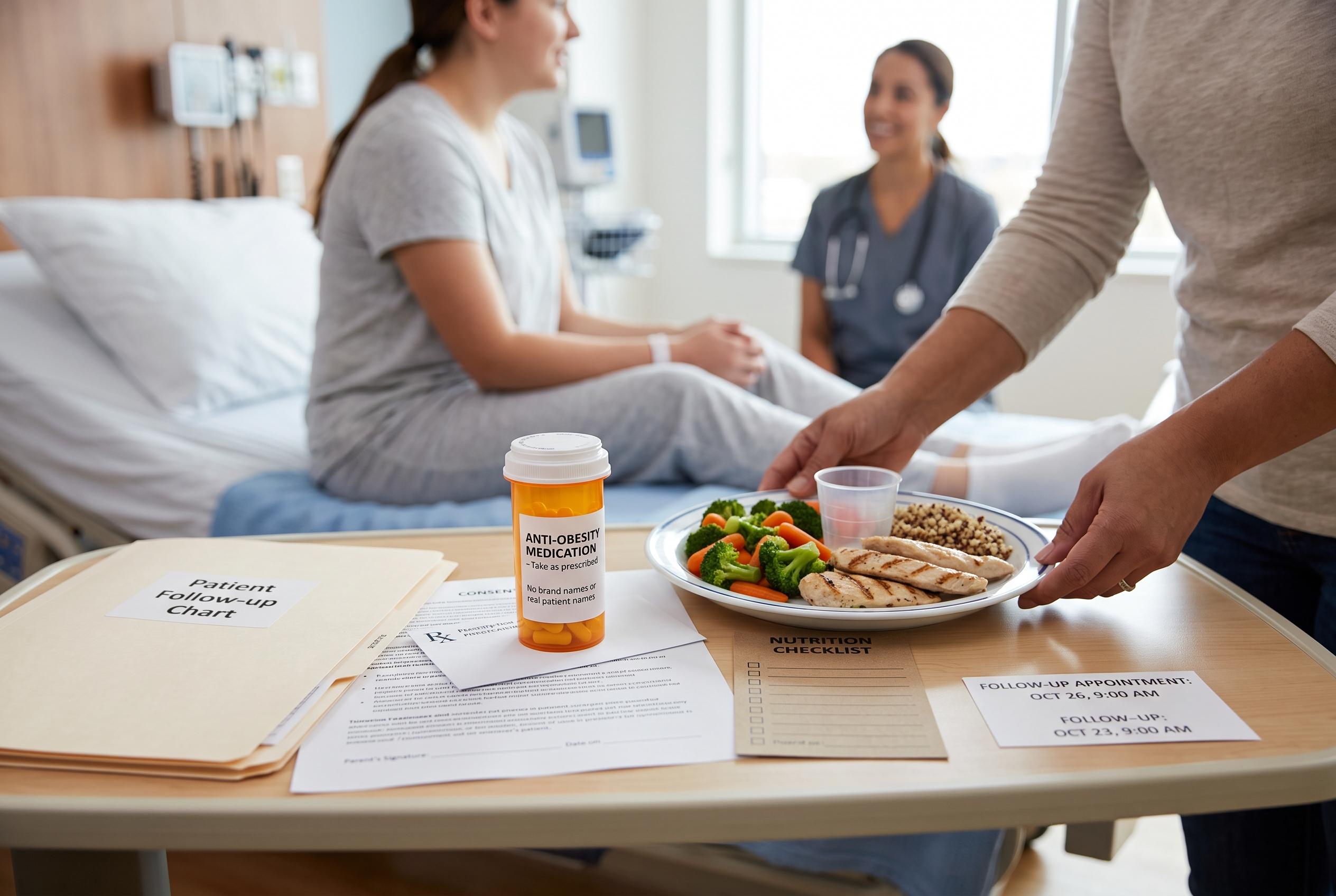

Restarting anti-obesity medication shortly after sleeve gastrectomy in adolescents and young adults leads to greater weight loss and improved eating behaviours, without increasing complications, new research suggests.
Restarting obesity medication soon after sleeve gastrectomy appears to improve weight-loss results in adolescents and young adults, according to a research letter published in JAMA Surgery and reported by HealthDay. In a study of 99 patients aged 7 to 20 who had the procedure between November 2023 and February 2026, those who resumed treatment a median of 1 month after surgery lost more weight over 12 months than those treated with surgery alone.
The analysis found that 53 of the patients restarted medication, most often the same class they had used before surgery. Doctors also tended to simplify treatment after the operation, with fewer young people needing more than one anti-obesity drug. During the first 6 months, weight loss was broadly similar in both groups, but by 12 months the early-restart group had a greater fall in body mass index and a larger reduction in excess BMI, a measure used to show how far a patient is above a healthy range.
The study also reported better eating-behaviour scores at 12 months among those who restarted medication early, including lower hunger ratings. Importantly, the researchers found no meaningful difference between the groups in postoperative complications, including biliary problems requiring gallbladder removal, hospital readmissions, emergency department visits or repeat operations. Alaina P. Vidmar of Children’s Hospital Los Angeles said in a statement that “Bariatric surgery is the most durable and effective treatment for severe obesity, but for youth with severe disease, we need a multimodal approach, which means combining medication and surgery over the lifespan.”
The findings fit a broader body of evidence suggesting GLP-1 receptor agonists can be useful after bariatric surgery, rather than only before it. A systematic review and meta-analysis published on PubMed Central found the drugs were associated with additional weight loss and better blood sugar control after surgery, while another multicentre retrospective study found that conversion to Roux-en-Y gastric bypass produced more weight loss than weekly injectable GLP-1 medicines in adults with insufficient response after sleeve gastrectomy. Separate retrospective data also suggest GLP-1 drugs can help people who regain weight or do not lose enough after bariatric surgery.
Disclaimer: This content is for informational purposes only and is not intended to be a substitute for professional medical judgment, advice, diagnosis, or treatment.