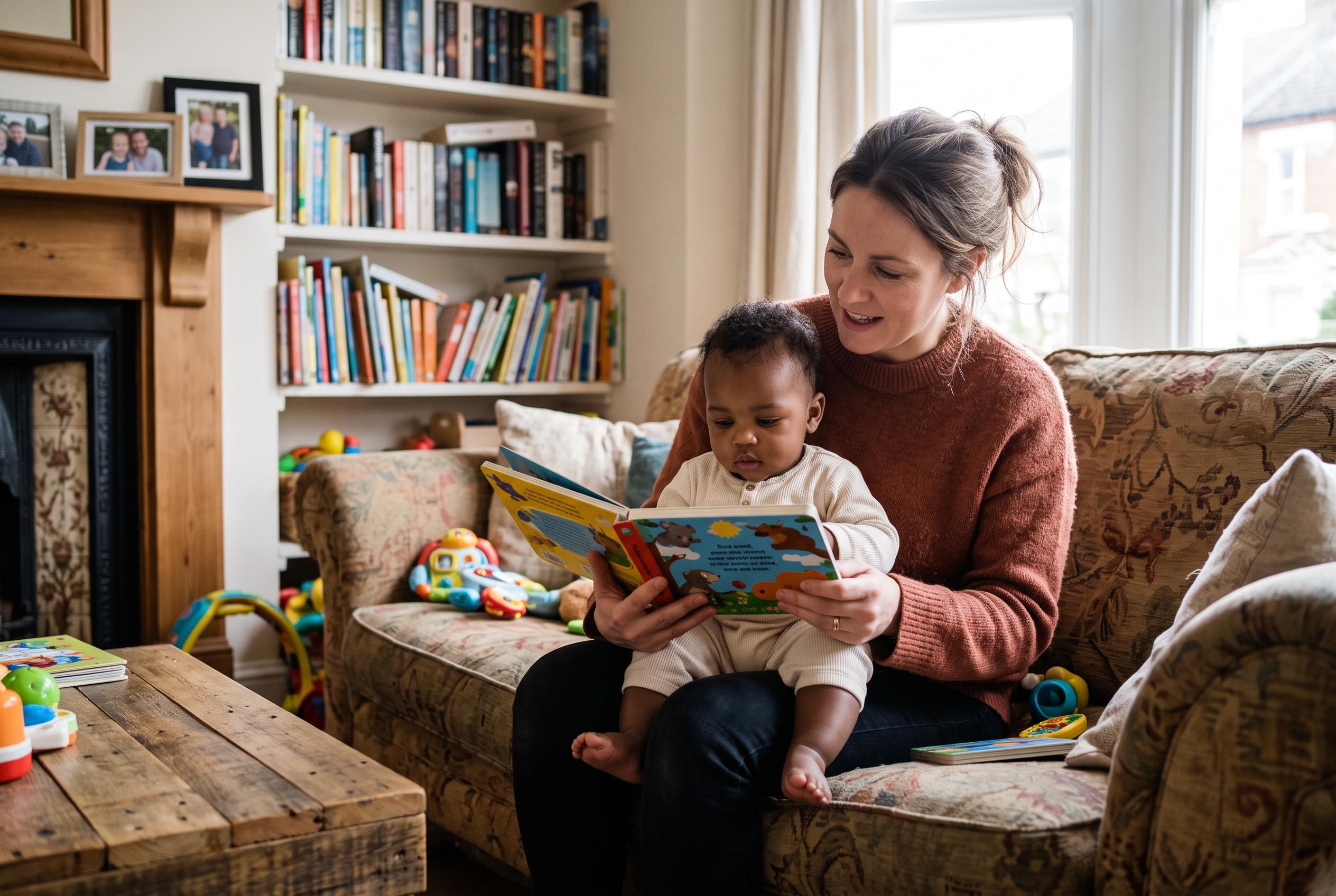

A new study highlights how stress originating from birth families and adoptive households influences children’s growth through different mechanisms, emphasising the complex interplay of genetics and environment in adoption.
A study of adopted children suggests that stress in the birth family and stress in the home can shape development through different pathways, with birth mother life stress linked to poorer adolescent effortful control and adoptive fathers’ stressful life events associated with flatter cortisol rhythms in early childhood. Researchers writing in PLOS One used data from the Early Growth and Development Study, a long-running adoption project that follows birth and adoptive families, to separate inherited and prenatal influences from postnatal rearing effects. The work adds to a growing body of adoption research showing that children’s stress regulation cannot be understood by looking at one parent or one environment alone.
The findings are notable because they point to distinct roles for birth and adoptive parents. According to the study, birth mother life stress was associated with weaker effortful control in adolescence, a trait that covers attention, impulse control and emotion regulation. By contrast, neither adoptive mothers’ nor adoptive fathers’ stressful life events predicted effortful control directly. Among adoptive parents, only fathers’ stress was tied to flatter wake-to-bedtime cortisol slopes, a pattern usually interpreted as altered activity in the body’s stress system. The expected mediation model, in which cortisol would explain the link between parental stress and effortful control, did not hold up.
The results fit with earlier adoption research showing that parental stress and child stress physiology can interact in complicated ways. A 2012 adoption study found that child evening cortisol moderated the effects of parental depressive symptoms on behaviour, suggesting that stress biology can shape how family risk is expressed. Other work in internationally adopted children has shown that parental reflective functioning can protect against socio-emotional difficulties while parenting stress partly explains why some families struggle more than others. Together, these findings suggest that adoption studies are especially useful for separating inherited vulnerability from the effects of caregiving after placement.
The Early Growth and Development Study, launched in 2003, was designed to examine exactly these kinds of family processes across birth and adoptive households. Earlier reporting on the project has also underlined how children can influence parents, including in ways that reflect the child’s genetic make-up. In the new analysis, the authors argue that parental stress is not a single influence but a set of related forces: birth parent stress may shape offspring through genetic and prenatal pathways, while adoptive parent stress appears more likely to affect children through the day-to-day rearing environment, especially when it comes to fathers’ links with stress sensitivity.
Disclaimer: This content is for informational purposes only and is not intended to be a substitute for professional medical judgment, advice, diagnosis, or treatment.