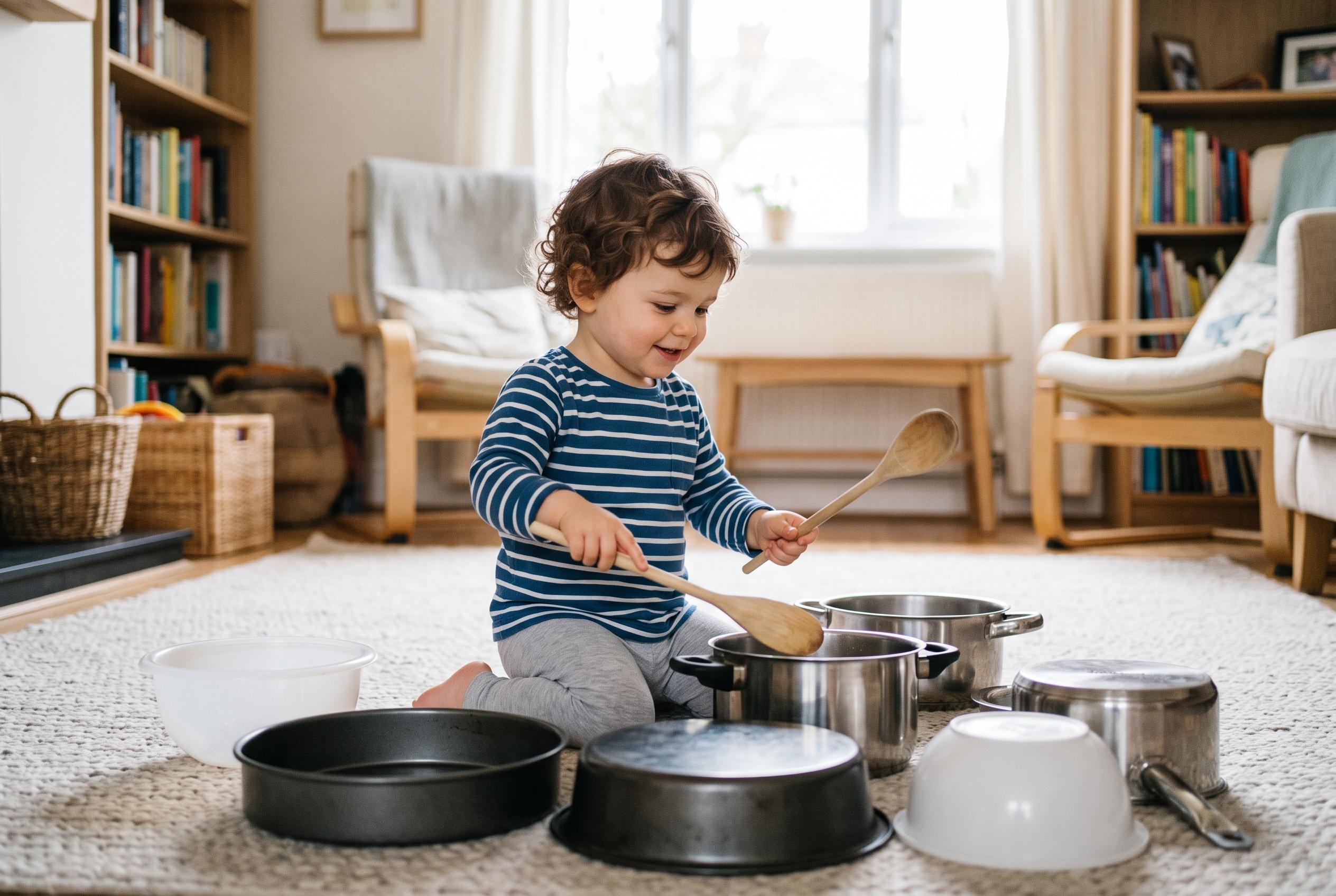

Experts emphasise that fostering a child’s natural curiosity and participation in music through simple, screen-free play and household instruments lays vital foundations for future musical learning, even before formal lessons begin.
Children often show an interest in music long before they are ready for formal tuition. They sing the same refrain again and again, tap out rhythms on a table or dance as soon as a tune begins. According to guides from MakingMusicFun.net and My Music Workshop, that early curiosity is best met with play, movement and simple sound-making rather than immediate instruction.
The key distinction is between liking music and being prepared to learn it in a structured way. Formal lessons usually require a child to sit still, follow directions, repeat movements and absorb new concepts step by step. For many preschool-aged children, that can arrive too soon. Screen-free musical play fills the gap by letting children explore rhythm, pitch and volume without having to get anything “right”.
That kind of exploration can start with the simplest household items. Esplanade suggests turning everyday objects into instruments, while ReConnect Families encourages parents to build music-rich environments that do not depend on devices. A spoon, a bowl or a box can become a drum, and children can compare sounds that are high or low, loud or soft, fast or slow.
The point is not performance but participation. Making Music Fun and My Music Workshop both stress that young children learn best when music feels active and immediate. An energetic child may want to march, clap or stomp, while another may prefer to sit quietly and experiment with sound. Either way, the child is not just hearing music but making it.
Simple instruments can help lower the barrier further. One example is a steel tongue drum with notes arranged in a clear sequence, which makes it easier for a child to connect action and sound. That sort of design can give beginners an accessible route into melody without removing the freedom to improvise. A child can invent a rhythm one moment and try to follow a tune the next.
Familiar songs can be especially motivating. When a child hears the opening notes of a well-known melody emerge from their own playing, the connection between experimentation and music becomes tangible. That small success can encourage another attempt and give early musical play a sense of purpose. It also helps explain why parents should think beyond whether a child is ready for “real lessons” and consider whether the instrument itself is inviting enough to sustain curiosity.
Music does not have to rely on instruments at all. Care.com recommends call-and-response games, rhythm copying and movement activities, while SingaporeMotherhood highlights storytime and animal-themed songs as easy ways to make music interactive. An adult can clap a short pattern and ask a child to repeat it, then swap roles. A picture book can also become musical if different sounds are assigned to characters, footsteps or moments of suspense.
Over time, those small experiences can build confidence and readiness. A child who has spent time moving to music, copying beats, inventing sounds and recognising a simple melody is already learning the foundations of musical thought. Lessons may come later, but the groundwork is often laid much earlier, in the ordinary moments when music is treated as something to explore rather than something to get correct.
Disclaimer: This content is for informational purposes only and is not intended to be a substitute for professional medical judgment, advice, diagnosis, or treatment.