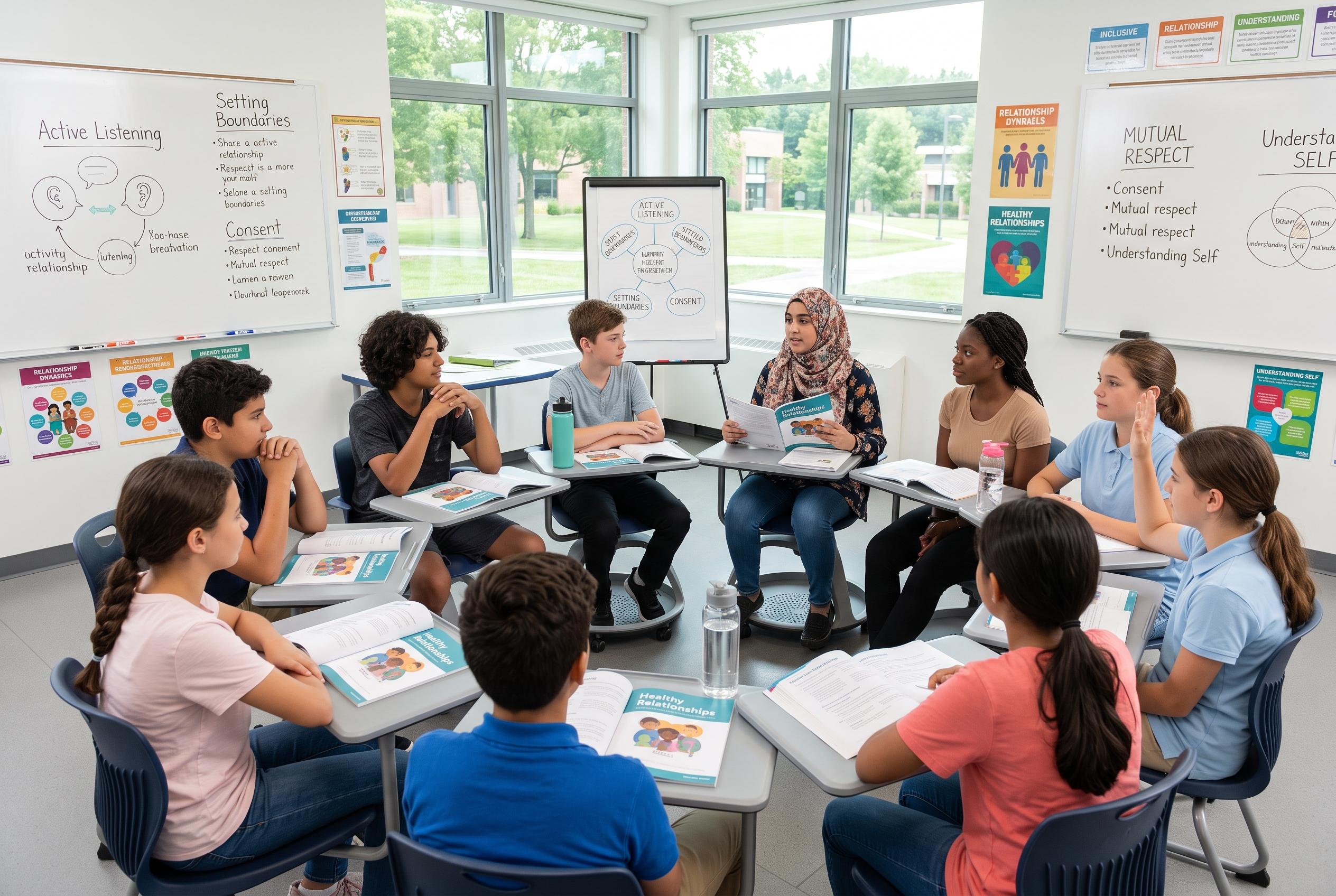

As US schools reopen, experts stress the importance of comprehensive, age-appropriate sex education that promotes communication, consent, and self-identity, challenging narrow risk-focused approaches and advocating for holistic well-being in policy and practice.
As schools across the US settle back into the autumn term, sex education is once again heading into the cultural crossfire. But the usual argument, centred on whether lessons reduce teenage pregnancy or sexually transmitted infections, captures only part of what young people say they need. Many adolescents are looking for something broader: help with relationships, communication, consent, decision-making and the confidence to navigate sex and identity without shame.
That wider view is not just a matter of preference. The United Nations Population Fund has said comprehensive sexuality education works better than narrow, risk-focused programmes because it addresses gender, power and practical decision-making. Its evaluation found that young people exposed to that approach were more likely to delay sex, use condoms and practise contraception, while also developing more egalitarian views on gender roles. In other words, instruction that builds judgement and agency can also improve the very health outcomes critics often want to protect.
A 2023 meta-analysis in the journal Healthcare reached a similar conclusion, finding that comprehensive sexuality education has measurable effects on cognition and abstinence and should be introduced gradually from childhood through adolescence into adulthood. The researchers argued that sex education works best when it is not a one-off warning session but a sustained, age-appropriate programme that helps young people form a healthier sense of self and make sense of a changing social world.
That broader framework matters especially for Black adolescents, who are often taught about sexuality through the language of risk, surveillance and control rather than support. The article’s author says her own research shows many young people want room to discuss pleasure, identity, misinformation, family expectations and the realities of social media as well as pregnancy and infection. Their point is not simply to receive more facts, but to be helped to use information in ways that fit their values and relationships.
The policy picture remains uneven. According to SIECUS: Sex Ed for Social Change, only seven states earned an A in its 2025 report cards and more than a quarter received an F, with Oregon and Washington among the strongest performers. Those scores reflect whether states support medically accurate, inclusive teaching on contraception, healthy relationships and LGBTQIA+-inclusive instruction. At district level, Seattle Public Schools is cited as an example of a broader model, combining prevention with lessons on consent and communication and giving families a chance to review materials in advance.
The article argues that schools should be judged on more than whether students avoid harm. A better test, it says, is whether they leave sex education able to talk to partners, assess online information, set boundaries and make choices consistent with their own values. Parents, meanwhile, should be kept informed about what is being taught and how material changes by age group, with schools respecting family concerns without allowing the loudest objections to narrow what is available to everyone else. The central message is simple: prevention matters, but well-being is not a luxury extra. It is part of prevention too.
Disclaimer: This content is for informational purposes only and is not intended to be a substitute for professional medical judgment, advice, diagnosis, or treatment.