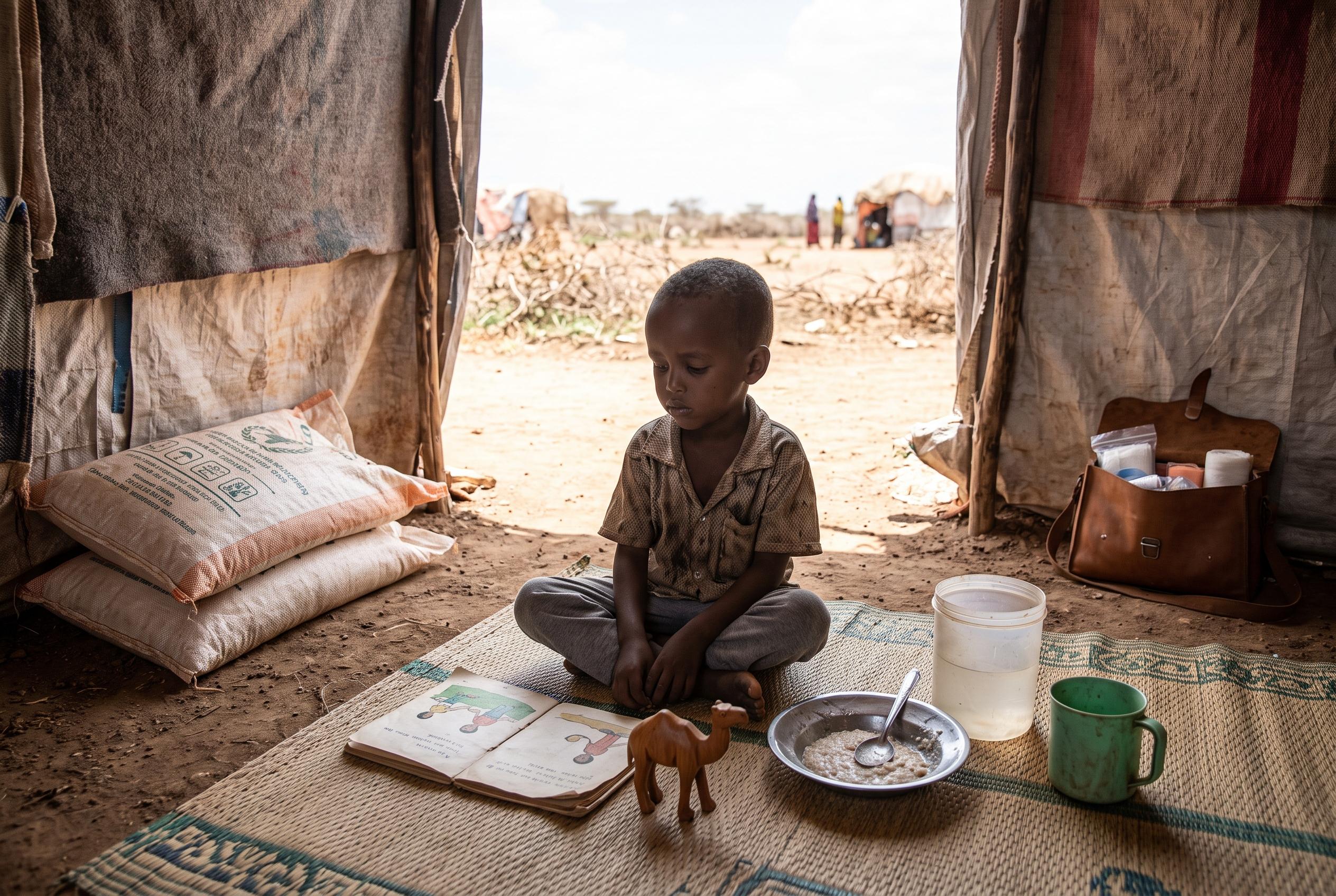

Doctors Without Borders reports alarming levels of acute malnutrition among displaced children in south-west Somalia, driven by drought and declining humanitarian funding, as families struggle with severe food insecurity.
Doctors Without Borders said on Tuesday that malnutrition among displaced children in south-west Somalia has reached alarming levels, with about half of the under-5s screened in Baidoa found to be acutely malnourished. The charity said the crisis has been deepened by drought and a sharp reduction in humanitarian funding, leaving families with few options as food insecurity spreads across one of the country’s hardest-hit regions.
The warnings come as the wider food emergency in Somalia continues to worsen. In February, Somali authorities and UN agencies said nearly 6.5 million people were facing high levels of hunger, with more than 1.8 million children under 5 affected by acute malnutrition. By May, UN agencies including the Food and Agriculture Organization, the UN Office for the Coordination of Humanitarian Affairs, UNICEF and the World Food Programme said 6 million people were facing critical food insecurity between April and June, while about 493,000 children were at risk of severe acute malnutrition.
In Baidoa, one of the main centres for displaced people in the south-west, MSF said it had screened more than 21,000 children since January and found acute malnutrition in around 50% of them. A July survey of 888 households across 14 displacement sites found that only 2% of families could afford three meals a day. Mitchell Sangma, MSF’s medical coordinator, told a press conference in Nairobi that the situation represented a severe humanitarian emergency and said the charity’s facility had expanded from 50 beds to 120 in June as admissions rose.
MSF said the shortage of aid is compounding the crisis, with Somalia’s 2026 humanitarian response plan cut by 40% and still less than one-third funded by July. The organisation said it is being forced to focus on emergency care rather than prevention, feeding a cycle in which children return to treatment after being discharged. Epidemiologist Chenoa Sankar said re-admissions to MSF-backed programmes were above 60%, underscoring how fragile recovery has become for mothers and children trapped between drought, displacement and rising insecurity.
Disclaimer: This content is for informational purposes only and is not intended to be a substitute for professional medical judgment, advice, diagnosis, or treatment.