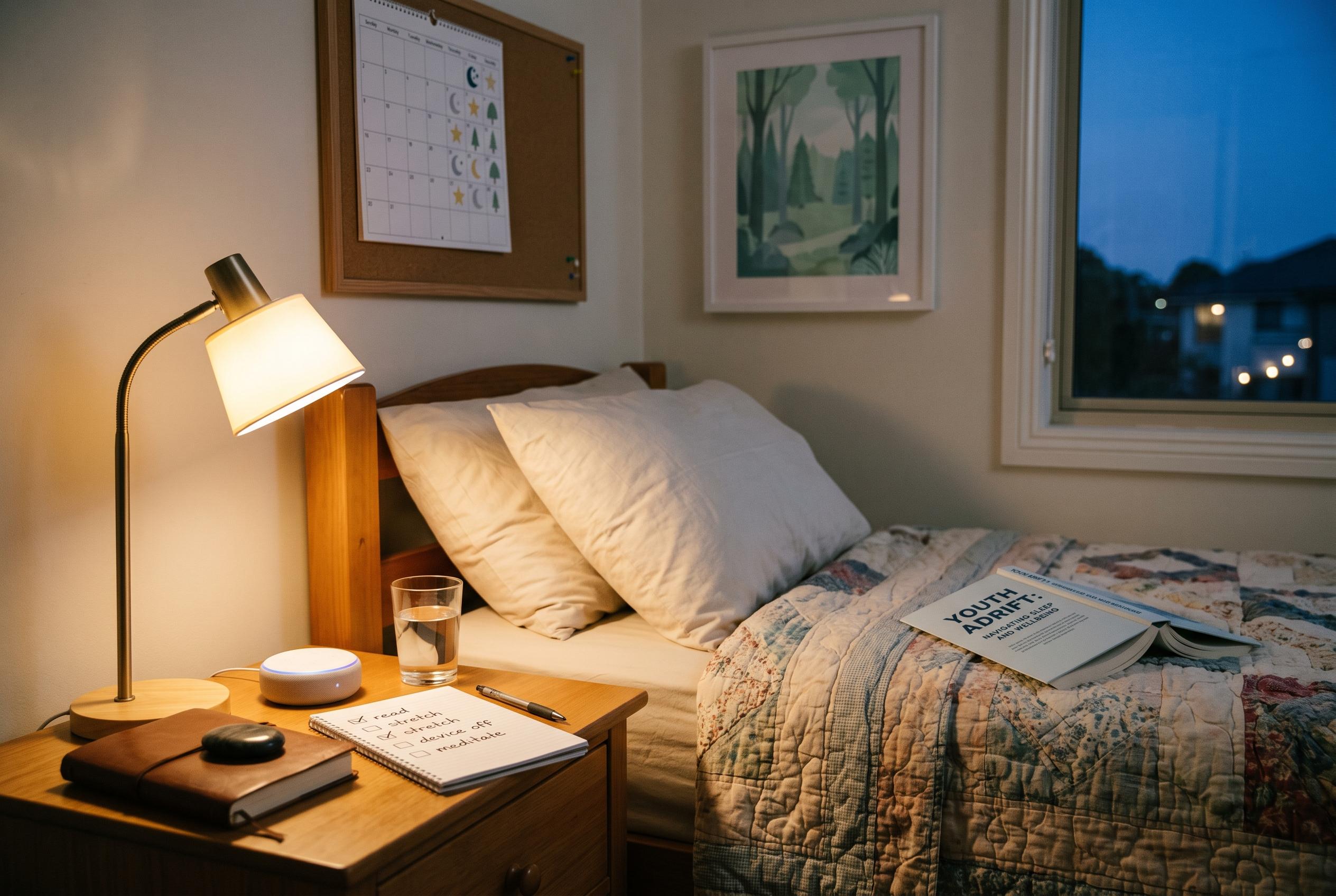

A recent review underscores the need for a biopsychosocial and contextual perspective on adolescent sleep, exposing its links to mental health, trauma, and social pressures, and calling for early interventions.
Adolescent sleep has become a major public health concern, and the review by Stephanie P. Becker, J. M. Langberg and K. C. Byars frames it as more than a matter of tired teenagers. Writing in the Journal of Youth and Adolescence, the authors argue for a biopsychosocial and contextual approach that takes account of biology, mental health, family setting and wider social pressures. They use that framework to introduce a special issue devoted to sleep in adolescence, a period when sleep patterns shift and problems can spill over into mood, school performance and day-to-day adjustment.
The review sits within a wider body of research showing why the issue matters. Studies of adolescent sleep have linked poorer sleep to stress, depression, aggression and later health risks, while other work has shown that sleep duration and sleep quality do not always tell the same story. Researchers have also found that childhood adversity can shape sleep problems well into adolescence and, in some studies, that sleep difficulties may mediate links between maltreatment and later emotional or behavioural difficulties. In that context, the Childhood Trauma Questionnaire short form, developed by David P. Bernstein and colleagues, has become a widely used screening tool for identifying maltreatment histories in both clinical and community samples.
The broader message of the review is that adolescent sleep should be studied as part of a larger developmental system rather than in isolation. That means paying attention to stress, trauma, coping, relationships and environment, not just bedtime habits. It also means recognising that sleep problems may be both a symptom and a driver of poorer mental health, making early identification and intervention especially important during the teenage years.
Disclaimer: This content is for informational purposes only and is not intended to be a substitute for professional medical judgment, advice, diagnosis, or treatment.