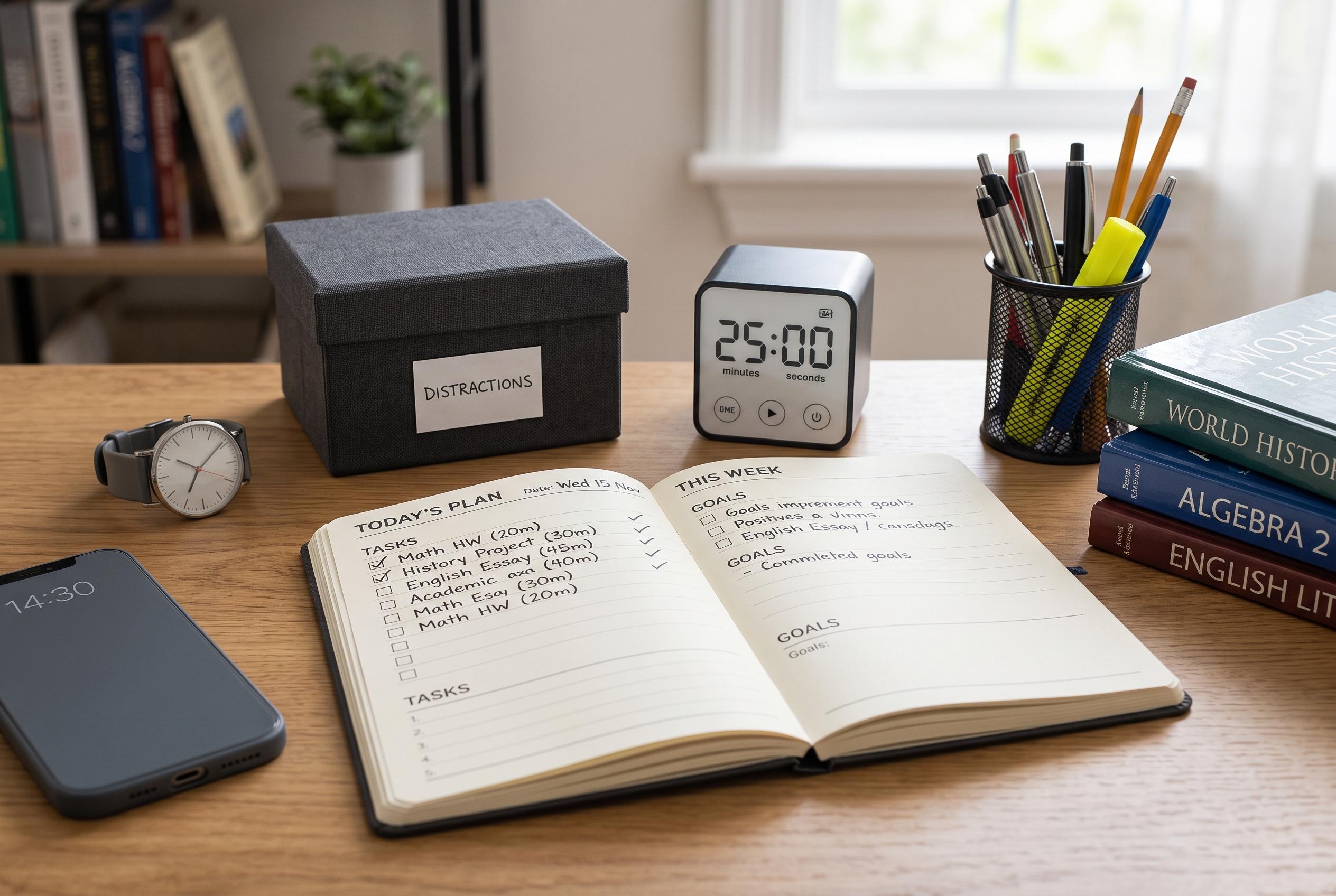

Practical and easy-to-implement techniques at home and school can help teenagers strengthen essential skills like organisation, time management, and self-control, fostering greater independence and reducing stress.
Teenagers who can devote hours to a hobby yet still misplace homework are not unusual. Executive function difficulties affect many young people, particularly those with ADHD, autism, anxiety, learning differences and other neurodevelopmental conditions. These skills cover planning, organisation, time management, memory, self-control and follow-through, all of which become more important during the secondary school years.
Education specialists say the good news is that these abilities can be strengthened. Harvard Graduate School of Education describes executive function as a set of skills that includes goal-setting, planning and monitoring progress, while other guidance for families notes that consistent support at home and school can make a real difference. The emphasis is not on perfection but on building routines that reduce the mental load on a teenager’s day.
Some of the most effective methods are also the simplest. Keeping one planner, whether paper or digital, can prevent information from being scattered across several apps or notebooks. Colour-coding subjects, using visual checklists and setting phone or visual timers can make assignments and routines easier to follow. A shared family calendar, a fixed homework space and a backpack packed the night before can also cut down on morning stress and last-minute scrambles.
Breaking work into smaller stages is another useful approach. A long essay, for example, is easier to manage when it is divided into choosing a topic, gathering research, drafting an outline and completing one section at a time. Teens also tend to benefit from short movement breaks, built-in buffer time between activities and weekly clean-outs of school bags and folders. These habits can improve attention, reduce clutter and make tasks feel less overwhelming.
Experts also stress that support should encourage independence rather than constant prompting. Instead of repeated reminders, parents can ask what comes next, whether the planner has been checked or what the first step should be. That kind of self-monitoring helps teenagers practise judgement and responsibility. Progress often comes gradually, and the most effective system is the one a teen will actually use.
As several learning specialists note, executive function is not fixed at birth. It develops over time and can continue to improve into early adulthood. That means families do not need to overhaul everything at once. Starting with one or two practical habits, and adjusting them as school demands change, may be the most realistic way to help teenagers become more organised, less stressed and increasingly independent.
Disclaimer: This content is for informational purposes only and is not intended to be a substitute for professional medical judgment, advice, diagnosis, or treatment.