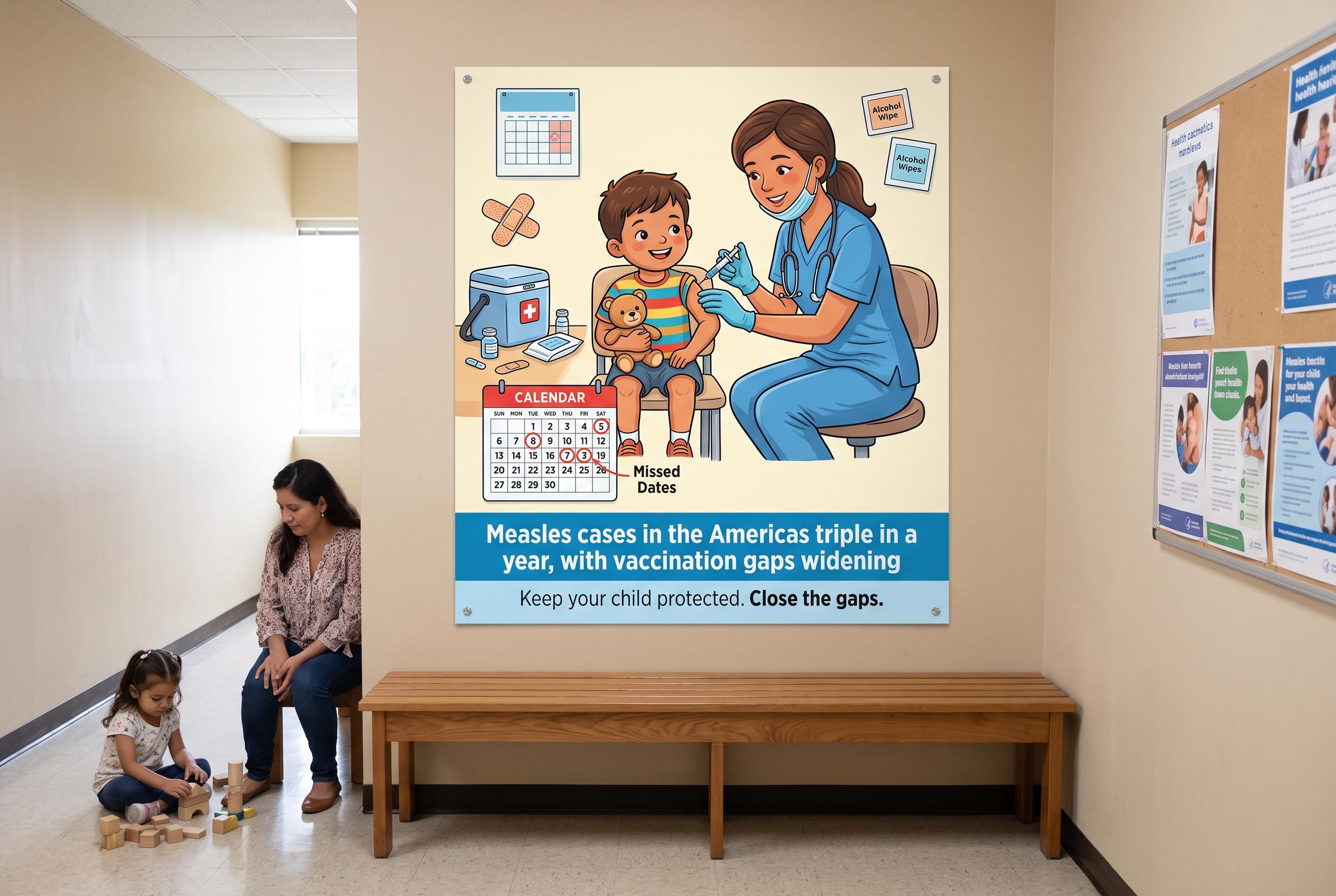

The Pan American Health Organization warns of a sharp rise in measles cases across the Americas, urging countries to close immunisation gaps as the virus spreads among children and unvaccinated populations.
The Pan American Health Organization has urged countries across the Americas to tighten vaccination coverage and disease surveillance as measles cases climb sharply, warning that the public health risk across the region remains very high. In its latest alert, issued on Saturday, the agency said the virus is still moving through multiple countries even as some outbreaks show signs of easing.
By epidemiological week 28 of 2026, which ended on July 18, the region had recorded 47,459 confirmed cases in 16 countries and one territory, along with 44 deaths, according to the Metropoles report. That is more than three times the 15,011 cases and 32 deaths reported in all of 2025. PAHO situation reports released earlier in the year show how quickly the outbreak has escalated, rising from 14,465 cases by week 12 to 22,974 by week 25 before reaching the latest total.
Mexico, Guatemala, the United States and Peru account for most of the infections, with the Metropoles report putting their combined share at about 95% of confirmed cases this year. Earlier PAHO updates identified the same four countries as the main centres of transmission, while also noting that Canada had recorded notable numbers in the first half of the year. The agency has said the outbreak has remained concentrated in some areas, even as the wider regional spread has continued.
PAHO says the virus is hitting children hardest, particularly those aged 1 to 9, with the highest infection rates among infants under 1 year old. Its reports also show that a large majority of confirmed cases are among people who are unvaccinated or whose vaccination status is unknown. The Metropoles report said the combination of low coverage, a growing pool of susceptible people, international travel and large gatherings is helping the disease move between communities and into new areas.
Measles is spread through the air and respiratory droplets and can cause fever, cough, runny nose, conjunctivitis and a rash. In severe cases, it can lead to pneumonia, encephalitis and death. PAHO says the most effective defence remains two doses of vaccine, with 95% coverage needed to stop sustained transmission. Daniel Salas, PAHO’s immunisation manager, said in a statement that every outbreak shows there are still gaps in immunisation that must be addressed urgently. The World Health Organization has also reported 186,168 measles infections globally by July 2026, 12% more than in the same period a year earlier.
Disclaimer: This content is for informational purposes only and is not intended to be a substitute for professional medical judgment, advice, diagnosis, or treatment.