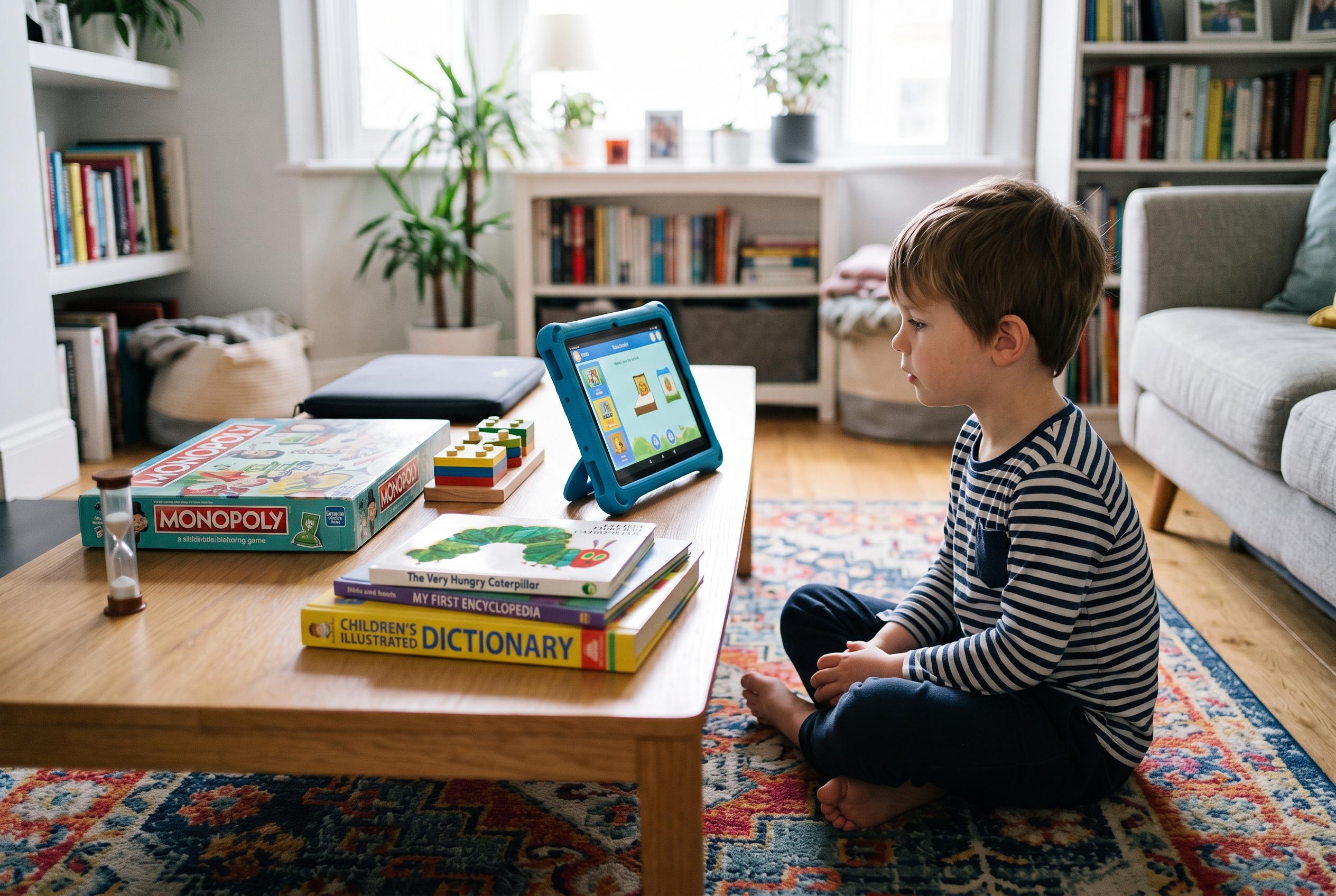

Research indicates UK children spend up to a month annually in front of screens, sparking worries over impact on language, behaviour, and family interactions, with calls for balanced routines and early guidance.
Children in the UK are spending the equivalent of about a month a year looking at screens, according to research cited by WalesOnline, with many parents saying that devices now crowd out time with family and friends. More than half of those surveyed said they worry their child spends too much time on screens, while 57% said technology has become too central to entertainment. Data from University College London also suggests screen habits are forming early, with two-year-olds in England averaging about 2 hours a day in front of screens, well above the World Health Organisation’s recommended limit.
The broader concern is not just the amount of time involved but what it replaces. The UCL study found that heavier screen use in very young children was associated with weaker language development and more emotional and behavioural difficulties, while children from less advantaged homes tended to spend longer on screens than their better-off peers. Government guidance on screen use in under-fives has also been updated in recent years to help parents and carers weigh the benefits and risks of early digital exposure.
Yasmin Shaheen-Zaffar, a creative health practitioner and children’s mental health ambassador at The Principle Trust Children’s Charity, said the most effective way to manage a difficult shutdown is to stay calm and help children regulate first. Speaking to Tenpin, she said parents should acknowledge frustration, prepare children for transitions and prioritise connection before correction so that children feel secure enough to settle.
Shaheen-Zaffar also pointed to four warning signs that screen use may have gone too far: children becoming very upset when devices must be switched off, losing interest in play or creativity, wanting to isolate themselves on devices and letting screens disrupt routines such as meals, homework, sleep or getting ready in the morning. Her advice is not simply to cut screen time, but to make room for other activities that can compete with it, such as movement, creativity and time with other people.
Disclaimer: This content is for informational purposes only and is not intended to be a substitute for professional medical judgment, advice, diagnosis, or treatment.