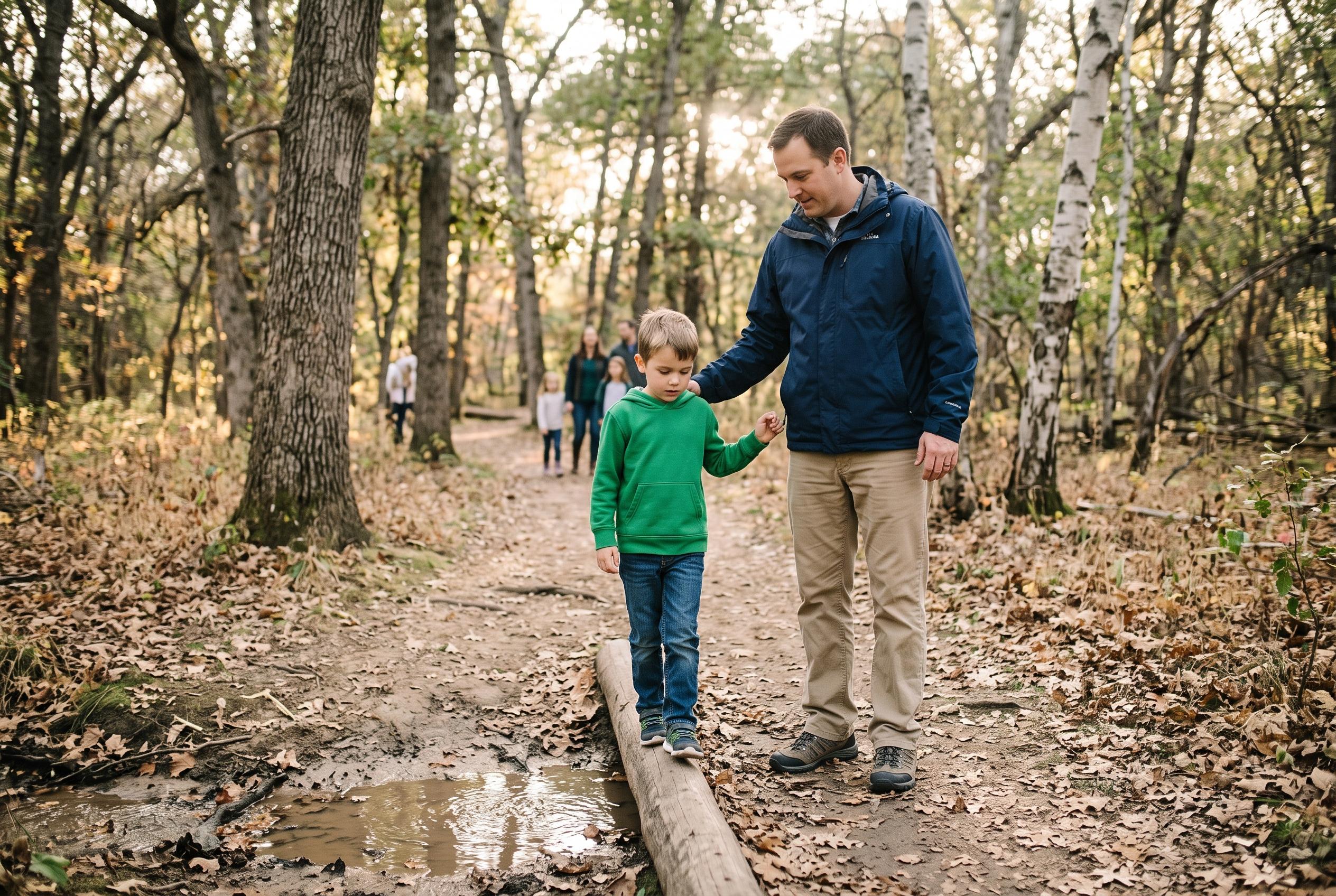

A family trip illustrates how allowing children to confront fears with parental support fosters resilience, modelling courage and trust in everyday life.
Parents often worry that shielding children from fear is an act of care, but sometimes the better lesson is to let them feel the fear and move through it. That was the point of a recent family trip to a theme park, where a child eager to try every ride found confidence on a wooden roller coaster while the adults beside her quietly managed their own nerves. The experience turned a moment of anxiety into one of courage, and it captured a larger truth: children often learn bravery less from what they are told than from what they watch.
That lesson sits close to a familiar biblical theme: fear should not have the final word. But in everyday family life, parents can struggle to live that out consistently. Anxiety tends to present itself as caution, especially when the risk seems avoidable. Yet child-development experts say there is a difference between sensible protection and over-accommodation. HealthyChildren.org, the education arm of the American Academy of Pediatrics, notes that common childhood fears can often be eased when adults respond calmly, talk through the worry and avoid turning ordinary concerns into something larger than they are. The Family Institute similarly warns that stepping in too quickly can preserve the fear rather than relieve it.
One example came during a storm that startled a child enough to bring tears, after lightning struck a tree across the street and the power flickered. Instead of dismissing the fear or feeding it, the parent invited the child to stand on the porch and watch the rain, talk through what was happening and consider the shelter still around them. PBS KIDS for Parents recommends a similar approach: acknowledge the feeling, help children understand what they are afraid of and guide them towards manageable exposure. Over time, that sort of response can turn thunder from a source of dread into something a child can observe with curiosity rather than panic.
The same principle can apply to everyday fears, from bugs to first-day drop-offs to unfamiliar activities. ParentMap says children tend to become more anxious when they repeatedly avoid the things that worry them, while PBS KIDS for Parents emphasises that bravery is not the absence of fear but action in spite of it. Preparation helps too: a child who is nervous about skating, for example, may feel less overwhelmed after practising a fall on a slippery kitchen floor. The broader aim is not to erase fear altogether, but to teach children that fear is not always a stop sign.
Even then, parents will not handle every situation perfectly. The article’s strongest claim is that children need a model of courage, not a flawless one. Adults who can stay steady in front of a child during a frightening moment give them a living example of trust. And when parental strength runs out, the faith message at the heart of the piece is that children can be pointed towards a greater source of steadiness than their parents can provide. In that sense, facing fear becomes less about heroic self-control and more about showing children how courage, humility and trust can coexist.
Disclaimer: This content is for informational purposes only and is not intended to be a substitute for professional medical judgment, advice, diagnosis, or treatment.