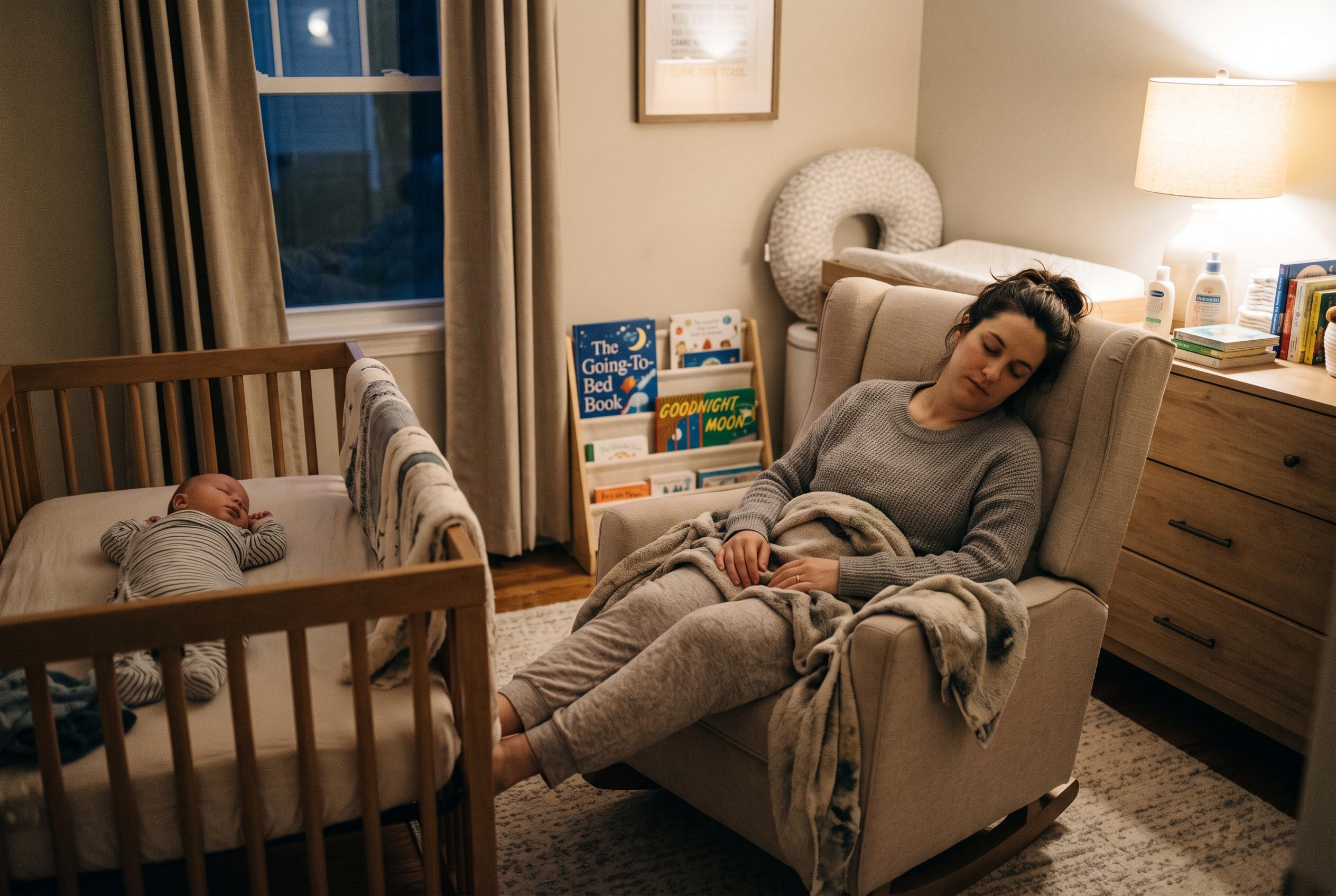

Experts advise new parents to capitalise on their baby’s first nap to rest and improve overall wellbeing, highlighting the benefits of strategic sleep during early parenthood amid rising concerns about sleep deprivation’s impact on mental health.
For many new parents, the first quiet stretch of the morning can feel like a choice between survival and housework. Sleep experts say it is often wiser to choose sleep. Victoria Cuomo, a maternal-child and paediatric nurse educator, says the first nap of the day is frequently the most dependable one, and using that window to rest can make the rest of the day feel more manageable. Research and guidance from the Sleep Foundation also underline that chronic sleep loss in early parenthood can affect mood, judgement and resilience.
The idea is simple: once a baby wakes in the morning, sleep pressure begins to build again. Scott Moore, Michigan medical director at Zarminali Pediatrics, says the first nap usually falls within the first 1 to 2 hours after waking, which makes it easier to predict than later sleep periods. Laura Hunter, co-founder of Moms on Call, says that after a full night and a morning feed, many babies are biologically ready to drift off again before overtiredness sets in.
That matters because sleep deprivation does more than leave parents groggy. The Sleep Foundation says too little sleep can intensify irritability, anxiety and depression. Funke Afolabi-Brown, a sleep medicine physician, has said frequent night wakings for feeding, changing and soothing can worsen emotional strain and create a difficult cycle for families already stretched thin.
Age also shapes how useful the first nap may be. Guidance for infants from the National Association of Paediatric Nurse Practitioners says babies aged 1 to 3 months still sleep in short, irregular stretches, while HealthyChildren.org notes that many babies begin to settle into more predictable daytime routines as they grow. The Canadian Paediatric Society says that by about 4 months, many infants need three naps a day, with the morning nap often among the most reliable.
Practically, the first step is to watch both your baby and the clock. Some infants give clear signs of sleepiness, such as eye rubbing or fussiness; others move from calm to crying quickly. Violet Giannone, a paediatric sleep consultant, recommends paying attention to wake windows, noting that newborns can only stay awake for short periods before they become overstimulated.
The sleep environment matters too. Darker rooms, lower noise and white noise can help signal that it is time to settle, according to paediatric sleep guidance from several children’s health systems. If the nap is the morning one, experts say it is often the best chance for the parent to rest as well, even if that means leaving the laundry or dishes for later.
Safety remains the non-negotiable part of the equation. HealthyChildren.org advises that babies should always sleep on their backs on a firm, flat surface with no soft bedding, and that exhausted parents should avoid dozing with an infant on a sofa or chair. If you are so tired that sleep feels unavoidable, the safest move is to put the baby down first and rest separately.
If sleep does not come, a short period of real rest can still help. Experts commonly recommend guided relaxation, breathing exercises or a few quiet minutes in a dark room. Some parents may find that lying down without trying to perform tasks is enough to reduce the sense of being on edge.
The broader lesson is that this strategy works best when it is backed by support. Child health guidance encourages parents to ask partners, relatives or friends for help, even if it is only for one narrow window. And if exhaustion is paired with intrusive thoughts, panic, ongoing sadness or difficulty functioning, health professionals say it is time to seek help rather than try to push through.
For some families, the first nap will remain the best rest opportunity of the day. For others, a later nap will prove more reliable. Either way, the point is the same: when a baby sleeps, it can be worth using at least part of that time to recover, rather than trying to win the battle with the laundry basket.
Disclaimer: This content is for informational purposes only and is not intended to be a substitute for professional medical judgment, advice, diagnosis, or treatment.