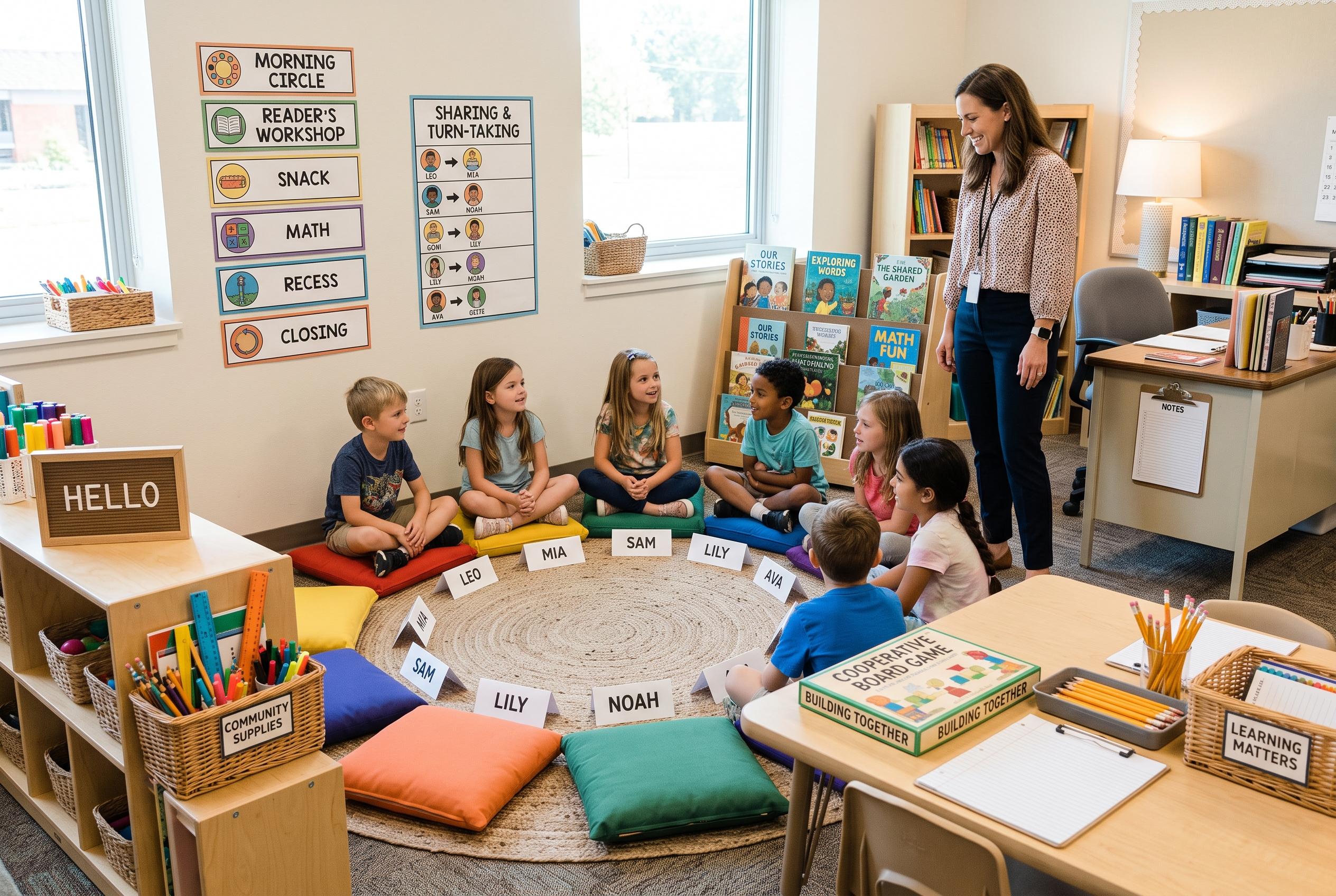

Research shows that prioritising relationship-building and establishing routines in the first five days can foster trust, independence, and community, laying a strong foundation for the academic year ahead.
At the start of a new school year, the first lesson is often not maths or reading but belonging. As one educator puts it, “Kids don’t care about your expectations until they know you care about them. Connection is the foundation everything else stands on.” That idea underpins a growing body of classroom advice: before teachers can ask for focus, independence or high standards, they need to build trust, predictability and a sense of safety.
A practical way to do that is to treat the opening days as a deliberate sequence rather than a scramble. Scholastic suggests beginning with icebreakers and other low-pressure activities that help ease first-day nerves, while McREL recommends using the first day to get to know students and the second to establish norms and routines. Edutopia, meanwhile, stresses that a warm welcome and a well-prepared room can set the tone for the entire year.
The middle of the first week is where those intentions start to become habits. McREL advises teachers to move from relationship-building to clarity around learning goals, while the classroom-management guide from The Education Magazine argues that procedures should be taught explicitly and repeatedly, as if they were academic skills. That means showing students, step by step, how to enter the room, handle materials, transition between tasks and use technology, rather than assuming they already know.
Ownership matters as much as order. One common approach highlighted by Post-it is to have students co-create what the classroom should look, feel and sound like, turning expectations into a shared agreement rather than a set of rules handed down from the front of the room. Other educators recommend classroom jobs, collaborative discussion and shared projects as ways to give pupils a stake in the space they are helping to shape. The result is not just compliance but community.
By the end of the first five days, the goal is not perfection but momentum. Edutopia and McREL both argue that teachers should use the closing day to check what is working, reinforce routines and encourage as much student independence as the room can sustain. That final reflection is important because it reminds teachers that the opening week is a foundation, not a finish line. If students leave the first week feeling known, capable and part of something organised, the rest of the year has a far better chance of taking root.
Disclaimer: This content is for informational purposes only and is not intended to be a substitute for professional medical judgment, advice, diagnosis, or treatment.