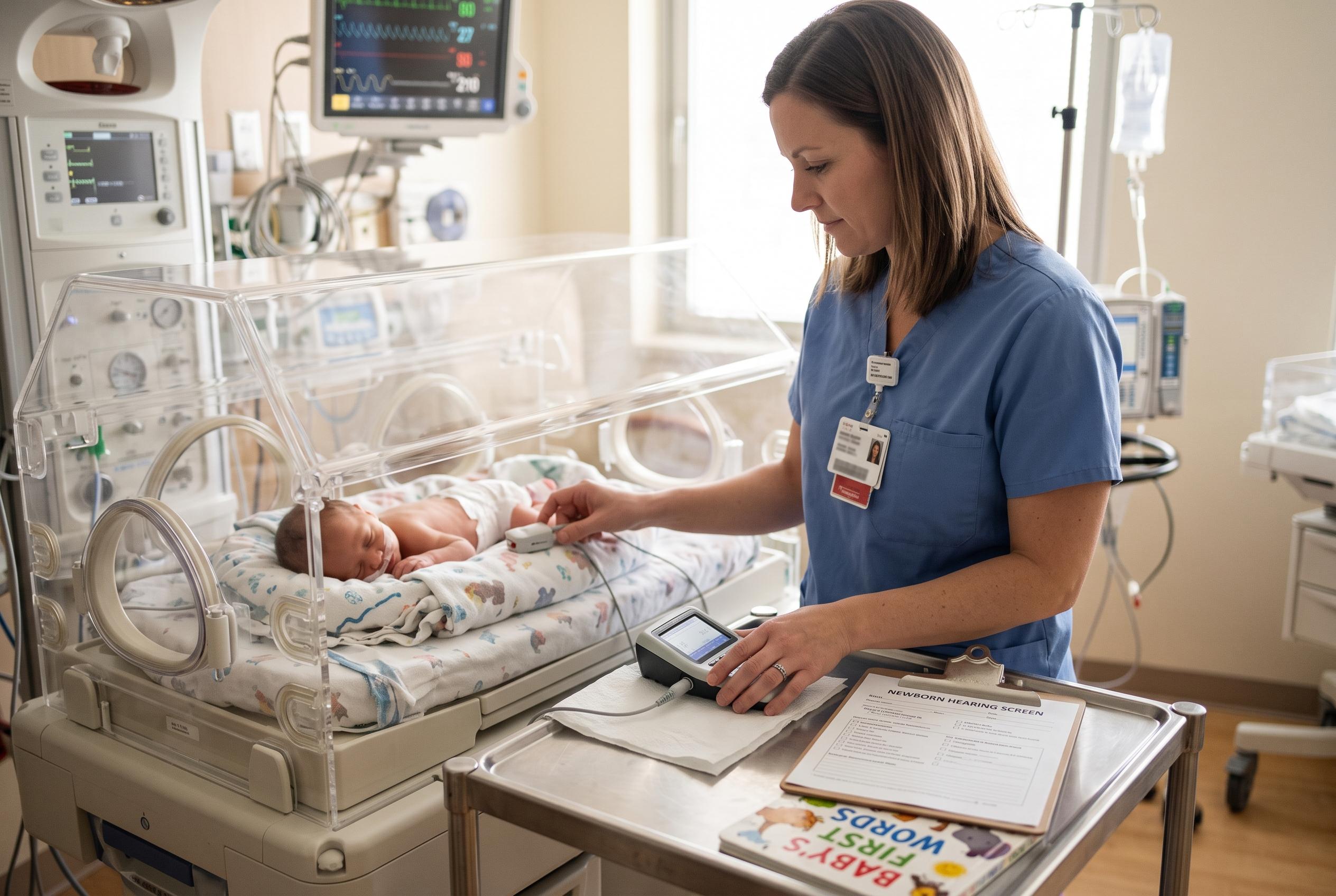

New research suggests that a failed newborn hearing screen in extremely premature infants could serve as an early warning for potential language and cognitive delays by age two, prompting a rethink of follow-up protocols.
A failed newborn hearing screen in extremely premature infants may be more than a signal to check hearing further down the line; it could also help identify babies at higher risk of language and cognitive delays by age 2, according to research published in The Journal of Pediatrics.
The retrospective study reviewed more than 4,800 children born between 2012 and 2021 at 22 to 26 weeks’ gestation or weighing 401g to 1,000g at birth. Of those who completed hearing screening before discharge and later returned for standard developmental follow-up at about 2 years corrected age, 690 did not pass the screening while 4,201 did. Children who did not pass recorded modestly lower language and cognitive scores than those who did, even after adjustment for other factors.
The differences were not large, but they were consistent. In the analysis led by Katsuaki Kojima of Cincinnati Children’s Hospital Medical Centre, a failed screen was linked with lower average language and cognitive scores and with higher odds of scoring below 85 on both measures. The researchers also reported no clear association with early behavioural problems, suggesting the signal was more specific to language and cognition than to broader behaviour at this age.
Experts have long stressed that newborn hearing screening matters because early identification of hearing loss can improve language development and reduce downstream developmental harm. Reviews and clinical summaries published in recent years have concluded that universal screening helps detect permanent hearing loss earlier and can improve outcomes when followed by timely diagnosis and intervention, ideally within the first 6 months of life. Against that backdrop, the new findings suggest that a “did not pass” result in extremely preterm infants may deserve to be treated as a broader developmental warning flag, not only an audiology issue.
The study had limitations, including variation in screening protocols across centres and incomplete confirmatory testing. Even so, the authors argued that a failed newborn hearing screen should be folded into existing follow-up pathways for very premature infants so clinicians can watch language and cognitive development more closely in the early years.
Disclaimer: This content is for informational purposes only and is not intended to be a substitute for professional medical judgment, advice, diagnosis, or treatment.