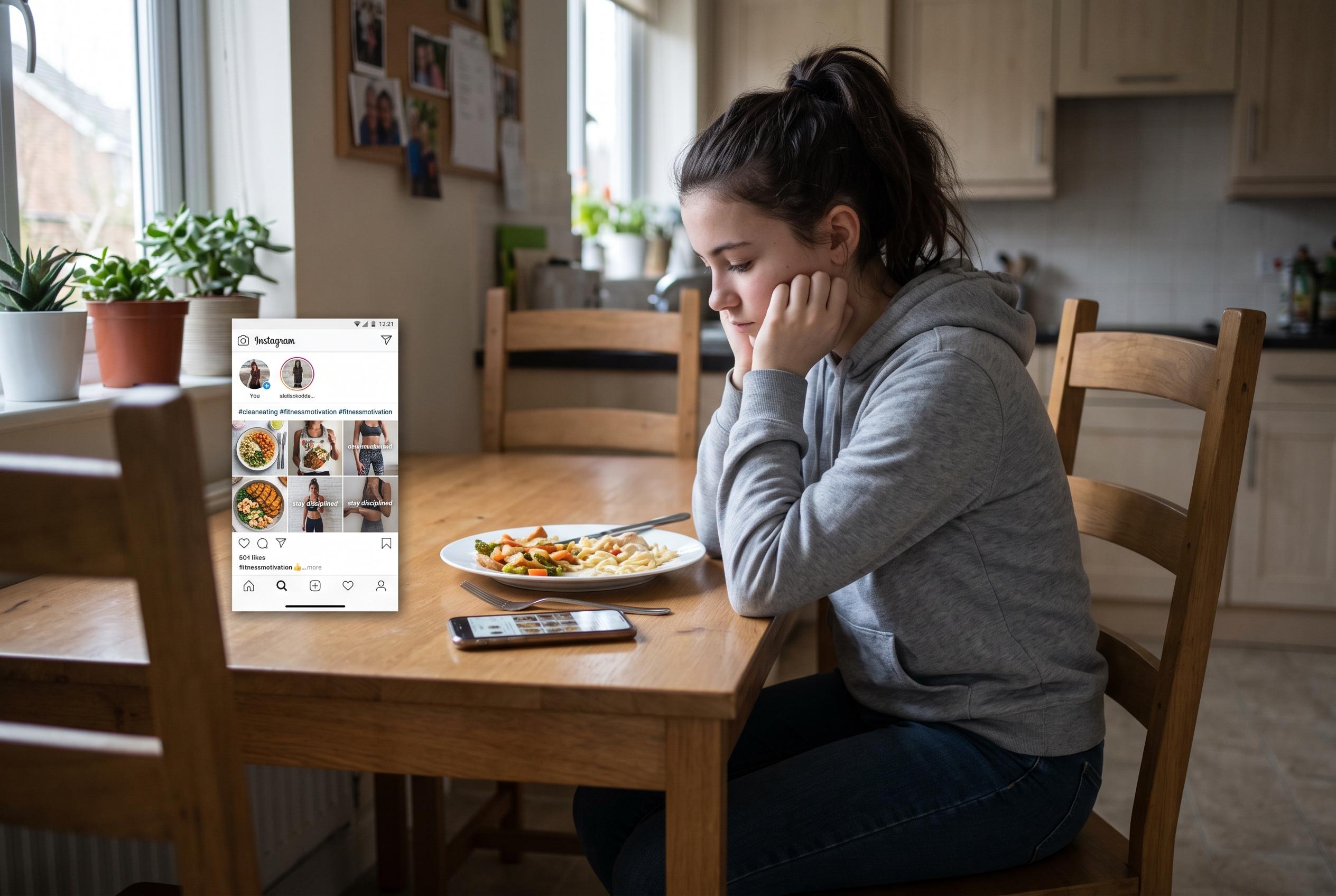

Hospital treatments for eating disorders among girls aged 10 to 17 in Germany have nearly doubled over 20 years, driven by social media culture and body image pressures, raising urgent concerns among health experts.
Hospital treatment for eating disorders among girls in Germany has climbed sharply over the past two decades, with the number of patients aged 10 to 17 rising from just over 2,800 in 2004 to nearly 6,000 in 2024, according to Germany’s Federal Statistical Office in Wiesbaden. That group now makes up almost half of all people treated for eating disorders in hospital, up from about one-quarter 20 years ago.
Overall, hospitals treated 12,400 people for eating disorders in 2024, a 2.2% increase on 2023 and 8% more than in 2004, the office said. Anorexia was the most common diagnosis, accounting for 9,000 cases, while bulimia made up 1,300. Women accounted for 11,500 of all cases, or 92.9%, compared with 88.5% in 2004.
The figures fit a broader pattern seen in earlier official data. In 2023, the statistical office said cases among 10- to 17-year-olds had already doubled from 2003 levels, with that age group making up 49.3% of all eating-disorder patients. It also reported that anorexia represented about three-quarters of cases and bulimia just over 11%. DAK Health, meanwhile, said in a 2025 report that 20 in every 1,000 adolescent girls were diagnosed with an eating disorder in 2024, a 2% rise from the previous year and a 38% increase from 2019.
Experts say the trend is linked in part to the pressure created by social media and constant screen use. Ursula Felderhoff-Müser, president of the German Society for Paediatrics and Adolescent Medicine, told the KNA news agency that rising screen time among children and teenagers is connected to eating disorders and that stronger media literacy is needed. Ada Borkenhagen, a psychotherapist and professor at the University of Magdeburg, told the same agency that platforms such as Instagram and TikTok intensify a culture of self-optimisation, while filters and editing tools make it easy to present impossible body ideals. A 2024 study by the EU initiative Saferinternet.at found that more than half of the young people surveyed wanted to change their appearance and more than a quarter had considered cosmetic surgery.
Disclaimer: This content is for informational purposes only and is not intended to be a substitute for professional medical judgment, advice, diagnosis, or treatment.