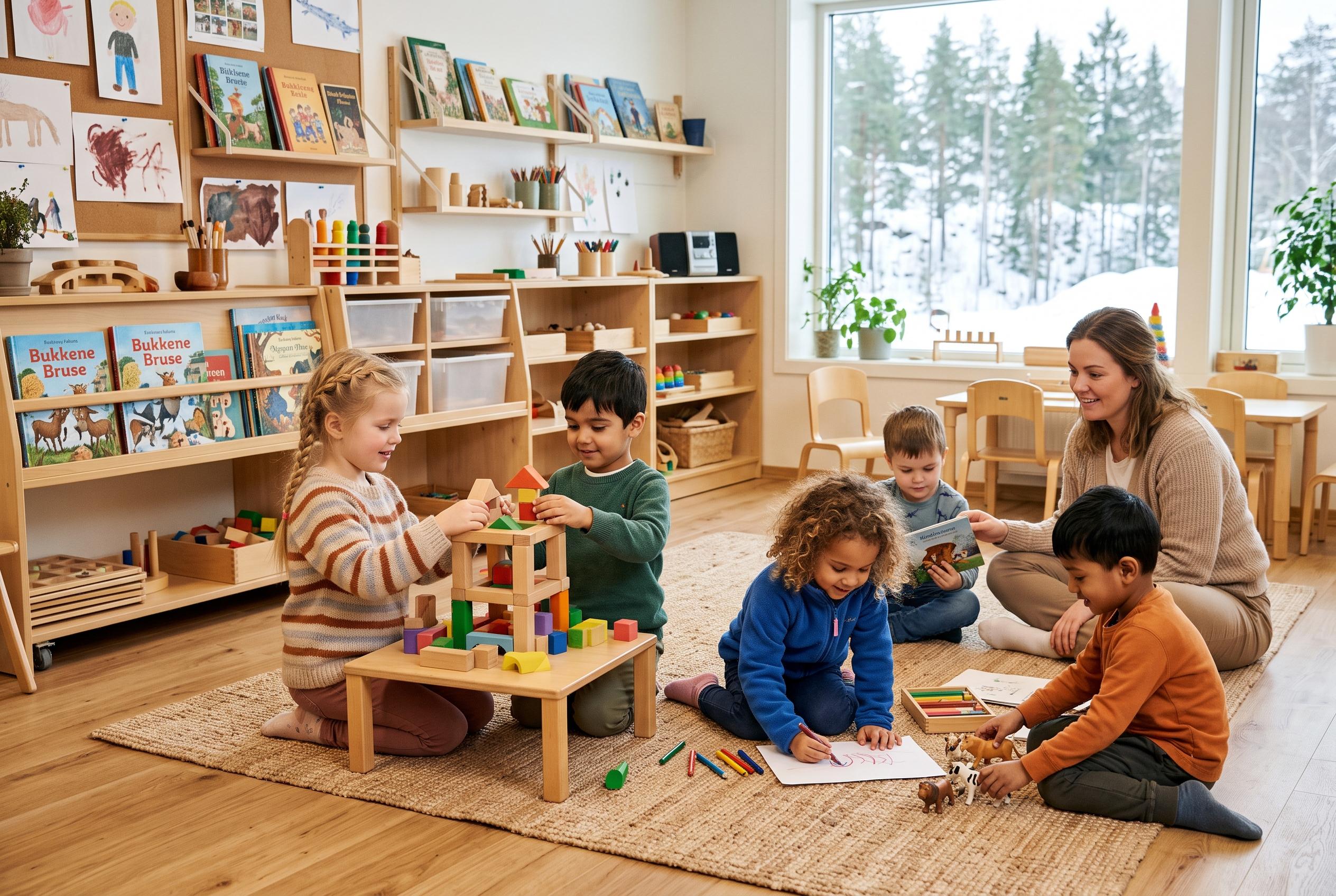

Fellesskoleutvalget in Norway proposes blending after-school care more closely into the school day for young children, emphasising play-based learning and diversified subjects, as part of a broader education reform debate.
Fellesskoleutvalget is preparing a significant shift in the early years of Norwegian schooling, with proposals to fold after-school care more closely into the school day for the youngest pupils, according to VG. The plan would give first- and second-form children a more continuous day built around play-based learning, while still keeping structured teaching in reading, writing and arithmetic. The group is expected to present its report on Tuesday at Arendalsuka, under the leadership of former state secretary Bjørn Haugstad.
The proposal arrives as Norway has already expanded access to free care after lessons. Since 1 August, children in first to third form have had a statutory right to 12 free hours of SFO a week, a change that appears to have strengthened the case for bringing those hours into a more integrated school setting. In practical terms, that could mean a longer, more joined-up day in which formal lessons and play alternate through to mid-afternoon.
The committee is also understood to want a stronger emphasis on practical and aesthetic subjects across compulsory schooling. That would mean more teaching time in music, food and health, and physical education, in an effort to make school more varied and, according to the thinking behind the proposal, better suited to a wider range of pupils. The group has not proposed extending the 10-year structure of primary and lower secondary education, despite concern that children are now spending substantially longer in school than they did a few years ago.
Beyond the early years, the panel is expected to call for a review of how school resources are allocated. One idea under discussion is a separate resource norm for primary school, which could eventually replace the teacher norm that sets minimum staffing ratios. The backdrop is growing pressure on municipal budgets, with some local authorities facing difficult choices between schools and elder care as enrolment falls in parts of the country.
The debate over how closely SFO should be tied to school has already exposed differences within the education sector. A reference group attached to the committee, which includes representatives of teachers, parents and municipalities, has argued for tighter cooperation between school and SFO for younger children, while others have warned against blurring the distinction between education and leisure-time activities. Utdanningsnytt has also reported that SFO can be an important inclusion arena for children with disabilities, giving them chances to play, make friends and build confidence when the setting is properly staffed and organised.
That wider role matters because participation in SFO varies sharply by age. According to figures from the Norwegian Directorate for Education and Training reported by Utdanningsnytt, nine out of ten first- and second-form pupils have a place in SFO, but numbers drop markedly by fourth form. The same reporting says 7 in 10 pupils in the lower primary years now attend SFO, helped by lower parental fees and the new free-hours scheme. Arbeiderpartiet has previously argued for turning SFO into a national activity school model to reduce inequality, while some municipalities have instead looked to cut opening hours or raise fees as they search for savings.
Disclaimer: This content is for informational purposes only and is not intended to be a substitute for professional medical judgment, advice, diagnosis, or treatment.