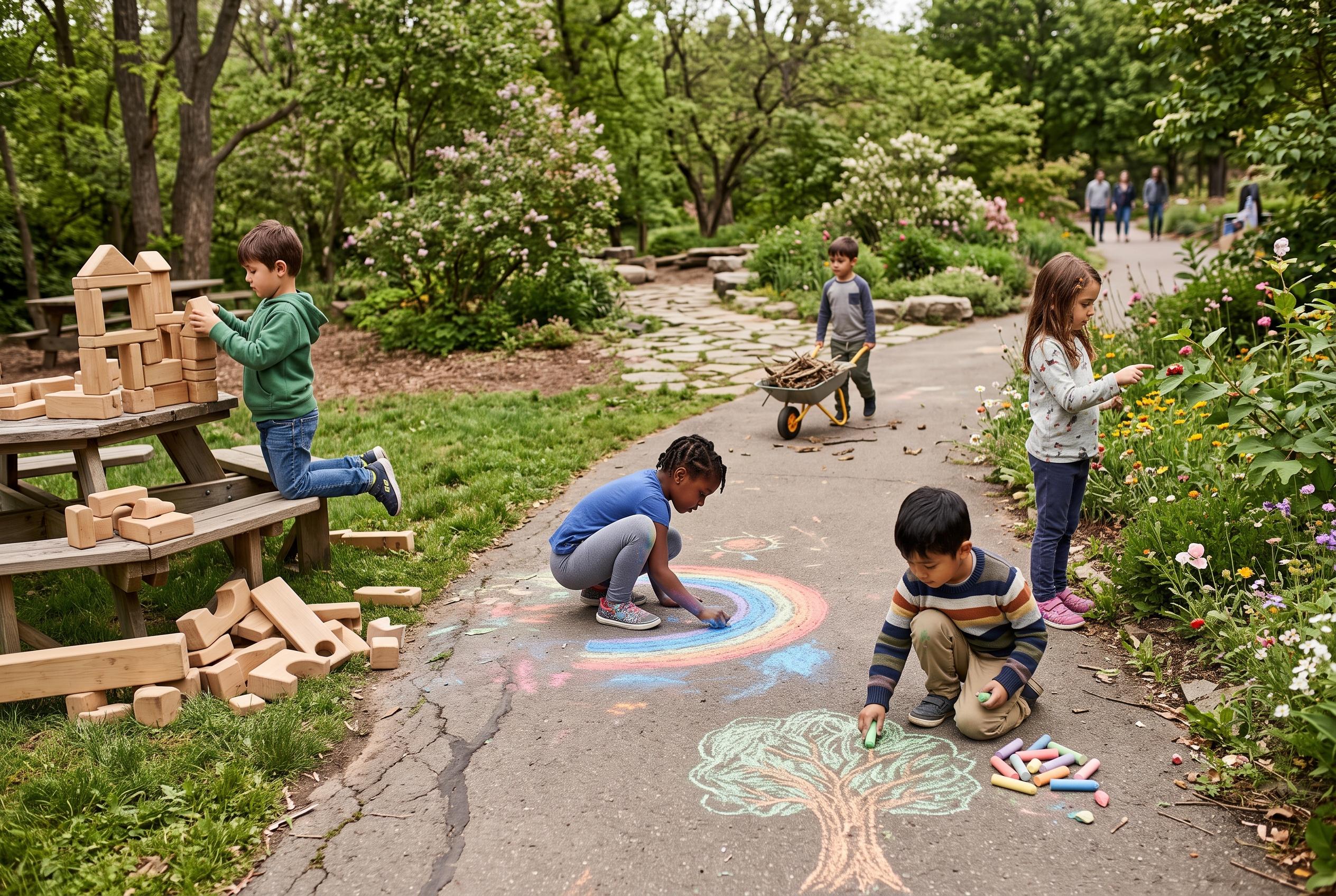

A growing movement encourages parents to turn boredom into an opportunity for children to foster creativity, independence, and social skills through simple, low-cost activities, both indoors and outdoors, that stimulate curiosity and learning.
The familiar complaint of “I’m bored” can sound like a warning siren to parents, especially on rainy days, during school holidays or on a slow weekend afternoon. Yet boredom is not always something to be fixed at once. Healthline says it can support creativity, imagination, adaptability and problem-solving, while the Kids Mental Health Foundation argues that it gives children a chance to practise independence and find their own solutions.
That is the idea behind a growing body of screen-free activity guides aimed at families looking for low-cost, low-pressure ways to keep children occupied. A list shared by Attachment Mummy pulls together 101 ideas ranging from indoor games and outdoor adventures to crafts, science experiments, games with siblings and small acts of kindness. The emphasis is less on perfect entertainment than on giving children enough structure to start and enough freedom to make the activity their own.
Many of the suggestions work because they begin with everyday objects. Blankets, cushions, socks, paper, cardboard, magazines and kitchen ingredients can become forts, puppet theatres, board games, comic books, slime, volcanoes or a stop-motion film. Other ideas lean into movement and the outdoors, from bike rides and scavenger hunts to cloud-watching, bug hunts and backyard obstacle courses. The point, according to the broader guidance from children’s wellbeing resources, is to make play accessible without turning it into another organised commitment.
The list also reflects a useful truth about children’s attention: curiosity often follows momentum. A child who starts by building a cardboard castle may end up designing a city, making a map or inventing characters to live there. A child who bakes biscuits may move on to measuring, timing and writing down a recipe. In that sense, boredom becomes less a problem to eliminate than a starting point for self-directed learning.
The educational value is woven throughout. The activities touch on reading, counting, telling the time, simple coding, map-making, science experiments, language learning and memory skills, but they do so in playful forms rather than formal lessons. Apple Books also offers similar collections of 101 screen-free ideas, suggesting the format has broad appeal among parents looking for practical, repeatable inspiration rather than one-off entertainment.
Just as importantly, some of the best suggestions are social. Children can play charades, stage a mini theatre show, design a fashion challenge, run a pretend shop or create a family podcast. Others encourage kindness and reflection, such as drawing a card for a neighbour, helping at home without being asked or picking up litter in a local park. That final category may be the most telling: it reframes boredom as a chance not only to occupy time but to build habits of generosity, confidence and resilience.
Disclaimer: This content is for informational purposes only and is not intended to be a substitute for professional medical judgment, advice, diagnosis, or treatment.