
A recent discussion in Finland underscores the complexities behind classroom disruption, calling for greater trust and cooperation between schools and families to support children’s wellbeing and development.
Finland’s debate over pupils’ behaviour and teacher strain has reopened an old fault line: whether the roots of classroom disruption lie mainly in the home or in the school. In an opinion piece published by Etelä-Suomen Sanomat, the writer argues that the conversation has become too quick to point the finger at parents, even though the issue is broader and more complicated.
The timing matters. MTV Uutiset reported on August 4 that its flagship evening news had focused on children’s and young people’s behaviour problems in schools and the pressure felt by teachers. That coverage reflected a real concern in the profession, where classroom order and workload have become increasingly sensitive topics. But, the columnist warns, public discussion can too easily create the impression that families are chiefly to blame.
That kind of framing is not new. In MTV Uutiset, the Finnish National Agency for Education has stressed that children should not be left to educate themselves, underlining the teacher’s role in providing structure and guidance. The broader message is that responsibility in education is shared, not simple. Children move between home, school and hobbies throughout the day, and the adults they meet in each setting all shape their development.
The writer also urges a developmental psychology lens. Difficult behaviour, the piece argues, is often a symptom rather than the underlying problem. Secure relationships, being heard, clear everyday boundaries, adult presence and environmental stress all influence a child’s conduct. Focusing only on what is visible risks treating the consequences while missing the cause.
That warning is echoed by other recent reporting. Verkkouutiset cited a survey in which 75% of responding school principals said there was a link between pupils’ mental health problems and weaker academic performance. The Finnish Institute of Occupational Health has also published guidance aimed at helping schools handle ethically demanding situations together, a sign that strain in education is increasingly being treated as a shared systemic challenge rather than an individual failing.
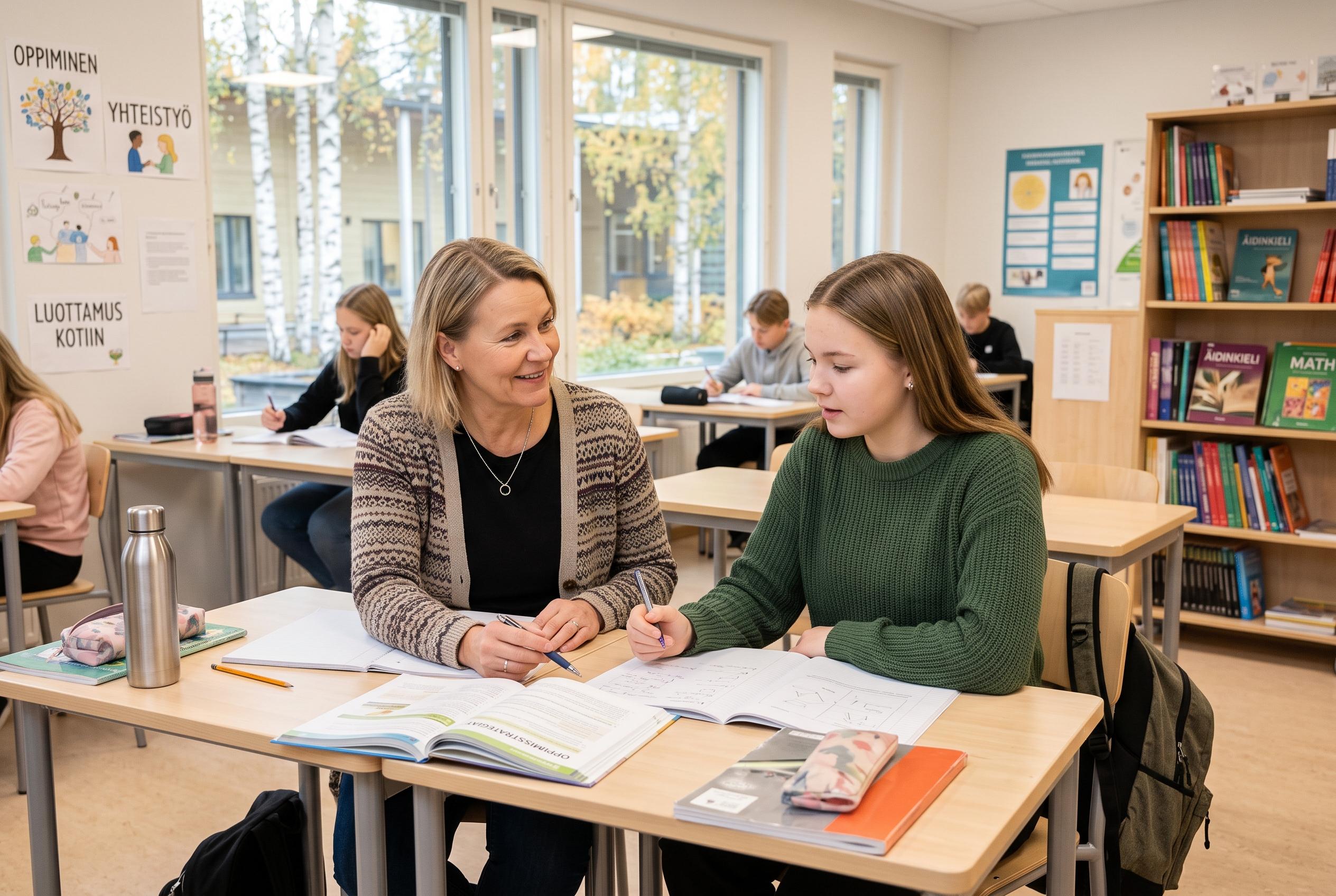
For that reason, the essay argues for a stronger culture of educational partnership in Finland. Teachers need parental support, while parents need the professional expertise of schools. Trust, it says, is built through listening, respect and practical cooperation, not through blame. If public debate pits homes against schools, the child is left trapped in the middle. What children need most, the writer concludes, is not a winner in that argument, but adults who work together for their safety and wellbeing.
Disclaimer: This content is for informational purposes only and is not intended to be a substitute for professional medical judgment, advice, diagnosis, or treatment.