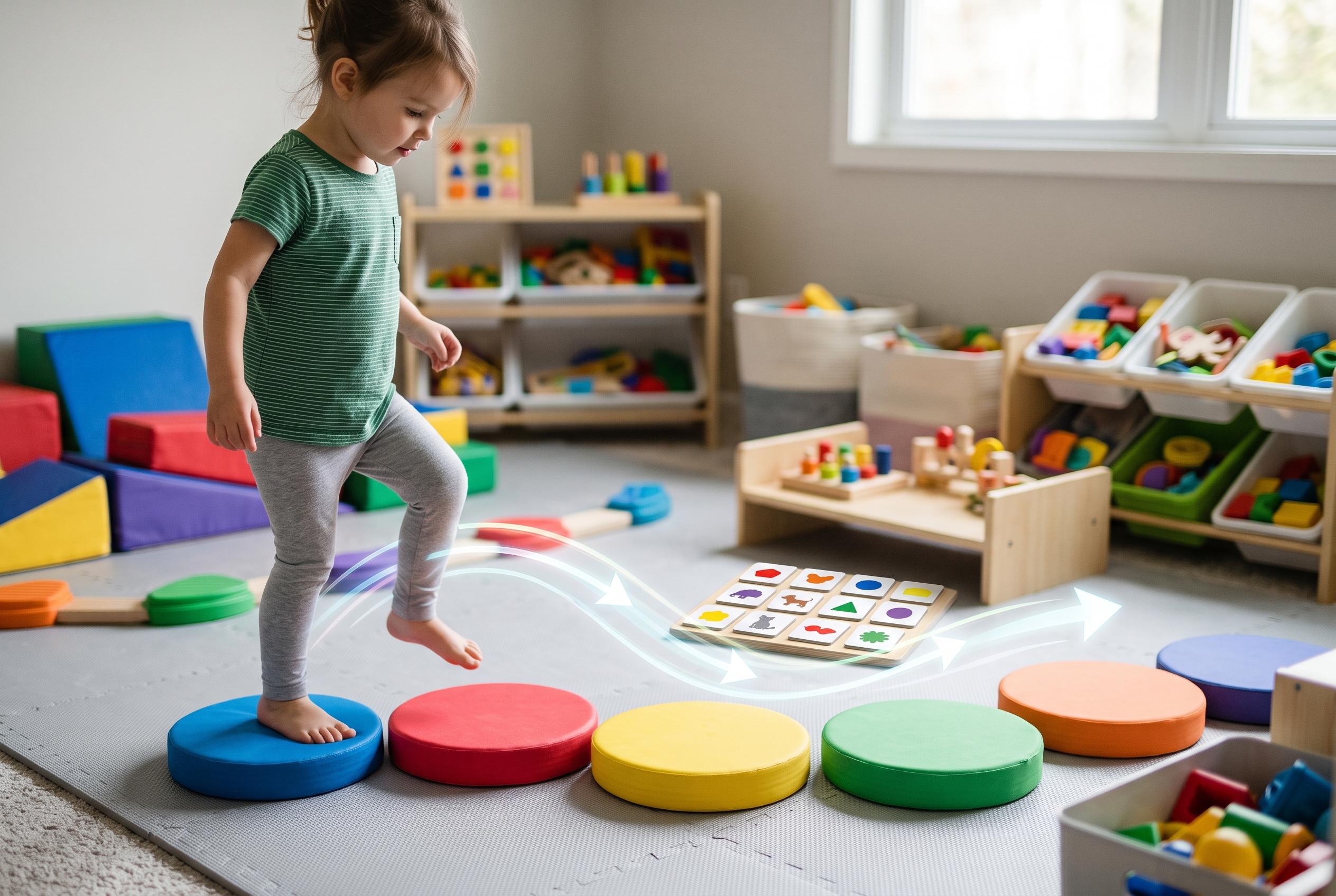

Emerging research highlights how movement-based play not only energises children but also strengthens their attention, memory, and self-regulation, providing a critical foundation for lifelong learning.
Children who seem restless, fidgety or full of energy are often doing more than burning off steam. In early childhood, movement is closely tied to how the brain develops, and active play can help children become better prepared to focus, remember and learn. Rather than treating movement as a distraction from learning, many specialists now view it as one of the ways children build the foundations for it.
Physical activity gives children repeated practice in attention, sequencing and self-regulation. A game that asks a child to jump, crawl and then stop on cue is not just play; it requires listening, holding information in mind and controlling impulse. Research summaries from youth occupational therapy and child development groups also point to the role of sensory input, including vestibular and proprioceptive experiences, in helping children stay regulated and alert.
Movement can also support memory by making ideas more concrete. Children are more likely to retain concepts such as direction, speed and position when they act them out with their bodies. Action songs, counting while hopping and using gestures to match words all give learning more than one pathway into the brain, which helps information stick.
Listening is another skill that grows through movement-rich play. Games such as musical statues, follow-the-leader and Simon Says ask children to wait, notice a cue, remember instructions and respond at the right moment. These activities also build executive function, the mental system that helps with working memory, impulse control and flexible thinking. Niroga Institute says movement-based mindfulness can strengthen those skills further by combining motion with breathing and awareness.
Parents do not need elaborate equipment or a formal programme to make this work at home. Short movement breaks before homework, obstacle courses made from household items, outdoor climbing and carrying, or simple rhythm games can all help. PedsTeam, ChildServe and other child development groups say even brief bursts of physical activity can help children reset, process sensory input and return to quiet tasks with better focus.
The broader message is simple: movement is not separate from development. For children, it is part of how development happens. When a child runs, balances, spins or jumps, they are not merely letting off energy. They are practising the very skills that help them pay attention, manage their bodies and take in the world around them.
Disclaimer: This content is for informational purposes only and is not intended to be a substitute for professional medical judgment, advice, diagnosis, or treatment.