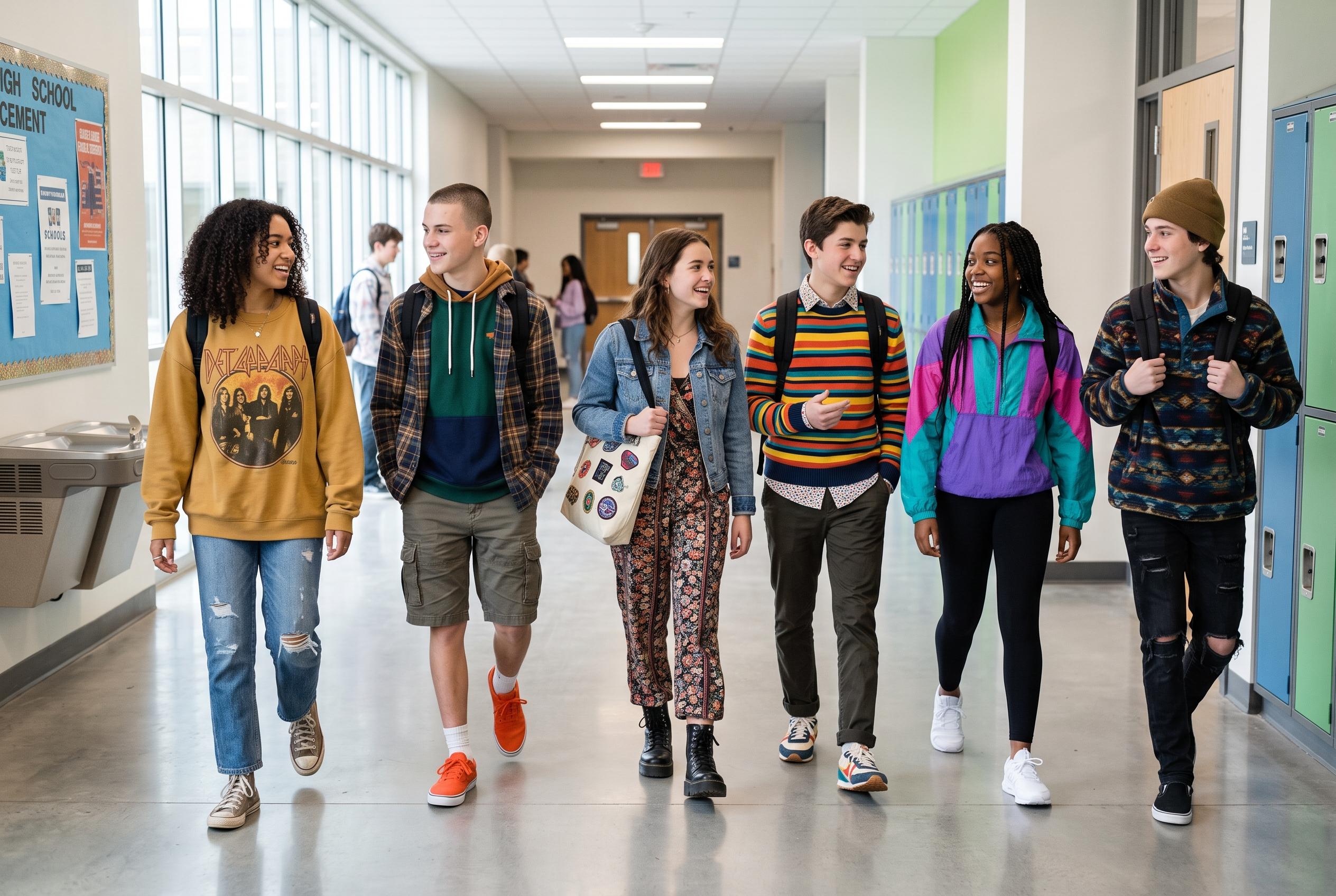

Young people’s sudden appearance changes during a new school year are often a sign of healthy self-discovery rather than rebellion, say mental health specialists. These experiments in style help teens explore their identity, build confidence, and gain independence, with experts urging adults to respond with curiosity and support.
In the first weeks of a new school year, parents are often startled by how differently their teenagers suddenly look: a new haircut, a bolder colour, a sharper wardrobe or a first attempt at make-up. But mental health specialists say these shifts are usually less about rebellion than about identity.
Veronica Lichtenstein, a licensed mental health counsellor, said such changes give teenagers a chance to test out a new version of themselves. In practice, that often means small but visible experiments, from changing clothes and hair styles to trying new skincare routines or make-up. Development experts say adolescence is a period when young people begin actively trying on different looks, interests and social roles to see what fits.
That urge is amplified by the social weight of appearance in the teen years. Research published by Psychology Today has noted that adolescence often brings a stronger preoccupation with looks, shaped by peers, social media and wider cultural standards. Other developmental guidance points out that puberty can make young people more self-conscious, because physical change arrives at the same time as a growing awareness of how others see them.
The trends themselves vary widely. Some teens lean into Y2K nostalgia with oversized graphic T-shirts and chunky trainers. Others prefer the pared-back, polished “clean girl” look, while many are drawn to second-hand clothing, sustainability or more gender-fluid styling. Lichtenstein said the point is rarely fashion for its own sake. For many teenagers, especially in the middle-school and early high-school years, appearance is a quick and public way to answer a bigger question: who am I?
That process can also serve a social purpose. A new look can bring praise, confidence or a sense of belonging, and it can help teenagers signal greater independence from their parents. Because of that, experts advise adults to respond with curiosity rather than criticism, as long as the changes are safe and age-appropriate. Simple questions such as what a child likes about a new style can open a better conversation than judgement.
Parents are also encouraged to separate reversible experiments from decisions that are harder to undo. Haircuts and clothing choices usually carry little long-term risk. Bigger spending choices, however, may need a calmer approach. Lichtenstein’s daughter offered a practical rule: wait a month before buying something tied to a fast-moving trend, especially if the price is high.
Even so, adults should pay attention if a change in style comes with signs of deeper distress, such as a sudden drop in mood, withdrawal from friends or intense body-image concerns. Without those warning signs, letting teenagers explore their appearance can be a healthy part of growing up, helping them build confidence, independence and a stronger sense of self.
Disclaimer: This content is for informational purposes only and is not intended to be a substitute for professional medical judgment, advice, diagnosis, or treatment.