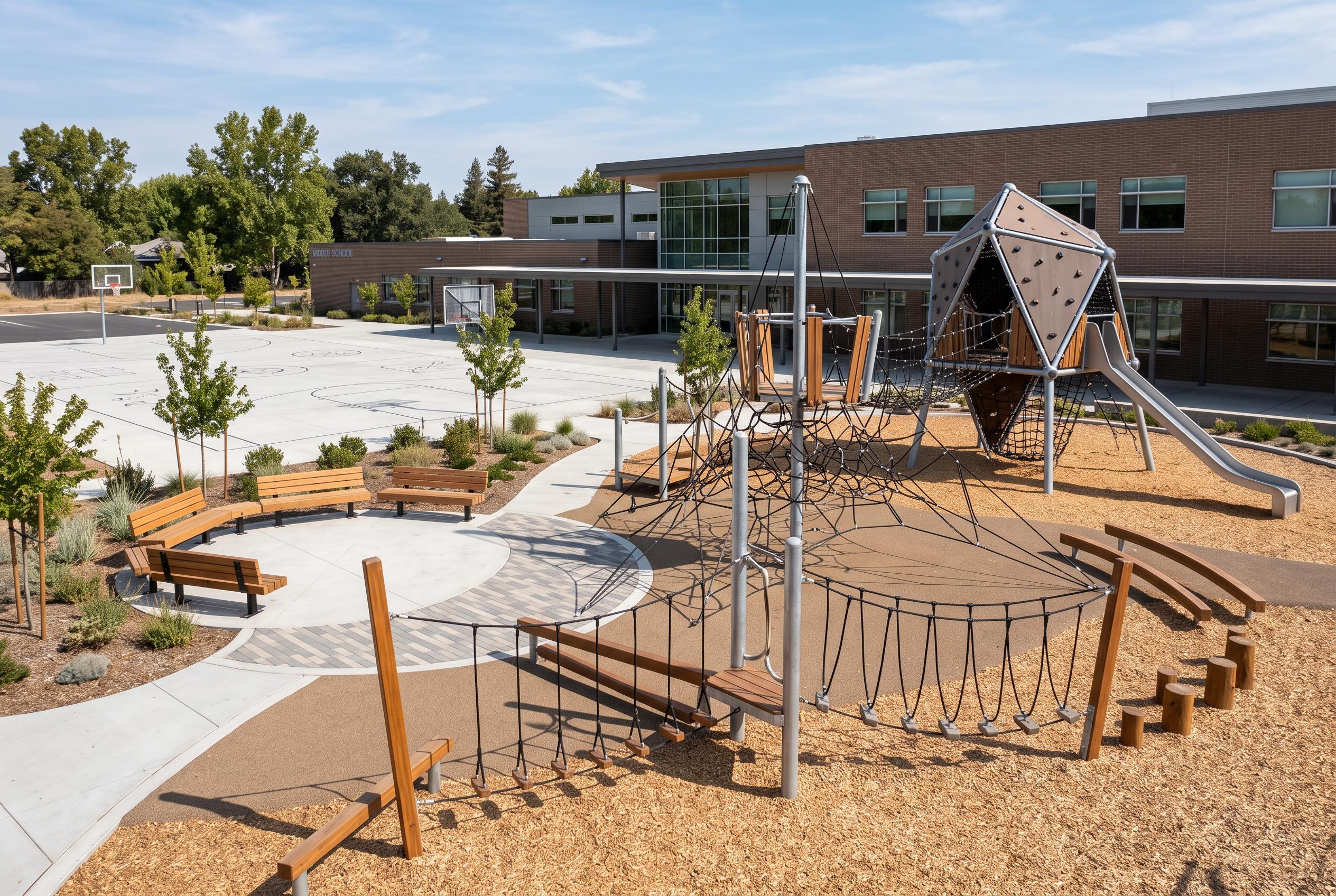

As teenagers outgrow traditional playgrounds, experts call for age-appropriate, challenging, and social spaces in schools to promote activity, well-being, and community safety among 9 to 12-year-olds.
Teenagers may no longer flock to tiny slides and colourful climbing frames, but that does not mean they have lost interest in play. The real issue, as the source article argues, is that many school grounds stop being designed with them in mind. Once children reach about 10 to 12, many begin to outgrow junior playgrounds, yet they still want movement, challenge, risk and time with friends.
Research on schoolyards for tweens, children aged 9 to 12, suggests they are most drawn to spaces that combine social interaction with physical challenge. That means more than a bench and a basketball hoop. It means climbing structures, balance features, informal games and places to gather. The aim is not to make a junior playground bigger, but to create a space that feels age-appropriate and worth returning to.
That point is reinforced by public health research. A 2025 essay from the US Centres for Disease Control and Prevention says many schoolyards are poorly equipped to support physical activity and social connection among young people, both of which matter for adolescent health. Other studies have linked more playable playgrounds with higher levels of moderate to vigorous activity, while research on adolescent perceptions of active environments highlights the importance of maintenance, varied equipment and good lighting.
There is also a wider social case for better design. A study published in the International Journal of Built Environment and Sustainability found that playground activity and a stronger sense of community can help reduce delinquency and social harm among adolescents. In other words, well-planned school play spaces are not just about exercise. They can also give teenagers a safer, more constructive place to spend time, build confidence and develop independence.
The argument, then, is less about whether teenagers still play and more about whether schools still make room for them to do so. If play is meant to support development across childhood, it should not end abruptly at the point when children become self-conscious, stronger and harder to impress. A better school playground would offer challenge, choice and a degree of managed risk for the whole age range, rather than assuming that older pupils no longer need play at all.
Disclaimer: This content is for informational purposes only and is not intended to be a substitute for professional medical judgment, advice, diagnosis, or treatment.