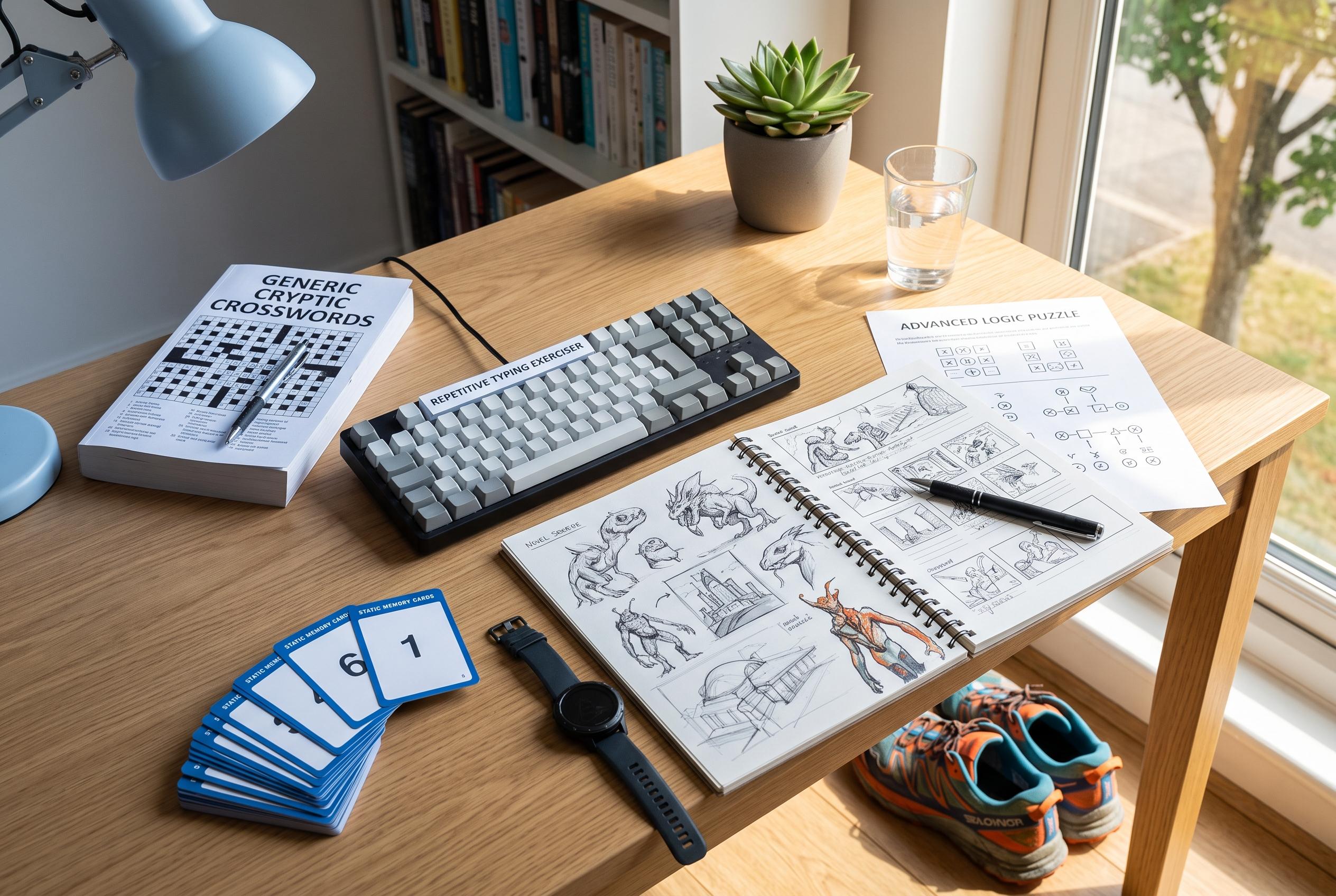

Recent research challenges the effectiveness of popular mental exercises, highlighting the importance of novelty, challenge, and physical activity for maintaining brain health.
New research is adding nuance to a long-running promise in the wellness market: not all “brain training” is equal. According to the Washington Post, emerging evidence suggests that only certain forms of training deliver meaningful cognitive gains and that the effects may vary between men and women.
For years, shelves were filled with products marketed as mental workouts, from crossword books and Sudoku to memory games and adult colouring books. The appeal was simple: keep the mind busy and it might stay sharper for longer. But the evidence for many of those activities was limited. More recent neuroscience, however, points to a narrower group of interventions that appear more consistently linked to brain health, including learning a language, making music, walking and taking on new skills.
Health experts have long argued that mental stimulation works best when it is genuinely demanding and unfamiliar. Harvard Health says low-cost activities such as language learning, card and board games, word puzzles and music can help the brain form new connections. Healthline similarly lists a broader set of exercises that may support memory, concentration and focus, including dance, meditation, sensory tasks and trying new routes. The common thread is novelty: the brain appears to benefit most when it has to adapt.
Physical exercise also remains part of the picture. Harvard Health has reported that moderate activity can improve memory and thinking through a range of biological effects, including lowering inflammation and supporting growth factors that influence brain function. Other research cited in Nature’s coverage of musical training suggests that sustained learning, particularly in music, can shape brain structure and improve working memory, processing speed and flexibility. In other words, the most useful “brain exercise” may be less about repetition and more about challenge, consistency and variety.
Disclaimer: This content is for informational purposes only and is not intended to be a substitute for professional medical judgment, advice, diagnosis, or treatment.