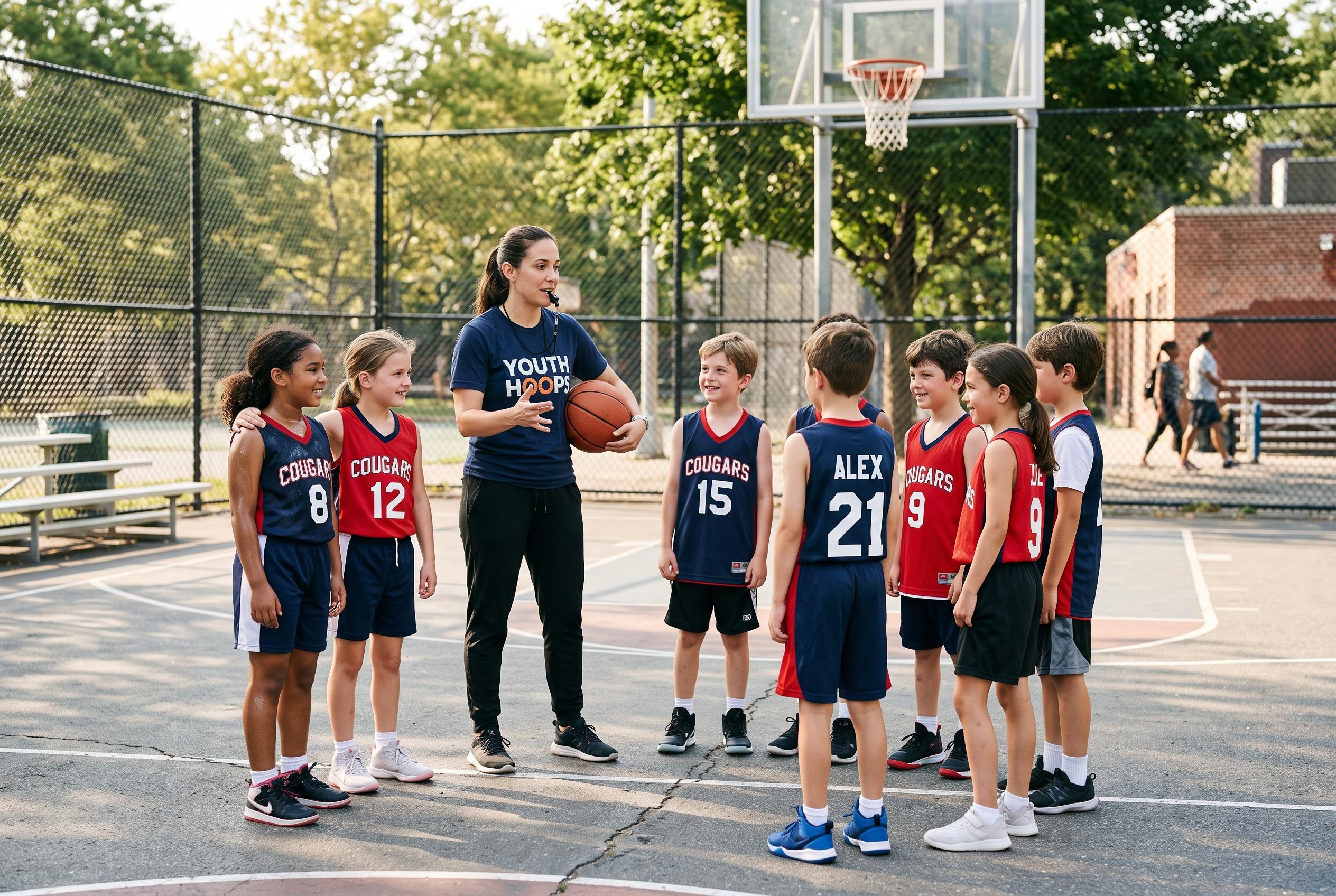

Youth basketball offers more than just skills; it fosters resilience, responsibility, and teamwork. Coaches are using everyday routines and game moments to teach lifelong lessons that extend beyond the court.
Youth basketball can teach lessons that linger long after the final whistle. A missed shot, a bad loss or a run-in with an official may fade from memory, but habits built around responsibility, resilience, teamwork and respect can stay with a player for years. According to Teach Hoops, the biggest value of a season is often not found in the scoreline but in the character a coach helps shape. Paragraph 1: [2], [7]
That idea runs through coaching conversations that place life skills on the same level as ballhandling and defence. Coaches cited by CoachUp stress that youth sports are a chance to help children deal with adversity, work with different personalities and accept responsibility. Basketball offers those moments naturally, whether in practice, during a tight game or after a disappointing result. Paragraph 2: [2], [7]
One of the clearest lessons is how to handle failure. Young players may feel crushed after missing a decisive shot or being cut from a team, but coaches can use those moments to ask what was learned, what can be controlled next time and how the player will respond at the next practice. Teach Hoops says disappointment does not have to define the next step, and that broader perspective can help athletes see setbacks as part of growth rather than the end of the story. Paragraph 3: [1], [2]
The same principle applies to team results. A single player should not carry the whole weight of a loss, just as one shot should not be treated as the entire game. CoachUp has argued that team play depends on more than scoring, with passing, spacing and unselfishness helping turn a collection of players into a real unit. That message can also guide how coaches speak after wins and losses: celebrate together, accept mistakes together and move on together. Paragraph 4: [3], [5]
Responsibility can be taught through ordinary routines. Being on time, bringing the right kit and showing up ready to work may sound basic, but these habits teach players that other people are relying on them. Teach Hoops points to simple expectations such as knowing practice times, communicating if running late and helping with set-up or tidy-up. Those small standards can build discipline that carries into school, home and later work. Paragraph 5: [1]
Coaches can also use the gym itself as a lesson. Players who pick up wrappers, collect bottles or clear the bench are learning to leave a place better than they found it, even when the mess was not theirs. That attitude, Teach Hoops suggests, helps youngsters notice what needs doing rather than waiting to be asked. It is a modest exercise, but one that reinforces initiative and shared responsibility. Paragraph 6: [1]
Another important lesson is learning to work with people who are different. Not every teammate will become a close friend, and not every personality will be easy to manage. Even so, players have to communicate, solve small disagreements and support one another if they want the team to function. CoachUp notes that these are the same skills children will need with classmates, colleagues and other adults later in life. Paragraph 7: [2], [5]
Coaches also have to teach players how to deal with frustration from officials, opponents and even their own bench. The point is not to pretend every call is fair, but to help athletes focus on what they can control: effort, attitude, communication and the next play. Teach Hoops says short reminders such as “next play” can redirect attention in a useful way, while CoachUp’s guidance on fundamentals shows that communication and adaptability are central to playing well under pressure. Paragraph 8: [1], [4], [6]
The best coaches do not treat character as a separate topic from basketball. They plan for it before the season, talk to parents about expectations and use everyday moments in practice to reinforce the same values again and again. Winning still matters, and skills still matter, but youth basketball can also prepare children for a wider set of challenges. If a season leaves players more resilient, respectful and responsible, it has done more than teach them how to play. Paragraph 9: [1], [2], [7]
Disclaimer: This content is for informational purposes only and is not intended to be a substitute for professional medical judgment, advice, diagnosis, or treatment.