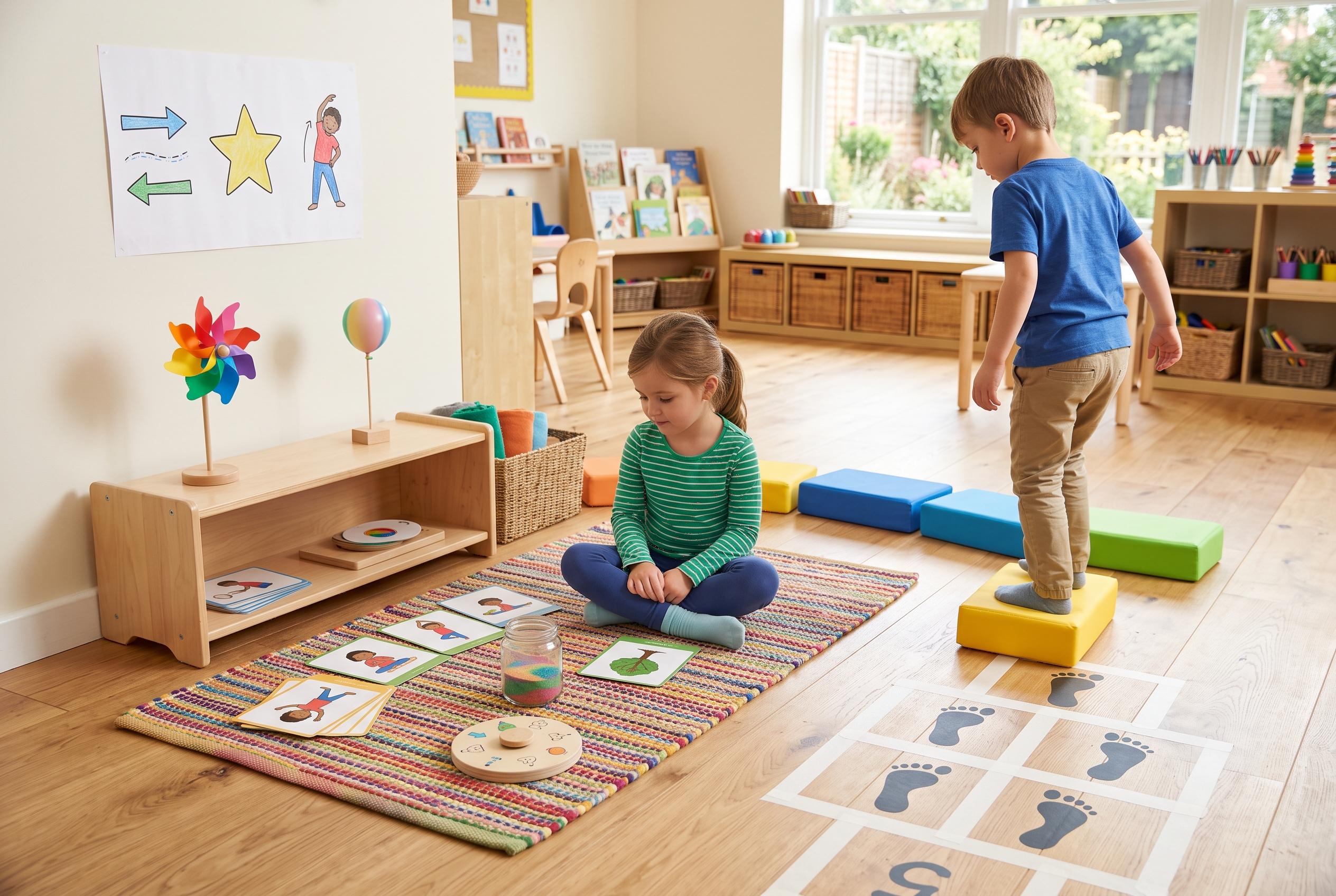

A new approach to children’s attention involves integrating movement, breathing, and play into mindfulness practices, offering a playful and effective way to enhance focus from preschool to school age.
Children’s attention is under pressure, but a growing body of classroom practice suggests the answer may be less about telling them to sit still and more about giving them structured ways to move, breathe and reset. In a guest contribution for Kids Yoga Stories, children’s author and mindfulness teacher Kira Willey argues that focus is a learned skill, not a fixed trait, and that young children are more likely to sustain attention when movement and rhythm are built into the process.
Her approach reflects a broader trend in children’s mindfulness work: instead of treating stillness as the starting point, many educators now use playful activity to help children regulate their bodies first. A short freeze-and-breathe game, for example, is designed to help preschoolers practise impulse control and calming by moving energetically before stopping on cue and taking slow breaths. Similarly, a brief classroom reset can use grounding, breathing, gentle movement and a consistent refocus cue to settle a group after recess or another high-energy transition.
Willey’s three exercises are simple enough for home or school use. One combines counting, clapping and breathing; another uses balance to challenge attention while keeping the activity playful; the third turns the sounds of a storm into a sequence of movement and stillness. The idea is that children stay engaged because the tasks feel like play, even as they practise concentration, body awareness and self-regulation. That philosophy matches other mindfulness activities for children, from pinwheel breathing to sensory listening games, all of which aim to make calm more accessible and less abstract.
The book she is promoting, The Joyful Child, extends that method into a larger toolkit of more than 75 activities, with QR codes to videos, classroom adaptations and playlists. Its premise is straightforward: if children are wired for movement, rhythm and imagination, then those same instincts can be used to help them focus. Rather than demanding attention, the adults around them can create the conditions in which it is more likely to emerge.
Disclaimer: This content is for informational purposes only and is not intended to be a substitute for professional medical judgment, advice, diagnosis, or treatment.