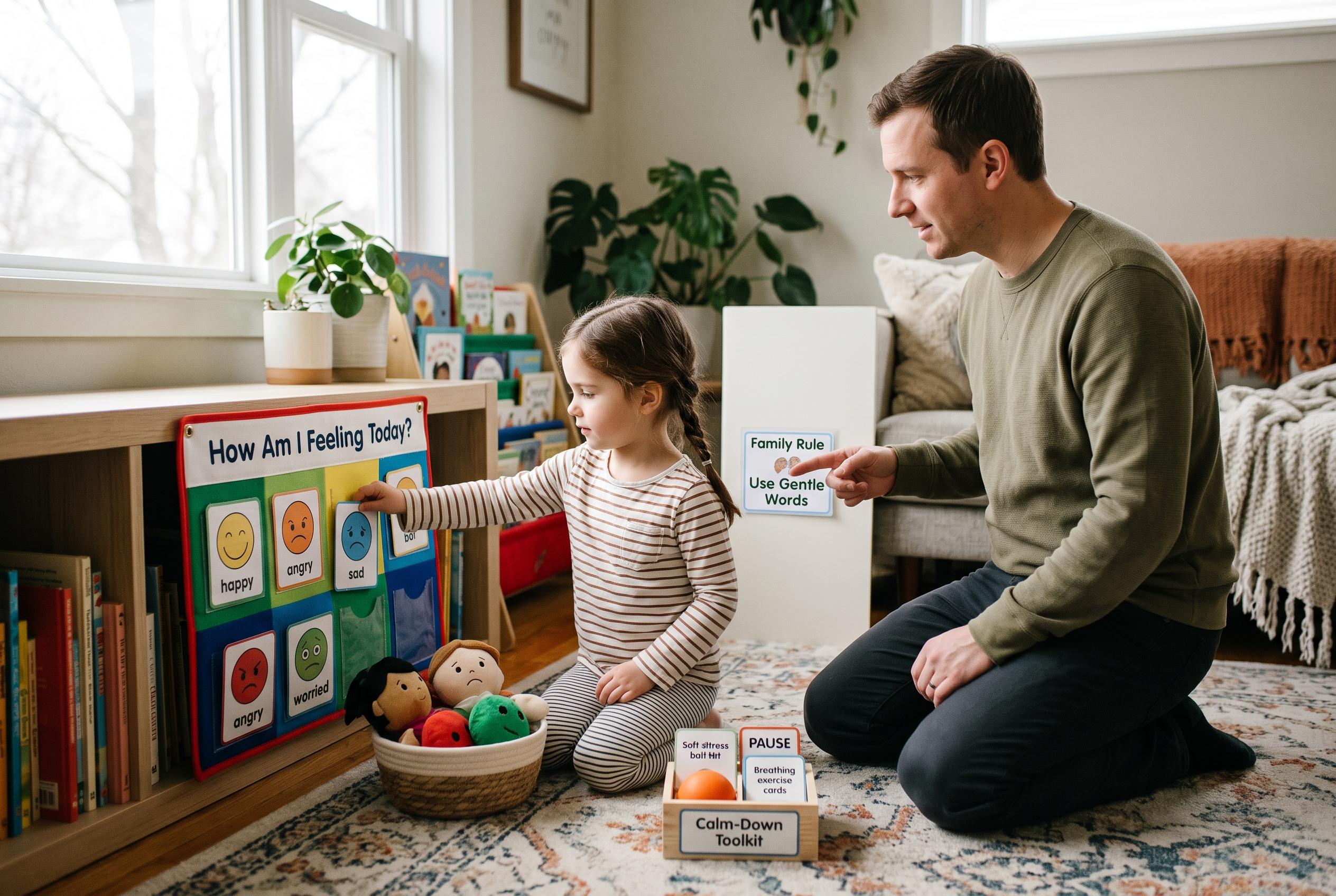

Research by psychologist John Gottman highlights how nurturing emotional resilience in children hinges on empathetic responses, boundary-setting, and modelling self-regulation, challenging the idea that shielding children from discomfort fosters emotional growth.
A child’s emotional intelligence is not built by shielding them from every disappointment, but by showing them how to face it. Research associated with psychologist John Gottman suggests that the way adults respond to anger, fear and sadness can shape how children learn to manage those feelings, with the most effective approach combining empathy, clear language and firm limits. Simply Psychology says Gottman identified four broad parenting styles: emotion coaching, emotion dismissing, emotion disapproving and laissez-faire, with the first linked to stronger emotional regulation and healthier social outcomes.
One common mistake is to rush to remove discomfort the moment it appears. Well-meant phrases such as “Don’t be sad” can teach children that difficult emotions should be silenced rather than understood. Gottman’s work instead points parents towards acknowledgement: naming the feeling, listening closely and helping the child make sense of what happened. That early step matters because children first learn emotional language through the adults around them, not through lectures.
Another pitfall is solving every problem before a child has tried to handle it alone. Whether it is phoning the teacher, finishing the homework or stepping into every squabble, over-involvement can deny children the chance to practise patience, choice-making and recovery after frustration. Gottman’s book on emotionally intelligent children describes emotion coaching as a process that includes helping a child find an appropriate response to an upsetting event, rather than providing an instant fix. In practical terms, that often means asking a simple question before reaching for a solution: “What do you think you could try first?”
Parents also teach by example, even when they are not trying to. Children watch how adults react to delay, rudeness or stress, and they learn from that behaviour as much as from direct instruction. Saying, “I am feeling annoyed, so I am going to take a few deep breaths first,” shows that emotion is real but does not have to drive impulsive behaviour. Gottman has argued that emotional self-regulation develops with practice, and that parents can support it by modelling it in everyday life.
A further mistake is believing that apologising weakens authority. In reality, admitting error can strengthen trust. If a parent raises their voice or reacts too quickly, a calm repair attempt such as “I shouted earlier and that was not right. I was upset, but I should have said it differently” can teach accountability and help restore safety. Gottman’s guidance on emotion coaching also stresses that children benefit from seeing how relationships are mended, not just how rules are enforced.
Not every emotional moment needs a full discussion. Sometimes a child needs closeness, quiet or time before talking makes sense. And praise works best when it is specific: instead of saying a child was “good”, it is more useful to notice the exact skill they used, such as putting a feeling into words while upset. That kind of feedback helps children recognise the behaviour they can repeat next time.
Disclaimer: This content is for informational purposes only and is not intended to be a substitute for professional medical judgment, advice, diagnosis, or treatment.