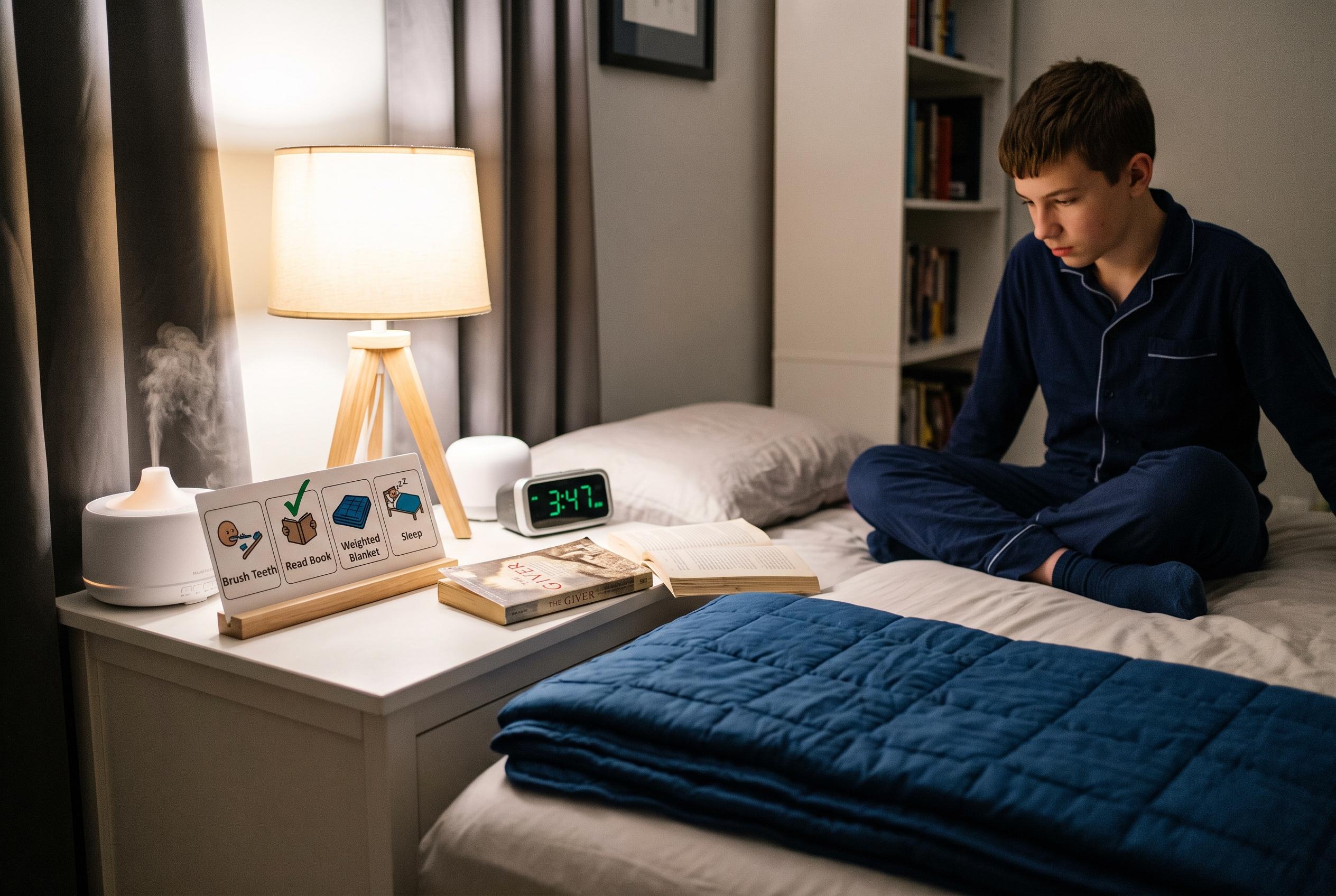

Sleep struggles among autistic teens are more prevalent than in their non-autistic peers, with experts emphasizing the importance of addressing underlying causes to improve daily life and emotional well-being.
If your autistic teenager is struggling to sleep, exhaustion can quickly spill over into daily life. Sleep affects mood, attention, emotional regulation and the ability to cope with ordinary demands, and Autism Central says sleep problems are far more common in autistic children than in non-autistic peers. Stanford Medicine’s autism sleep toolkit and NHS guidance both point to a mix of causes, including sensory sensitivities, anxiety, co-existing conditions and differences in sleep regulation. citeturn0search0? wait no citations allowed? We are not using web. Need no cite tags. Must use source map only. Sorry. Replace with prose only.
Disclaimer: This content is for informational purposes only and is not intended to be a substitute for professional medical judgment, advice, diagnosis, or treatment.