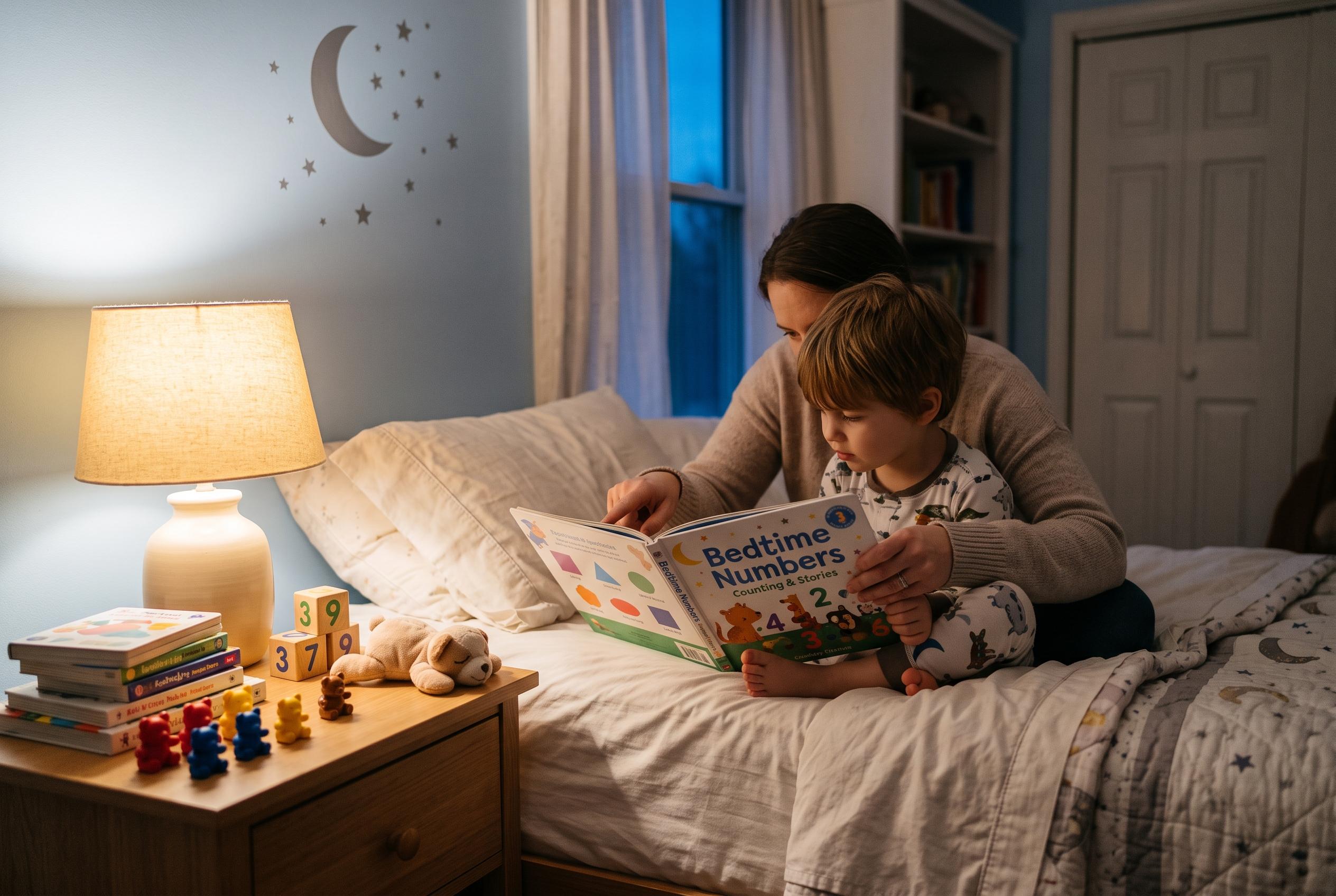

Transforming bedtime from a quiet end to a playful, educational pause, parents can seamlessly introduce maths into children’s lives that boosts confidence, emotional regulation, and family bonding, without the pressure of homework.
Bedtime can be more than the final stop in a child’s day. Used well, it can become a calm, low-pressure moment for building number sense, and research on bedtime routines suggests that consistent evening habits support sleep, language development, emotional regulation and parent-child attachment. That makes the wind-down period a natural place to add a little maths without turning it into homework.
The appeal of bedtime maths is that it feels informal. According to the Bedtime Math Foundation, children using its programme have shown gains in confidence and skill, and family-focused maths practice can help children see numbers as part of ordinary life rather than something limited to the classroom. Common Sense Media says the organisation’s daily problems are designed to make maths regular and enjoyable for families, while Homeschool Tools describes the approach as a conversational way to build mental maths through real-world stories and tiered questions.
Parents do not need worksheets or a lesson plan to make it work. A reverse countdown can reinforce subtraction, while spotting patterns in pyjamas or bedding helps children practise sequence and prediction. Storytime can also become a maths prompt: a parent might pause to ask how many objects a character has left after sharing some away. PBS KIDS for Parents recommends using bedtime reading, sequencing and simple language such as “next to”, “under” and “above” to fold maths into familiar routines.
Other ideas can be adapted to a child’s age. Younger children may simply count buttons, toes or stuffed animals, while preschoolers can compare sizes or identify shapes in a room. Older children can estimate how many minutes remain until lights out or work out how much sleep they will get before morning. The aim is not speed or correctness but comfort, repetition and a positive association with numbers. Screenwise App notes that Bedtime Math’s daily stories are brief, free and designed to prompt parent-child conversation, which makes them easy to fit into even busy evenings.
The wider point is that bedtime maths works because it is small, consistent and unthreatening. In a setting already linked with calm and closeness, children are more likely to engage without anxiety. Over time, these tiny exchanges can build confidence, strengthen routine and make mathematics feel less like a subject and more like a normal part of family life.
Disclaimer: This content is for informational purposes only and is not intended to be a substitute for professional medical judgment, advice, diagnosis, or treatment.