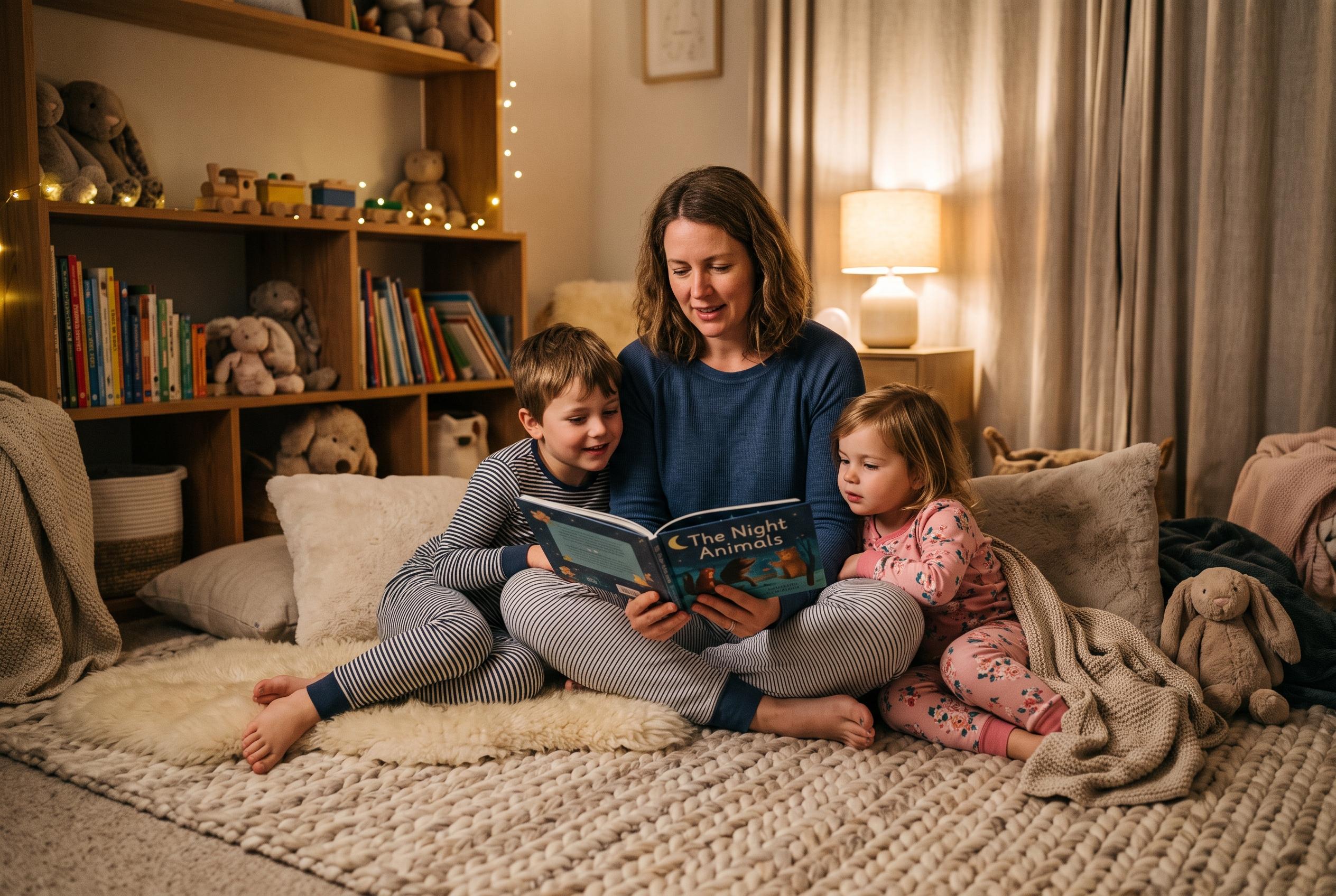

Brief, consistent family routines like shared meals and bedtime reading can significantly boost emotional closeness, communication, and overall well-being among children and parents, according to recent research.
Parents often look for big, memorable ways to deepen their bond with a child, but the most effective habits are usually the smallest ones. Family routines that take only a few minutes can still carry real weight, because they create repeated moments of attention, comfort and conversation that children tend to remember. Research cited by outlets including Sleep.com, Scholastic and Healthline points to the same broad conclusion: ordinary rituals, repeated consistently, can support emotional closeness as well as literacy, communication and healthier behaviour.
One of the simplest examples is a screen-free meal. According to reporting on family dining research, even a short breakfast or dinner without phones or television can open space for more talk, better listening and calmer eating habits. Studies discussed by Healthline suggest that more screen time during meals is linked with poorer diet quality, while family meal research has connected shared, distraction-free eating with stronger relationships and better well-being in children and teenagers.
Bedtime reading offers another low-effort way to build connection. Sleep.com reports that reading aloud before sleep does more than support language and literacy; the close physical routine of cuddling, settling down and sharing a story also helps children feel safe and cared for. Scholastic says the practice remains valuable even for older children, because it exposes them to richer language, encourages reflection and keeps the parent-child relationship active as children grow.
The same principle applies to brief moments of child-led play, a predictable greeting or goodbye ritual, a short walk, or a few minutes spent cooking together. These activities work not because they are elaborate, but because they signal steady attention. Family-meal research and parenting guidance often emphasise that children thrive on repeated patterns of presence: a parent asking a better question than “How was your day?”, leaving a note in a lunchbox, or giving one specific compliment can matter more than a grand gesture.
In practice, the point is not to find extra time so much as to use the time that already exists. A car journey, a song in the kitchen or a few minutes at bedtime can become a reliable point of contact. Over time, those small exchanges add up to something durable: trust, familiarity and the sense that a parent is consistently paying attention.
Disclaimer: This content is for informational purposes only and is not intended to be a substitute for professional medical judgment, advice, diagnosis, or treatment.