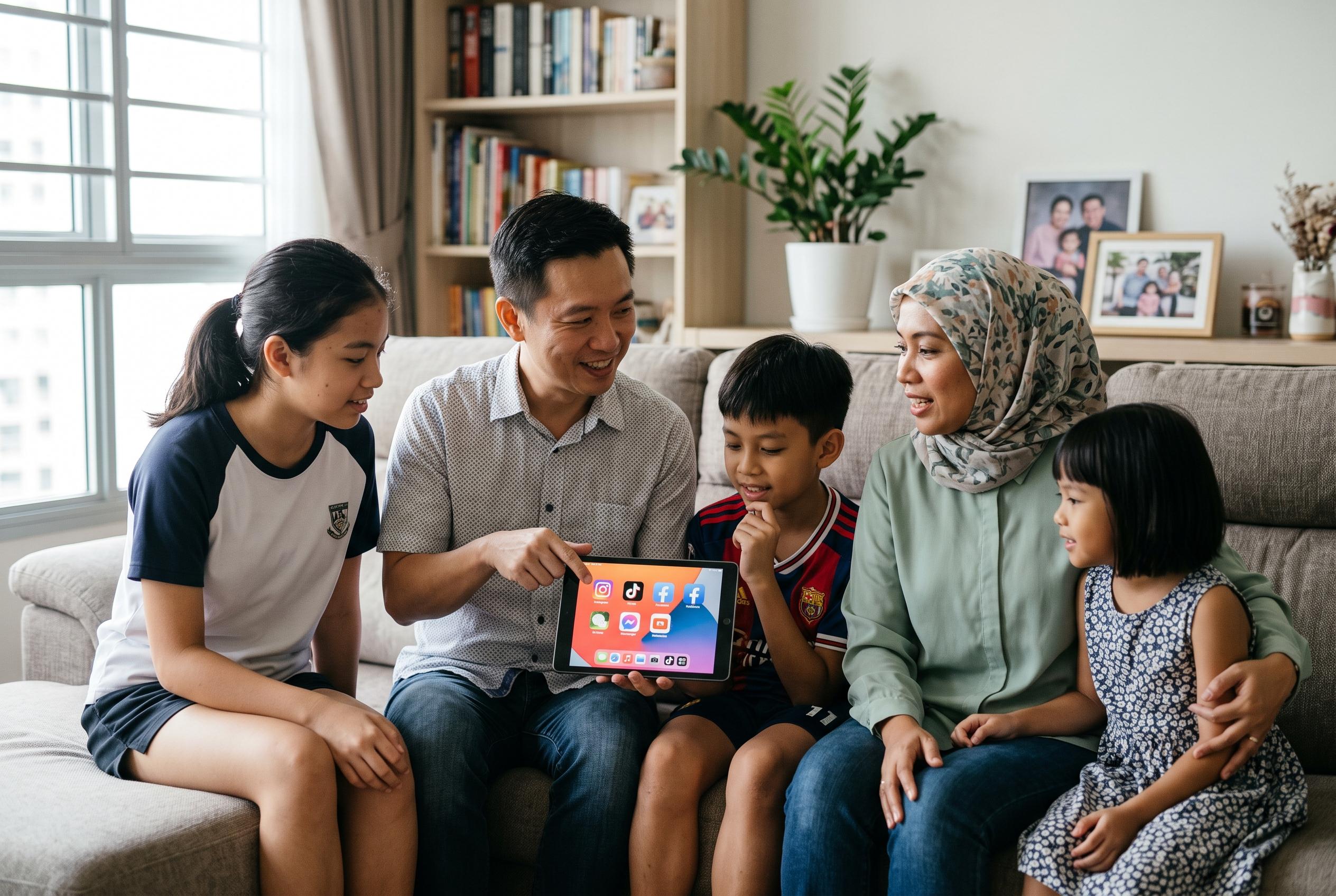

Singaporean experts highlight the importance of assessing the quality and impact of children’s social media habits, advocating for targeted interventions that go beyond simply measuring screen time to protect emotional wellbeing and relationships.
Experts are urging parents and schools to look beyond the clock when assessing children’s social media habits, saying the real issue is often not how long young people spend online but how they use platforms and whether those habits disrupt sleep, friendships or emotional wellbeing.
A panel convened by Singapore’s Ministry of Health said in a report published on July 30 that intervention should focus on risky platform features and harmful patterns of use rather than a blanket age-based ban. The distinction matters, panellists said, because a teenager spending 4 hours online chatting with friends or following a hobby community may still be functioning well if school life, rest and eating habits remain intact.
Andrew Yee, an assistant professor at Nanyang Technological University’s Wee Kim Wee School of Communication and Information, said the key question is whether social media use spills into other parts of life. By contrast, he said, even an hour a day can be concerning if it is spent compulsively chasing likes, comparing appearances and pulling away from face-to-face relationships.
That view is consistent with wider international concern. The U.S. Surgeon General has warned that social media can be both beneficial and harmful, and said excessive use, defined in its advisory as more than 3 hours a day, is linked to a higher risk of mental health problems such as depression and anxiety. A recent meta-analysis in JAMA Pediatrics also found that digital media use is associated with modest declines in children’s mental health and development, with the strongest effects seen in social media use.
Shawn Soh, senior team lead and lead counsellor at Touch Community Services counselling and psychological services, said problematic use can sometimes point to deeper struggles such as emotional distress, loneliness, identity concerns or a need for validation. In those cases, he said, the response may need to include counselling, stronger coping skills and help with emotional regulation, alongside limits on damaging features built into platforms.
The panel also pointed to design elements that can keep young users hooked, including infinite scroll, auto-play, algorithmically curated feeds and visible like counts or follower totals. These features can make it harder to stop, increase exposure to upsetting content and encourage social comparison, the report said. Beyond individual action, the panel called for a broader response involving families, schools and community groups.
Lim Choon Guan, the panel’s co-chair, said more cyberliteracy workshops could be run for parents at neighbourhood centres so they can better recognise harmful features and safety tools. In Singapore, TikTok and Touch Cyber Wellness have already started workshops in Bukit Batok East for parents and teenagers on online safety and social media readiness.
Yee said parents should judge the nature of their children’s online activity, not just the amount of time spent on it. Watching endless short-form videos, for example, is not the same as following cooking tutorials or staying in touch with friends. Soh added that schools should create more space for guided discussion and scenario-based learning so students can think more carefully about how online content affects their mood, self-esteem, sleep and relationships.
Disclaimer: This content is for informational purposes only and is not intended to be a substitute for professional medical judgment, advice, diagnosis, or treatment.