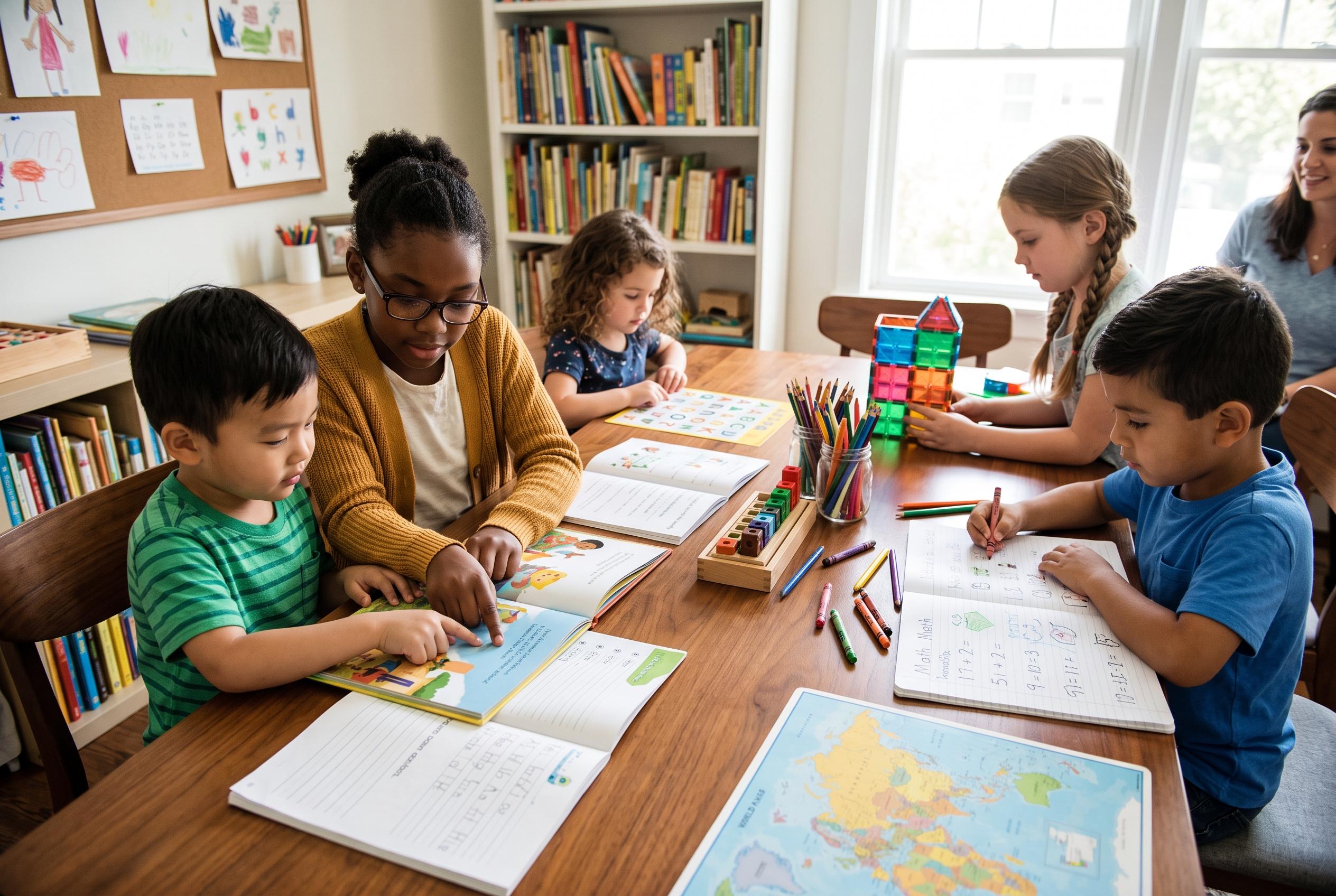

New research indicates that differences in children’s learning speeds are heavily influenced by environment, practice, and support, rather than innate ability, offering reassuring insights for parents and teachers aiming to foster potential.
Parents often notice that two children can spend the same amount of time on the same task and arrive at very different results. One may finish a worksheet quickly and confidently, while another needs far longer to reach the same point. That contrast can tempt adults to assume that speed is the same thing as ability. But research in child development suggests that learning pace is shaped by far more than intelligence alone.
According to cognitive science, the rate at which a child absorbs new material depends on a mix of factors, including how well information is processed, how much is retained in memory, how focused the learner is and what kind of environment surrounds them. The brain is still developing through childhood and adolescence, which means differences in learning speed are not a fixed verdict on ability. In practice, a child who seems slower may simply need stronger support in areas that can be improved.
Several education-focused summaries point to the same practical influences. A solid grasp of the basics makes later learning easier, while active recall, the practice of retrieving information from memory rather than passively rereading it, tends to work better than cramming or review alone. Motivation matters too: children who are curious and engaged often learn more quickly because they stay with a task for longer and notice patterns sooner. Focus, attention and cognitive flexibility, the ability to shift between ideas or strategies, also appear to play a significant part.
A study from Carnegie Mellon University’s Human-Computer Interaction Institute adds an important corrective to the idea of the “fast learner”. Using data from 1.3 million student interactions across educational technology tools, the researchers found that when conditions are favourable, learners tend to progress at broadly similar rates. That finding suggests the gap is often less about innate brilliance than about practice, structure and opportunity. Other analysis of pattern learning says previous experience, working memory and attentional control can shape speed too, but these differences are not necessarily permanent and can be improved with the right methods.
For parents and teachers, the implication is encouraging rather than worrying. Learning speed is not a clean measure of potential. A child who appears to struggle may need clearer explanations, more repetition, better routines or a more engaging approach, not a lower expectation of what they can achieve.
Disclaimer: This content is for informational purposes only and is not intended to be a substitute for professional medical judgment, advice, diagnosis, or treatment.