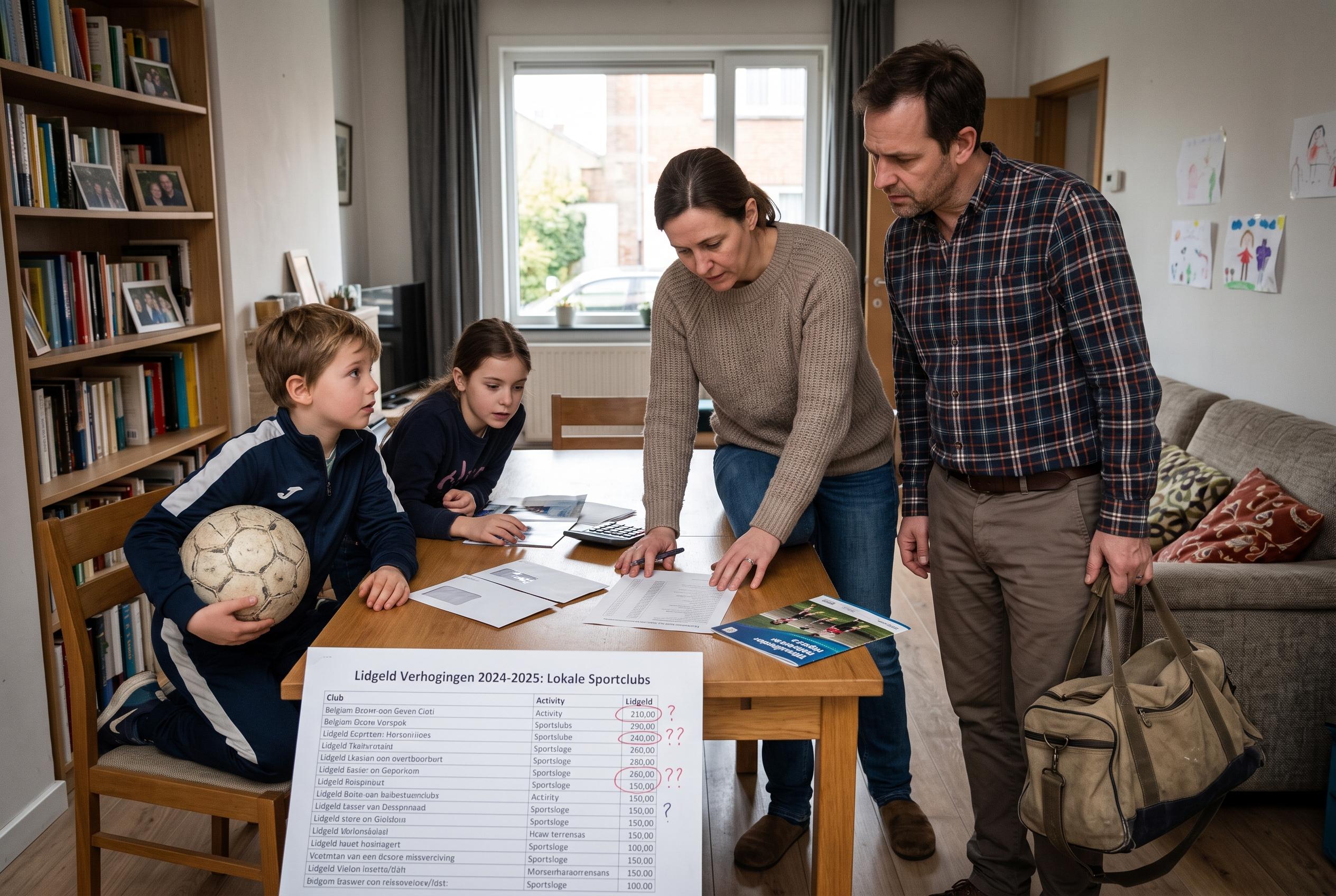

As the new school year looms, many Belgian families are struggling with sharply increasing fees for after-school sports and clubs, prompting concerns over affordability and the need for coordinated public policy support.
As the new school year approaches, many Belgian families are already facing a familiar but worsening reality: after-school sports and clubs are getting more expensive, and the cost can vary sharply depending on the activity, the club and the region. Parents quoted by DH described football, tennis, hockey, riding and gymnastics bills that have climbed to the point where some households are being forced to choose between activities or drop them altogether.
One mother, Laetitia, said the price of her 10-year-old son’s football membership had risen from 200 euros to 500 euros for three training sessions a week and a weekend match, before adding the separate cost of kit and boots. She also wants to enrol her younger daughter in gymnastics, at 40 euros a session each week. Another parent, Liesbeth, said riding now costs more than 700 euros a month for her family once lessons, equipment, licences and transport are all included.
The price rises are not limited to one sport. DH reported that six months of tennis lessons at Forest Domaine, with one hour a week between March and October 2026, cost between 105 euros and 265 euros, while RTC Liège charges between 60 euros and 242 euros. Hockey fees can range from about 275 euros to 400 euros, but at the Royal Racing Club of Brussels they can climb above 700 euros. Several clubs also point to extra charges tied to federation fees, equipment and competition entry.
Club officials say the increases are often unavoidable. Stéphane Delhalle, president of RE Blégnytoise, told DH that the club had kept its football fee between 295 euros and 395 euros for another season even though that does not cover energy costs or coaches’ pay. Frédéric Graindorge, treasurer of RES Wanze/Bas-Oha, said his club had raised fees after three years without an increase and because of energy and staff costs. Manu Morimont, speaking for ARCH Athlétisme in Charleroi, said the club had lifted its fee from 130 euros to 160 euros, noting that infrastructure work, coaching, piste hire and winter energy bills had all become more expensive.
The wider debate, according to sociologist Jean-Michel De Waele of ULB, is also about the lack of a coherent public sports policy. He argued that local facilities are often underused once schools close and that there is too little coordination to make sport more affordable. Families are trying to cope through second-hand kit, car-sharing and cutting back on activities, while some mutual insurers and local sport vouchers offer limited help. But, as DH reported, many parents and club leaders say those measures are still far from enough.
Disclaimer: This content is for informational purposes only and is not intended to be a substitute for professional medical judgment, advice, diagnosis, or treatment.