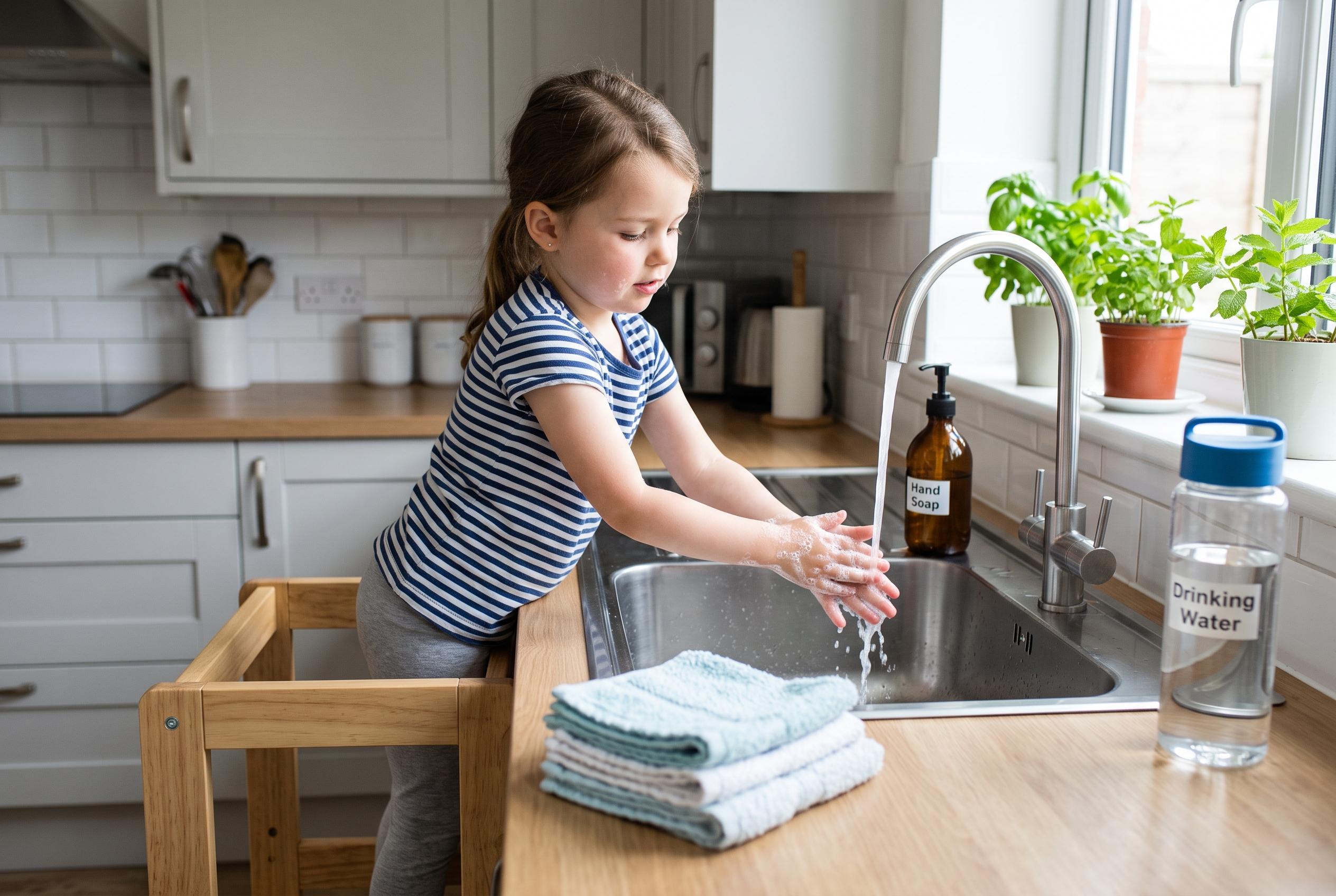

Experts from Nationwide Children’s Hospital and the WHO emphasise that consistent hygiene routines at home, such as handwashing and safe water consumption, are crucial in preventing childhood diarrhoea and its potentially serious dehydration consequences.
Childhood diarrhoea often starts with small, preventable lapses at home. Health guidance from Nationwide Children’s Hospital and the American Academy of Pediatrics says the biggest danger is not only loose stools but dehydration, which can develop quickly in children. The World Health Organization also notes that diarrhoeal illness remains a major threat in young children, especially where safe water, sanitation and handwashing are inconsistent.
That makes everyday habits matter. Eating with unwashed hands, drinking unsafe water, and relying too heavily on street food or other unhygienic snacks can increase the risk of stomach infections, particularly in children with weaker immune systems. Doctors say parents should be alert at the first signs of vomiting or diarrhoea, since fluid loss can escalate fast and leave a child weak, listless or in need of urgent care.
Prevention is straightforward but requires consistency. Children should be given boiled or properly filtered water, taught to wash their hands with soap before eating and kept away from open or cut foods sold in unsafe conditions. If diarrhoea begins, medical guidance recommends prompt rehydration with oral rehydration solution, or ORS, and other suitable fluids to replace lost water and electrolytes. Health bodies also caution against giving anti-diarrhoeal medicines without professional advice, and the American Academy of Pediatrics says the old BRAT diet is no longer recommended because it is too limited nutritionally.
Disclaimer: This content is for informational purposes only and is not intended to be a substitute for professional medical judgment, advice, diagnosis, or treatment.