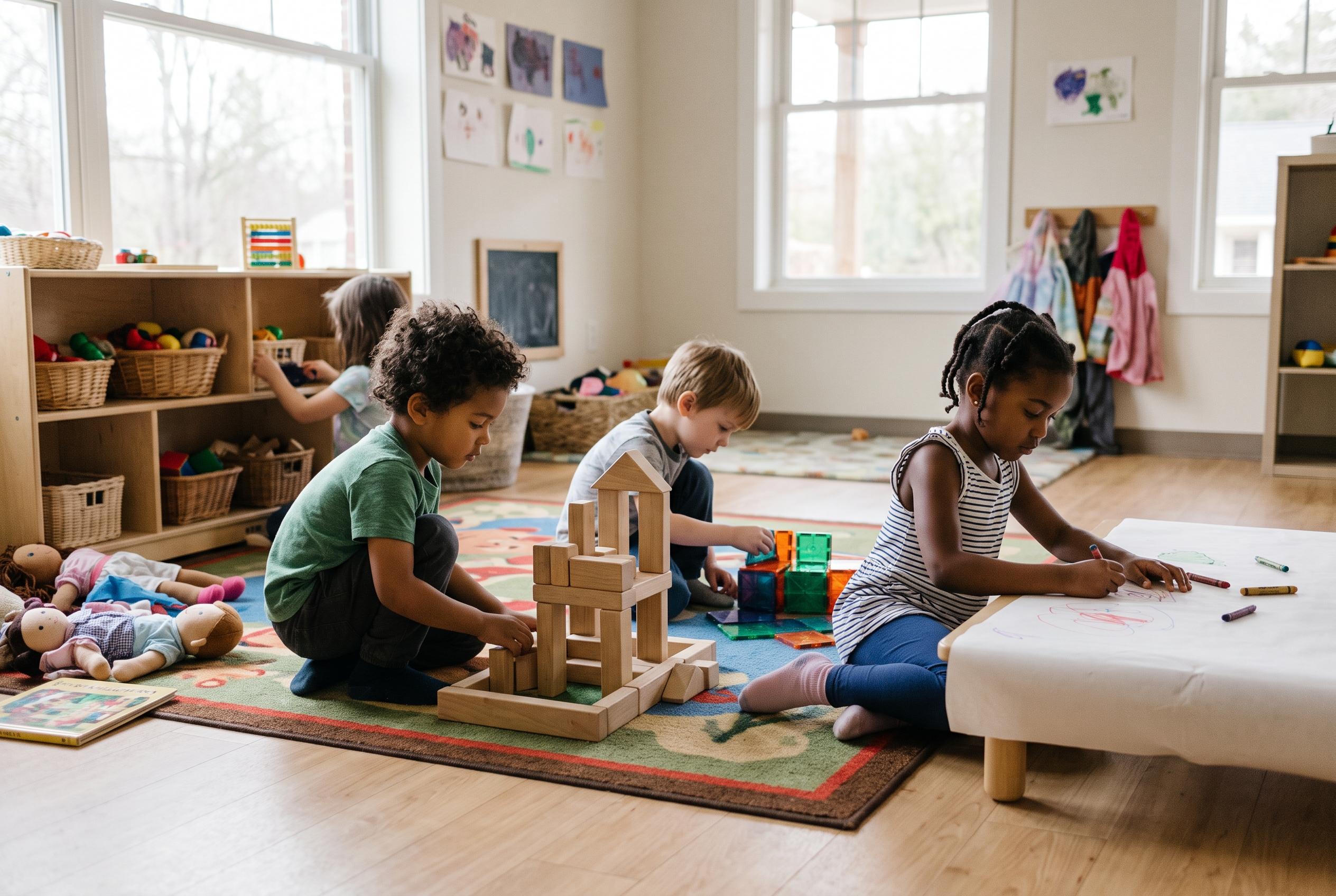

Experts warn that overstructured curricula and adult-controlled activities hinder children’s natural learning through play, calling for a shift towards unstructured, child-led experiences to foster resilience and independence.
Children do not need a lesson plan to learn how to kick a ball. As Lenore Skenazy argues in The Hechinger Report, that kind of overinstruction says less about children’s abilities than about adults’ growing habit of managing every moment of childhood. Her example of a pre-K curriculum that spells out, step by step, how to kick, bounce and hop is funny at first glance, but also unsettling in what it reveals about modern schooling.
The problem, Skenazy suggests, is not simply one clumsy curriculum. It is a deeper assumption that learning only counts when an adult is formally directing it. Once play is treated as idle time rather than a way children develop skills on their own, adults feel pressure to fill every gap with structured, “useful” activity. That logic has helped produce the packed schedules now common in many families, with children shuttled from one organised pursuit to another and parents often doing the driving.
That concern is echoed by child-development experts. UNICEF says free play is child-led and unstructured, giving children room to use imagination, practise independence and build problem-solving skills. The American Academy of Pediatrics has likewise said play supports brain development and helps children develop physical, cognitive and emotional strengths, while also learning to negotiate, share and work through conflict. In other words, what looks like simple fun is often serious developmental work.
The Hechinger essay points out how absurd the adult-managed version of childhood can become when even the most basic movements are turned into scripts. A curriculum that tells teachers how far back a child should stand before kicking a ball or how to explain bouncing a ball may be intended as support, but it can also reflect a profound lack of trust in children’s instinct to explore. Dartmouth Health Children’s says unstructured play with peers is precisely where children build resilience, learn to regulate emotion and take manageable risks.
Skenazy’s conclusion is blunt: if the goal is to help children learn how to kick, bounce, hop or simply enjoy being young, adults may need to do less, not more. Give children a ball, she argues, and step aside. That advice aligns with a broad body of child-development thinking that sees play not as a break from learning but as one of its main forms.
Disclaimer: This content is for informational purposes only and is not intended to be a substitute for professional medical judgment, advice, diagnosis, or treatment.