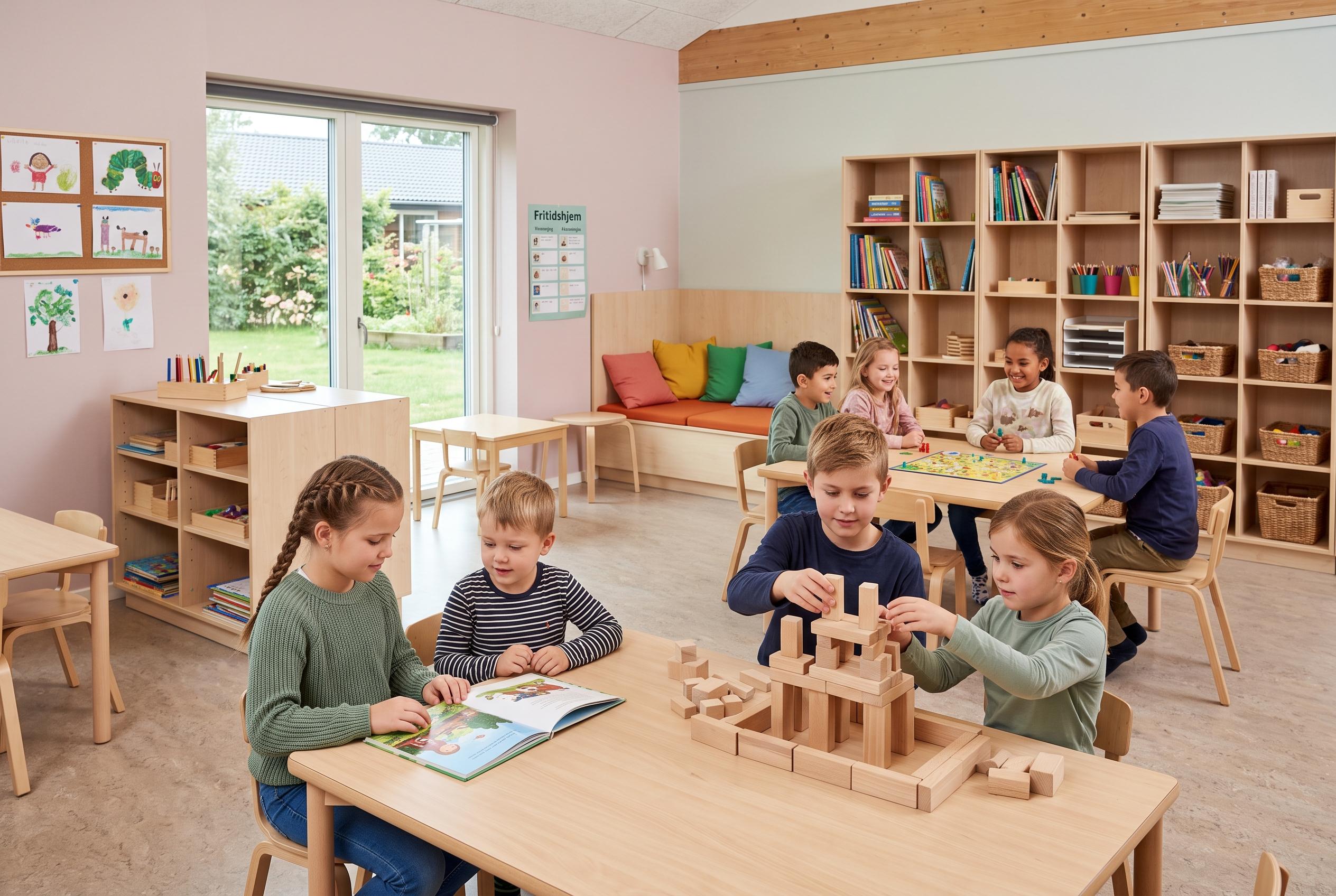

As Denmark launches a new initiative to improve leisure and after-school activities, the government plans a significant investment to foster children’s well-being, with some parties cautiously questioning the funding and scope of the programme.
As the new school year begins across much of Denmark, the government wants children to have better places to spend their afternoons. It plans to bolster school-age care, after-school clubs and leisure centres with more activities, longer opening hours and new play facilities, while also testing whether selected municipalities should be allowed to keep children in after-school provision through 6th grade rather than ending at 3rd grade, as is the case now.
Education Minister Magnus Heunicke described the move as an investment in children’s well-being. In a written statement, he said that children thrive in strong communities and that leisure provision gives them a safe setting in which to be curious, have fun and feel part of something bigger. The government has not yet said how much the package will cost, but its coalition programme promises 5 billion kroner in permanent funding for a range of measures in the children’s and education sectors by 2030, to be allocated gradually through budget negotiations and economic agreements.
The plan has drawn a cautious welcome from Venstre. Education spokeswoman Anni Matthiesen said the party would not dismiss the idea of strengthening the leisure sector, but she questioned how it would be financed and warned against promises that lack a clear funding source. Her concern echoes a wider debate over whether the state and municipalities have underinvested in after-school provision since school reform lengthened the school day, only for those hours to be shortened again in recent years.
The Radicals have pushed for a similar expansion before. Philip Vivet, the party’s education spokesman and chair of the parliamentary children, education and research committee, has argued that after-school clubs and leisure institutions have been cut too deeply even as screens take up more of children’s lives. He wants facilities where children are keen to stay longer because they are building, making music, climbing trees, performing theatre or playing with friends. According to Statistics Denmark, 257,676 children were enrolled in SFOs, the Danish school-age care scheme, in 2024.
Disclaimer: This content is for informational purposes only and is not intended to be a substitute for professional medical judgment, advice, diagnosis, or treatment.