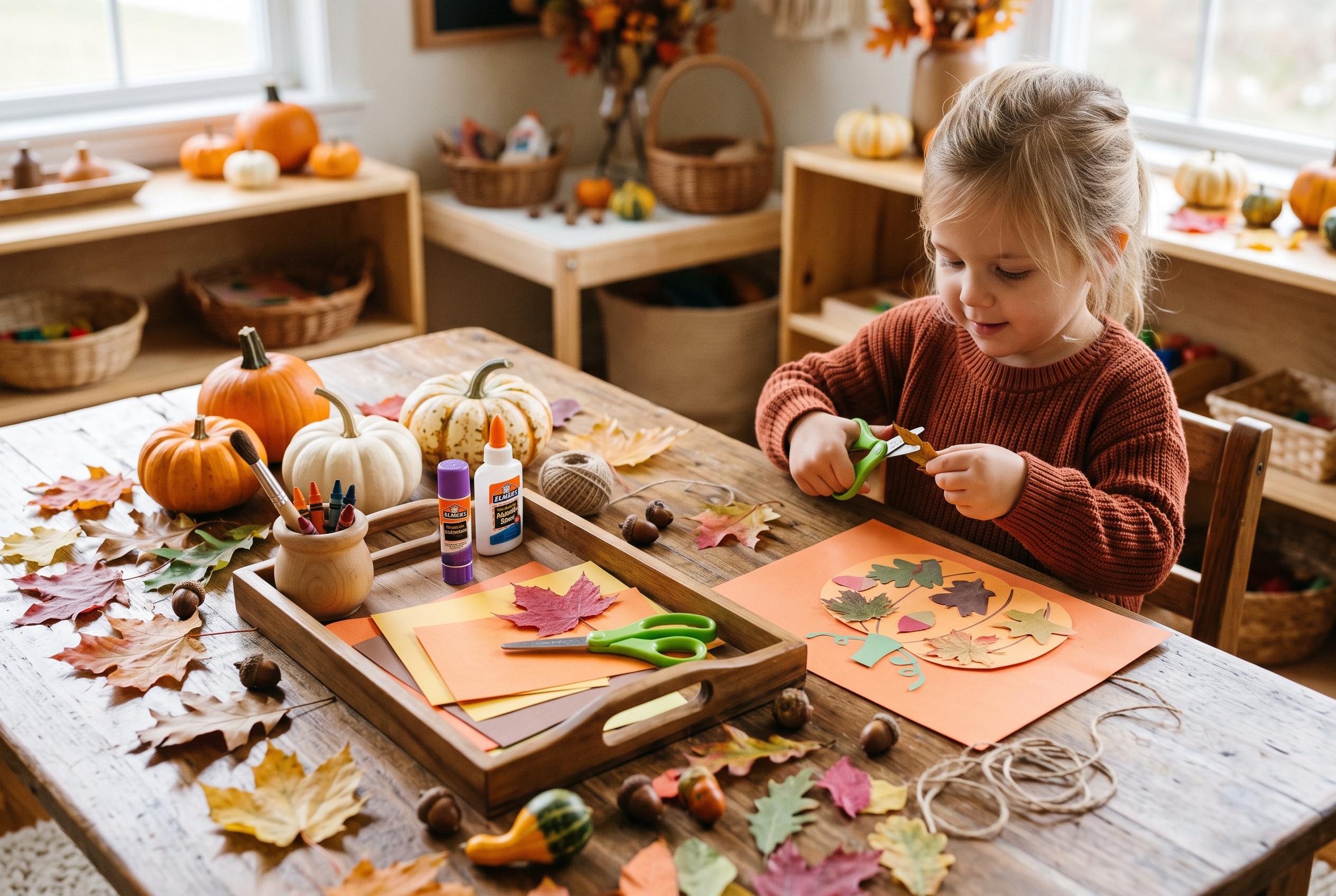

Seasonal art projects using natural materials like leaves and pumpkins offer preschoolers engaging, manageable ways to develop coordination, explore textures, and celebrate autumn, fostering both creativity and essential skills.
For preschoolers, autumn offers an easy entry point into art: leaves, apples, pumpkins and other seasonal materials give children something familiar to observe, touch and transform. The best projects are not the most elaborate ones. They are the ones that are safe, manageable and rich in learning, especially for children who are still building hand strength, coordination and confidence.
That is why simple stamping and printing activities work so well. Apple printing is straightforward and usually rewarding on the first try, while leaf printing brings children directly into contact with natural textures and shapes. Both activities give young children practice in grasping, pressing and coordinating movement, skills that child-development resources say are central to early fine motor growth and later independence.
Keepsake projects also have a strong place in the preschool classroom. Handprint trees, for example, turn a child’s body into part of the artwork, creating something families are likely to keep. These projects can feel more personal than template-based crafts, and they often invite conversation about seasons, family and growth. They also fit neatly into classroom displays and holiday gifts.
For children who enjoy experimentation, process art can be the most engaging option. Coffee filter leaf suncatchers encourage colour blending and observation, while pumpkin painting with cut pool noodles offers a novel tool that produces predictable shapes without losing the fun of discovery. Research and early childhood guidance consistently suggest that playful, hands-on work with materials supports attention, problem-solving and school readiness, not just creativity.
Natural materials can deepen that experience further. Leaf printing and corn cob rolling connect art to the outdoors and to harvest themes, while also giving children sensory input that is hard to replicate with standard classroom tools. Educators who work with natural objects often say children treat them with more care and curiosity, and that the materials themselves invite closer observation of texture, weight and pattern.
The more narrative activities can support language as well as art. Paper plate scarecrows, with yarn hair, scraps of fabric and drawn-on faces, naturally lead to storytelling and pretend play. Children can name their scarecrows, describe their features and invent little scenes around them, which turns a simple craft into a broader literacy experience.
The best choice depends on time, group size and the developmental goal. Apple printing and leaf printing are ideal for short sessions. Handprint trees work well when a keepsake matters. Pool noodle pumpkins and corn cob rolling suit larger groups or outdoor spaces. Coffee filter leaves and scarecrows reward children who enjoy open-ended making rather than following a fixed model.
Taken together, these fall art activities do more than fill an afternoon. They help preschoolers practise coordination, strengthen attention and explore the season through touch, colour and form. In a classroom or at home, that combination of play and purpose is what makes autumn art especially valuable.
Disclaimer: This content is for informational purposes only and is not intended to be a substitute for professional medical judgment, advice, diagnosis, or treatment.