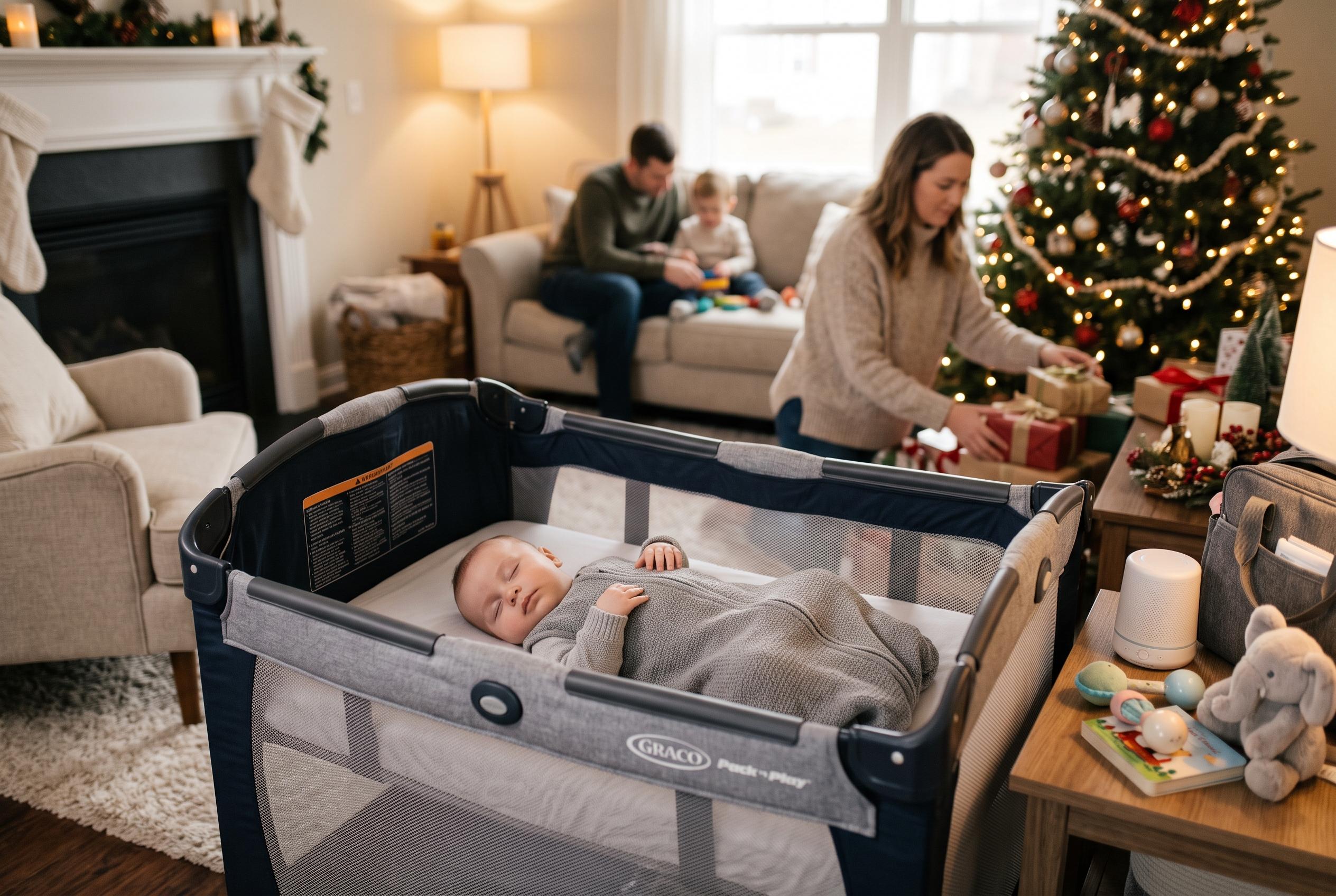

As family visits and holiday trips disrupt infants’ sleep routines, experts advise simple strategies like maintaining routines, creating familiar sleep spaces, and sharing rooms to help babies stay settled amid the chaos.
Family visits can unsettle a baby’s sleep because they often change everything at once: the setting, the schedule and the level of stimulation. Nested Bean says the result is often an overtired, overstimulated infant who has more difficulty settling, especially when late dinners, extra cuddles and unfamiliar surroundings pile up. Baby Sleep Site makes a similar point about holiday periods, noting that travel, skipped naps, visitors and busy evenings can quickly disrupt a baby’s normal rhythm.
The most useful approach is usually not to chase perfection but to preserve a few anchors. Keeping naps and bedtime as close to normal as possible, creating a familiar sleep space and reducing the intensity of late-day activity can all help a child stay regulated. Even small routines, such as a familiar sleep sack, a dim room or a predictable wind-down, can make a difference when the day has been full of new faces and noise.
Where a baby sleeps also matters. Baby Sleep Site notes that room-sharing can help some families by keeping the infant close while still maintaining a separate sleep space, which can be especially useful when visiting relatives. Johns Hopkins and the American Academy of Pediatrics both advise that babies sleep on their backs on a firm, flat surface with no loose bedding, pillows or soft objects in the sleep area, and that room-sharing is safer than bed-sharing.
Parents often need the same reassurance they give the baby: a rough night does not mean the routine has been ruined. Baby Sleep Site says parental stress and sleep habits can affect an infant’s rest as well, so protecting your own downtime can help the whole household settle. If sleep problems continue well beyond the visit, it may be worth considering whether something else, such as a developmental change, is involved rather than assuming the trip alone is to blame.
Disclaimer: This content is for informational purposes only and is not intended to be a substitute for professional medical judgment, advice, diagnosis, or treatment.