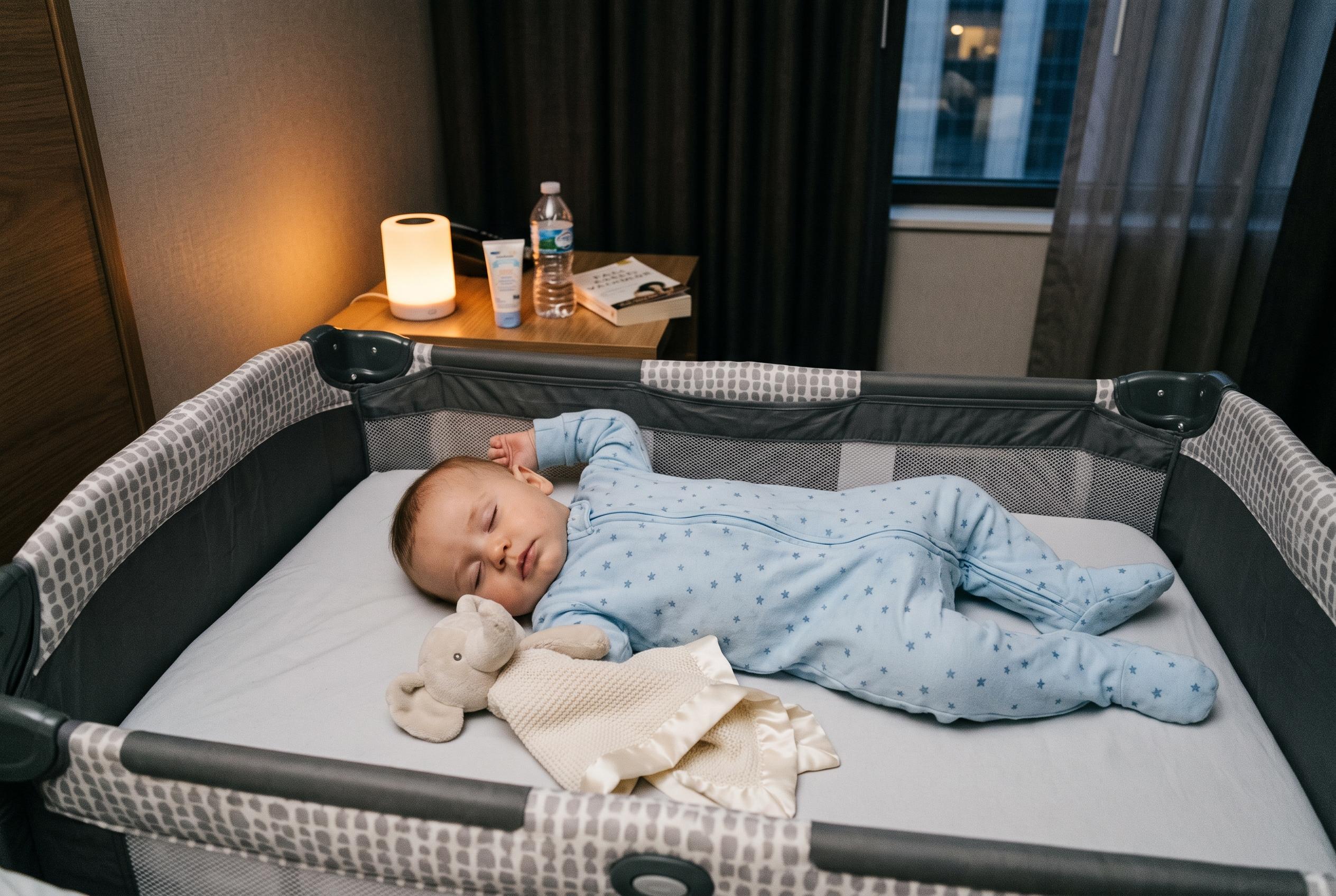

Travelling with children can disrupt sleep patterns due to environmental changes, but maintaining consistent routines and familiar signals can help babies settle better, easing travel stress for parents.
Travel can unsettle a baby’s sleep because it changes several familiar cues at once. Light, noise, temperature, timing and the sleep surface itself can all shift in a single day, leaving a child with far more to process than at home. Where adults may find a hotel room novel, babies often find it over-stimulating, which can make settling harder on the first night away.
Sleep experts quoted by Condé Nast Traveller and other parenting guides say the most effective response is not to chase perfection, but to preserve as many familiar signals as possible. A consistent wind-down routine, the same sleepwear and a recognisable sleep space can all help a baby’s body understand that it is time to rest, even in an unfamiliar setting. The basic idea is simple: when the environment changes, the routine should change as little as possible.
That approach also applies to older children. Advice from Little Spoon and Sleep.com suggests keeping key anchors intact, such as wake time, naps and bedtime rituals, while packing comfort items such as a sleep sack or white-noise machine. Travel often brings later nights, missed naps and more excitement than usual, so a few disrupted sleeps do not necessarily mean a routine has unravelled. They are often just a temporary response to change.
Parents are also encouraged to think about recovery after the trip, rather than treating travel as a test of sleep discipline. A night or two of waking more often, early rising or shorter naps can be part of the adjustment period. If those patterns persist, some specialists advise looking at whether the issue is travel-related or part of a wider developmental change, such as sleep regression. In many cases, the best remedy is patience, consistency and a quick return to normal once the journey is over.
Disclaimer: This content is for informational purposes only and is not intended to be a substitute for professional medical judgment, advice, diagnosis, or treatment.