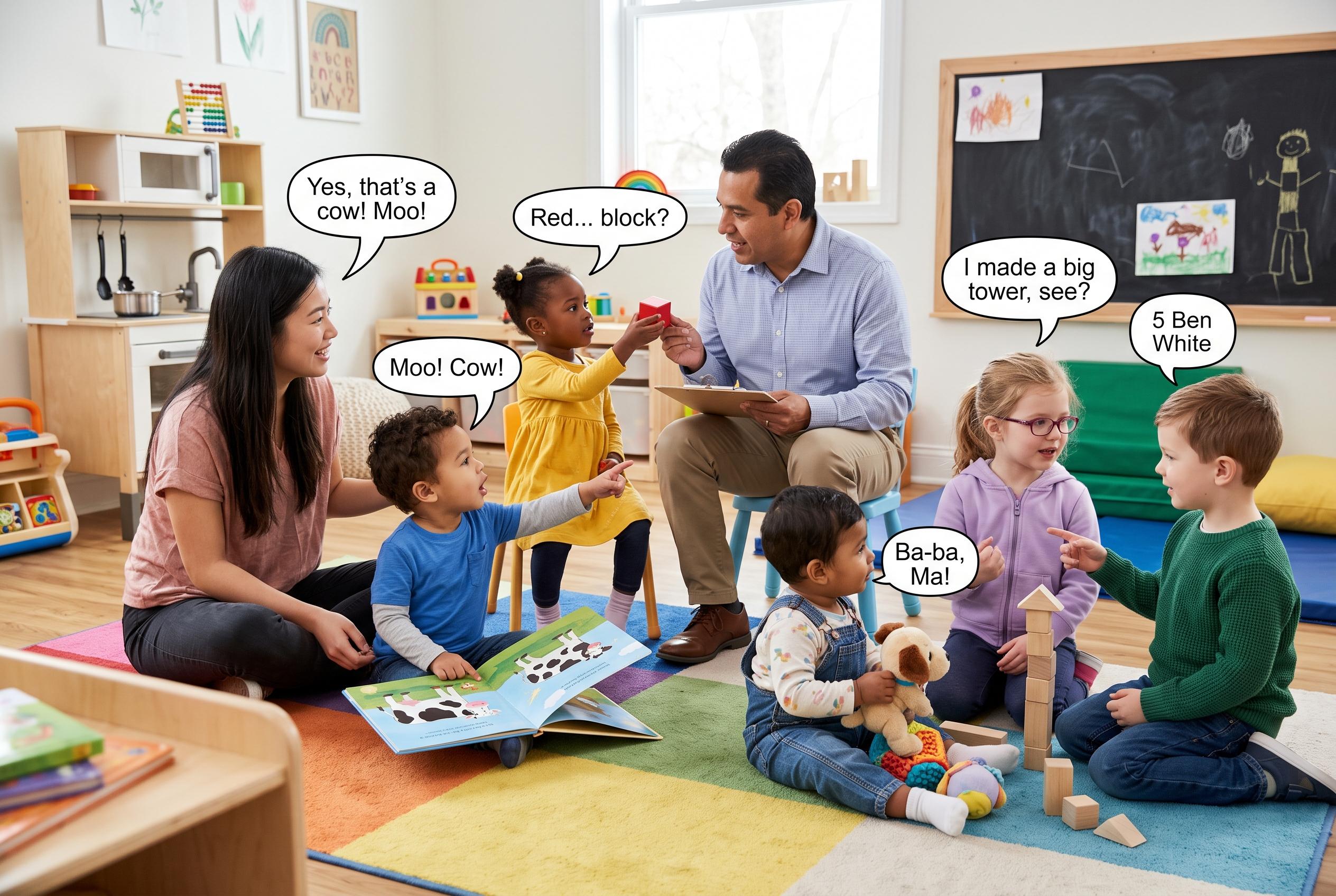

Understanding the recognisable stages of speech development from infancy to age 5 is crucial for early identification of delays or disorders, helping children improve communication, reading, and social skills.
Children’s speech does not emerge all at once. From infancy to about age 5, most children move through a recognisable pattern, and speech pathologists use that pattern to judge whether development is progressing as expected or whether further assessment is needed. The early sounds babies make are often the first clues, beginning with cooing and later moving towards first words, simple combinations and increasingly clear speech.
Specialists distinguish between a speech delay and a speech sound disorder. A delay means a child is slower than expected to begin talking or to reach early language milestones, but may later catch up. A disorder, by contrast, involves ongoing difficulty producing sounds clearly. That can show up as articulation problems, where a child struggles to form particular sounds, or phonological problems, where sounds are used in the wrong way within words. Health information from Kaiser Permanente, MedlinePlus and SpeechStep all note that these issues can be linked to hearing difficulties, structural differences in the mouth or, in some cases, no obvious cause at all.
The usual timeline helps explain why those distinctions matter. By around 6 months, babies are expected to coo. At about 12 months, many say first words such as “mama” or “dada”. By 18 months, children typically understand around 50 words or short phrases and may use a small spoken vocabulary. By age 2, they are usually combining two words and experimenting with a wider range of consonants. By 3, speech should be becoming easier for familiar listeners to understand, while children are also beginning to ask questions and talk about past events.
By age 4, most children should be understandable to most people, with longer sentences and more complex grammar beginning to appear. By 5, speech is usually clear to strangers as well, and children should be using more advanced sounds, telling simple stories and handling longer back-and-forth conversations. The Berkshire Healthcare NHS Foundation Trust says children should be able to produce all speech sounds by age 8, but also warns that dropping, adding, swapping or distorting sounds can signal a delay or disorder.
Experts say parents should seek help early if they are worried about how well their child is being understood. WebMD notes that speech and language difficulties can affect reading, writing and social confidence later on, while early treatment tends to improve outcomes. The broad message from speech pathologists is straightforward: if a child’s speech seems well behind the expected pattern, it is better to have it checked sooner rather than later.
Disclaimer: This content is for informational purposes only and is not intended to be a substitute for professional medical judgment, advice, diagnosis, or treatment.