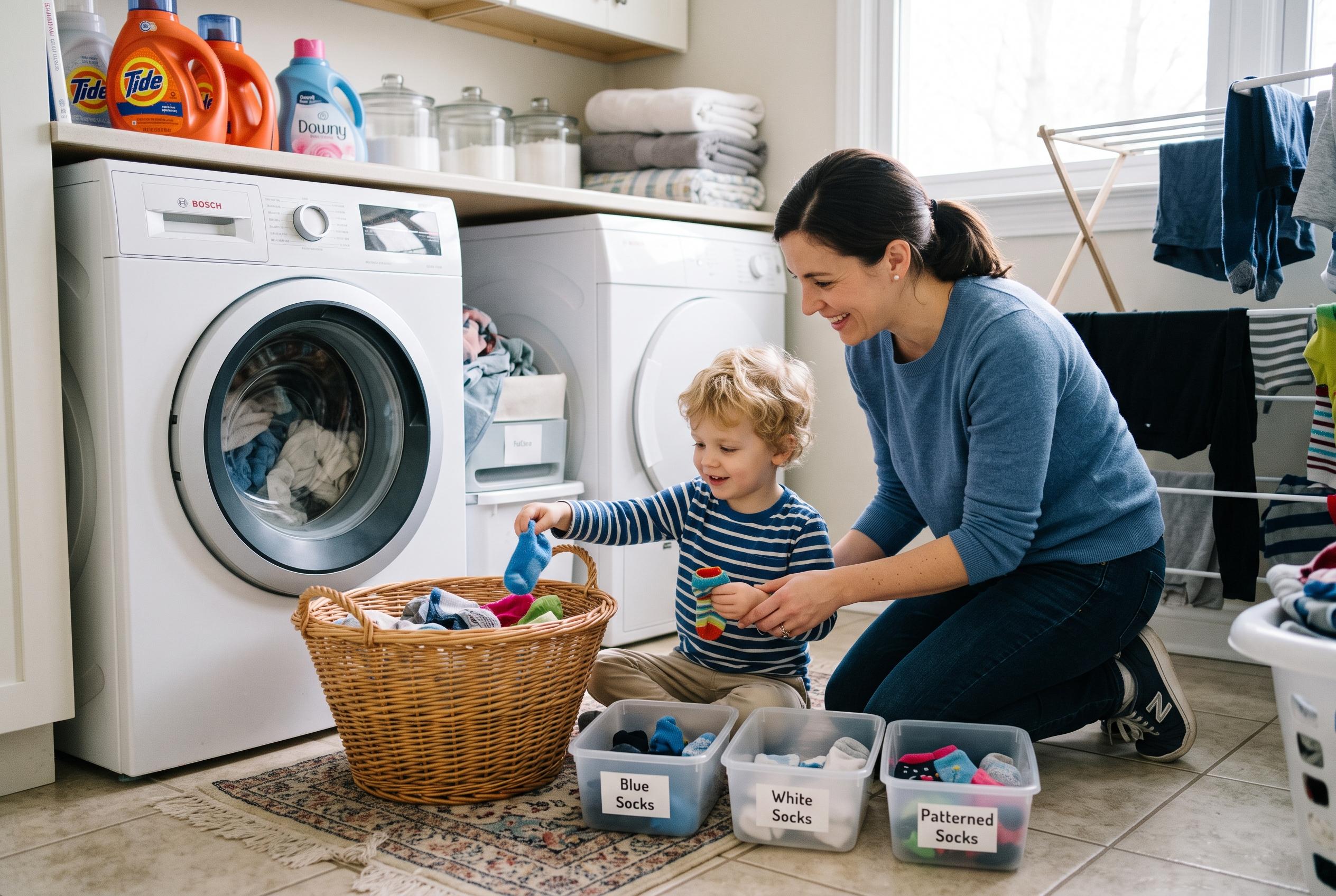

Early intervention specialists are increasingly integrating laundry activities into therapy sessions to promote language development, motor coordination, and social skills, utilising daily routines as natural opportunities for child development.
Laundry may seem mundane, but early intervention specialists increasingly treat it as fertile ground for language, movement and problem-solving. The SLT Scrapbook says it can be woven into coaching sessions because it happens regularly, offers repeated actions and gives caregivers plenty of chances to model simple language in a natural way.
During sorting, caregivers can be encouraged to narrate what they are doing, pause to invite a response and model key words such as colours, clothing items and quantities. As the clothes go into the machine, verbal routines and techniques such as copying and adding can help children hear the same structure again and again, making participation more predictable and easier to join in with.
The Illinois Early Intervention Clearinghouse says laundry can also support broader developmental goals, not just speech. Its guidance suggests that children can practise motor coordination by moving laundry, helping with socks and clothes or even climbing in and out of a basket under supervision, while the same routine can be used to build cognitive and social-emotional skills.
That approach fits with routine-based intervention more broadly, which places support inside ordinary family life rather than separating therapy from it. The SLT Scrapbook says laundry is especially useful for expanding utterances, since caregivers can model phrases such as “Daddy’s socks”, “Mummy’s shirt” and “two socks” while the child watches, listens and gradually takes part.
Disclaimer: This content is for informational purposes only and is not intended to be a substitute for professional medical judgment, advice, diagnosis, or treatment.