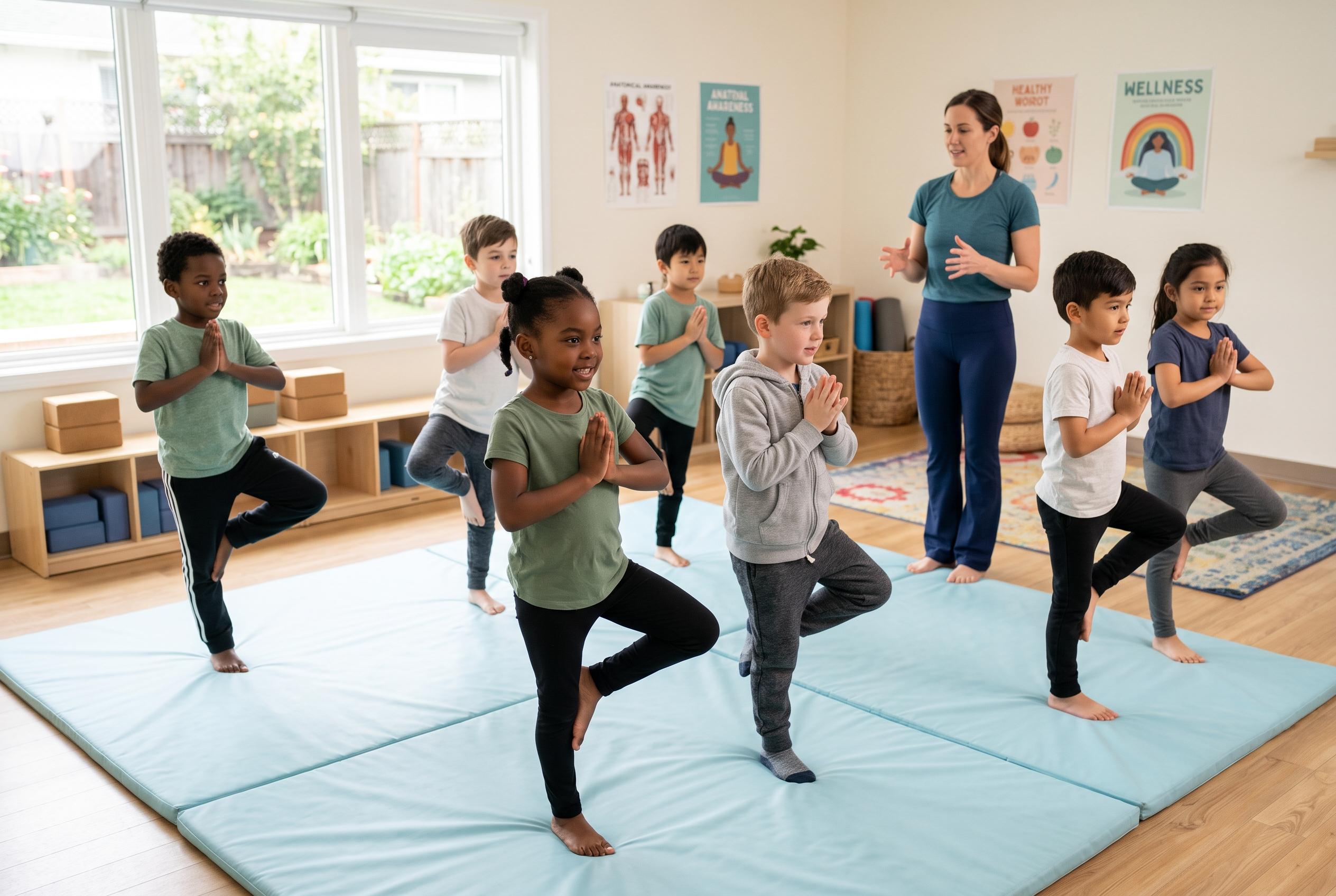

Integrating yoga into childhood education offers a playful and practical approach to teaching anatomy, enhancing physical awareness, confidence, and long-term wellbeing for children, especially those with special needs.
Children’s yoga can do more than calm a busy classroom. It can also help children understand how their bodies work, build confidence in movement and develop a stronger sense of physical awareness, according to Kids Yoga Stories and several related educational and clinical resources. That message sits at the centre of the discussion between Giselle Shardlow, founder of Kids Yoga Stories, and Menka Purswaney, founder of World of Yoga School, who argues that anatomy can be taught in ways that feel playful, practical and memorable.
Purswaney draws on a teaching career shaped by India and international experience, as well as her own early use of yoga to manage asthma. In the conversation highlighted by Kids Yoga Stories, she describes anatomy not as a dry subject but as something children can explore through stories, sports and simple props. The approach is designed to make body knowledge accessible whether a child learns best by seeing, moving, listening or creating.
That emphasis on active learning is echoed by Kids Yoga Stories in its separate anatomy guide for children, which recommends visual aids, interactive exercises, colouring books and 3D models. The idea is to give pupils a tangible way to connect names and functions with real movement, rather than treating anatomy as abstract memorisation. For younger children in particular, that can make the subject feel less intimidating and more empowering.
The broader case for yoga in childhood is well established in paediatric and educational material. Physio-Pedia says yoga can support strength, posture, flexibility and balance, while also helping with memory, attention and emotional regulation. The American Academy of Pediatrics has also noted that yoga may help children step back from a fast-moving, screen-heavy environment by focusing on breath and movement, with possible benefits for stress, anxiety and self-confidence.
Those effects may be especially valuable for neurodivergent children and pupils with additional needs. Guidance from HealthyChildren.org, along with specialist articles on special-needs education and occupational therapy, points to yoga’s potential role in supporting relaxation, coordination, motor skills and body awareness. Other resources note that movement-based yoga can help children with ADHD, autism and sensory processing differences by giving them tools to regulate attention and self-understanding.
Beyond the classroom, Purswaney links body awareness to injury prevention and long-term wellbeing, especially for children involved in sport. The case she makes is straightforward: when children learn how their bodies move, they are better placed to protect themselves, recover from strain and carry healthier habits into adulthood. In that sense, anatomy lessons delivered through yoga are not just about flexibility or balance. They are about helping children know themselves better, physically and mentally, from an early age.
Disclaimer: This content is for informational purposes only and is not intended to be a substitute for professional medical judgment, advice, diagnosis, or treatment.