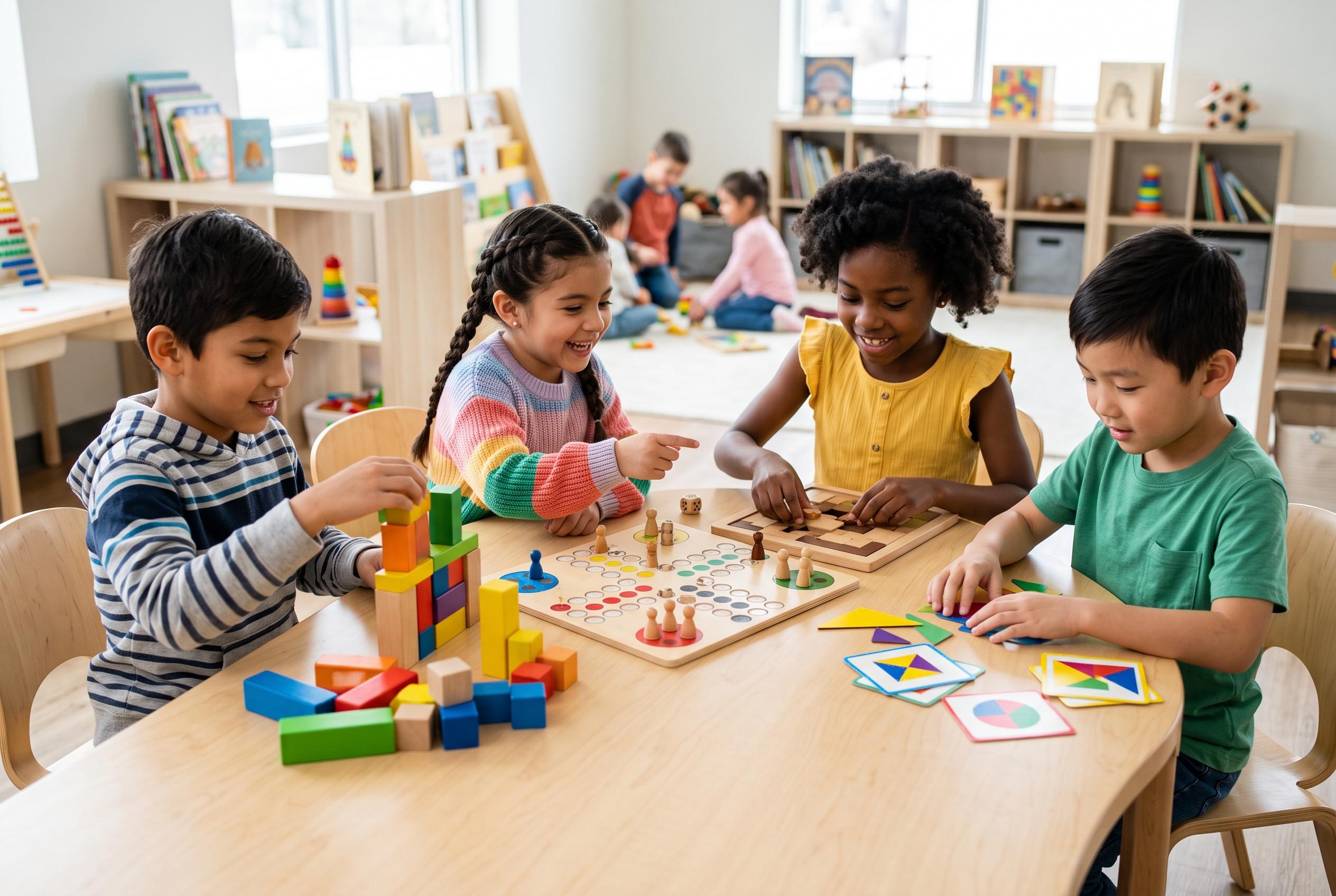

Despite children’s increased screen time, educators highlight engaging, hands-on activities like board games, puzzles, and creative challenges to foster social skills and concentration without digital devices.
Children may be glued to tablets and phones more than ever, but that does not mean screen-free play has lost its appeal. The Guardian says children aged 5 and over now spend more than three hours a day on devices on average, a habit many parents know is hard to reverse. Teachers quoted by the paper argue that the answer is not to compete with screens on their own terms, but to offer activities that feel just as absorbing, social and open-ended.
Adrian Neibauer, a Denver-based primary school teacher, says familiar board games still hold strong appeal, with pupils drawn to Battleship, Sorry!, Jenga and Uno. He says games that are quick to learn and involve strategy can feel immediately rewarding, while also building skills such as pattern recognition and planning. Other educators highlighted Ticket to Ride, including the simpler First Journey version for younger children, and Guess Who? as games that keep children engaged without a device.
Hands-on play also came up repeatedly. Chyna Delk-Bratcher, a kindergarten teacher in Houston, recommended blocks, Unifix cubes and magnetic tiles, all of which let children build, sort and count while keeping their hands busy. Noemi Hernandez, a first-grade teacher, pointed to Operation and jigsaw puzzles as ways to sharpen coordination and concentration. Separate round-ups of screen-free play ideas also echo that preference for tactile activities, from obstacle courses and treasure hunts to blanket forts and family dance challenges.
For children who miss the structure of video games, teachers suggest borrowing the feel of digital play rather than the screen itself. Brandon Jenkins, a fourth-grade teacher in Houston, recommends escape-room style games built from clues and riddles, as well as challenge-based tasks such as building the tallest tower or protecting an egg. Reyes Andon, a physical education teacher in New York City, says the most effective activities are often the ones children help design themselves. His view is that ownership matters as much as equipment: if a pool noodle and some chalk can become an obstacle course, the game may feel just as memorable as anything on a device. When a screen is unavoidable, Delk-Bratcher suggests Epic!, a reading platform that uses points to keep children moving towards reading goals.
Disclaimer: This content is for informational purposes only and is not intended to be a substitute for professional medical judgment, advice, diagnosis, or treatment.